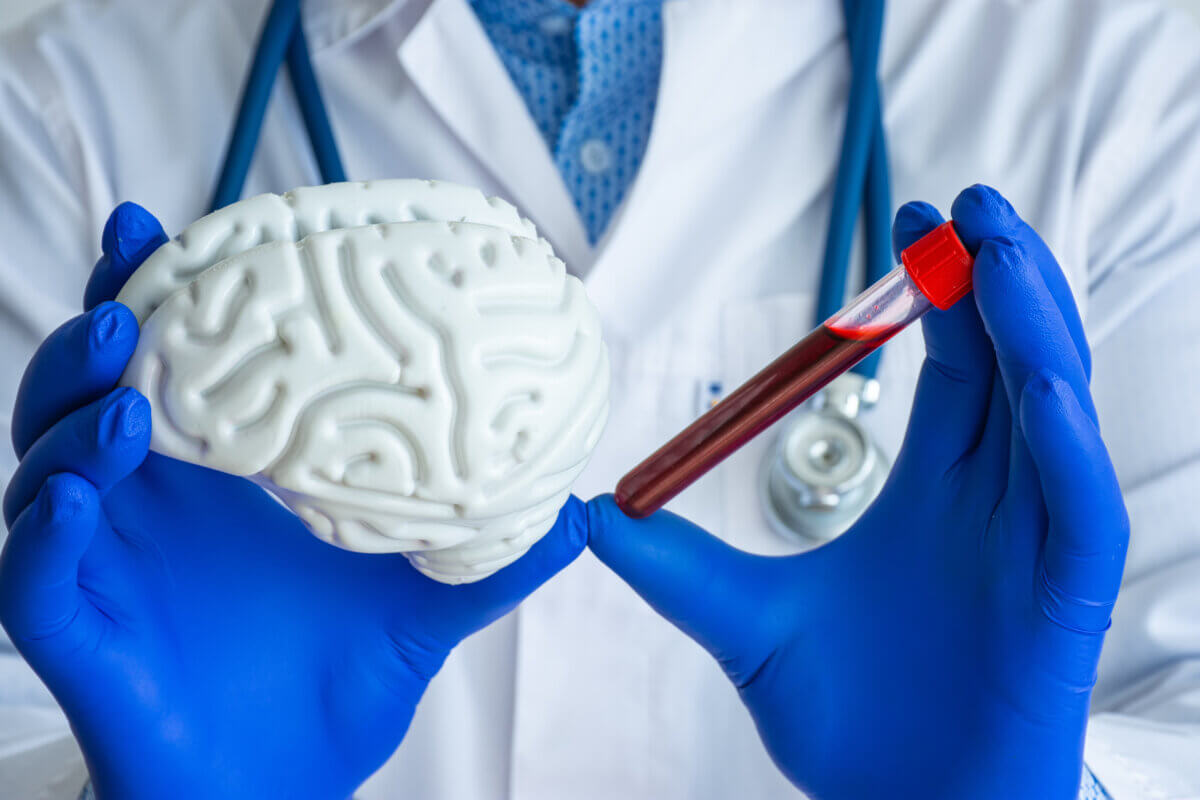
(Credit: Shidlovski/Shutterstock)
PITTSBURGH — In the quest for great health, doctors have maintained that having high levels of “good cholesterol” is the key to a long life. However, a new study finds that this golden rule isn’t quite so simple. Researchers from the University of Pittsburgh School of Public Health are turning this conventional wisdom on its head, revealing that when it comes to women’s brain health, the quality of this good cholesterol may actually be the first warning sign for Alzheimer’s disease.
Specifically, the study found that it’s not just about how much HDL a woman has — it’s about the quality of those tiny, fat-carrying particles swimming through the bloodstream which affects brain health.
Researchers explain that as women approach the stormy seas of menopause, their bodies undergo a myriad of changes. Among these shifts is a subtle transformation in their HDL cholesterol — a change that could hold the key to preserving cognitive function and warding off the specter of Alzheimer’s disease. This latest research, published in the prestigious Journal of Clinical Endocrinology & Metabolism, offers a fascinating glimpse into how the quality of HDL particles evolves over time and why it matters for your brain’s future.
“We were able to show that as early as midlife, women who have more of the smaller-sized particles and those whose particles’ concentrations of phospholipids increased over the menopause transition are more likely to experience better episodic memory later in life,” explains Dr. Samar R. El Khoudary, professor of epidemiology at Pitt Public Health and lead researcher on the study, in a university release.
This insight is crucial, as El Khoudary notes that the loss of working memory is the first sign of Alzheimer’s disease.
The study, which followed 503 women from the Study of Women’s Health Across the Nation (SWAN) HDL ancillary study, revealed some surprising trends. As women age, the number of larger HDL particles in their bodies increases — but these supersized particles aren’t living up to their “good cholesterol” reputation. In fact, they’re not functioning as well as their smaller counterparts when it comes to supporting brain health.
Before you despair over your HDL levels, however, there’s a silver lining to this cholesterol cloud. El Khoudary’s team has previously shown that certain lifestyle choices can improve the quality of HDL particles.
“That’s the good news in this developing picture of brain health and the ‘not-so-good-after-all’ cholesterol,” says El Khoudary. “Even though higher levels of HDL-C may not be protective as you get older, there are things you can do that might help, even as early as your 40s.”
So, what’s a health-conscious woman to do? The answer might lie in the American Heart Association’s Life’s Essential 8 — a set of key measures for improving and maintaining cardiovascular health.
“The same, modifiable risk factors that the AHA is advocating for—including physical activity, ideal body weight and quitting smoking—can help you protect your brain, too,” El Khoudary suggests, adding that these same principles could be your brain’s best friend.
As we continue to unravel the mysteries of the aging brain, this research offers a new perspective on the role of HDL cholesterol. It’s not just about having more of the “good” stuff — it’s about nurturing the right kind of HDL particles to support your cognitive health. For women navigating the complex terrain of middle age, this study provides a roadmap for potential interventions that could make all the difference in maintaining sharp minds and vibrant memories for years to come. In the end, the message is clear: when it comes to HDL and brain health, quality trumps quantity.
Paper Summary
Methodology
The study tracked 503 women from diverse racial and ethnic backgrounds. The women were between 42 and 52 years-old at the start of the study and were followed for about eight years.
Over time, the women completed tests measuring working memory, processing speed, and episodic memory. These tests were repeated up to five times to track changes in their cognitive abilities.
The researchers measured various aspects of HDL in the participants’ blood, focusing on the size and number of HDL particles, as well as HDL’s ability to remove cholesterol from cells (a process called cholesterol efflux capacity, or CEC).
The team then looked at whether changes in these HDL metrics over time were associated with the women’s cognitive performance.
Key Results
The study found that certain HDL metrics were linked to better memory performance in women. For example, having more medium-sized HDL particles and higher levels of a protein called apolipoprotein A-1 (apoA-1) were associated with better performance on memory tests. Smaller HDL particles seemed to help the brain clear out cholesterol more efficiently, potentially reducing the risk of memory loss.
In contrast, having more large HDL particles over time was linked to slower thinking and worse memory. This suggests that not all HDL particles are equally beneficial – the size and function of HDL matter.
Study Limitations
As with any study, there were some limitations to consider. First, the study only included women, so it’s unclear if the same results would apply to men. Additionally, while the researchers tracked HDL levels and cognitive performance, they didn’t have data on genetic factors like APOE, a gene associated with Alzheimer’s risk. This could be important for understanding why HDL affects brain health differently in some individuals.
Another limitation was that the study didn’t track diet or lifestyle factors in detail, which can also influence HDL levels and cognitive health. Finally, the researchers noted that HDL behaves differently depending on the method used to measure it, so more research is necessary to understand which types of HDL are most protective.
Discussion & Takeaways
For middle-aged women, paying attention to HDL cholesterol might be more important than you think – not just for heart health, but also for keeping your brain sharp. While this study doesn’t provide direct recommendations for boosting HDL, adopting heart-healthy habits like regular exercise, a balanced diet rich in healthy fats, and not smoking can all help improve your HDL levels.
In the future, we might see new therapies that target specific types of HDL to protect against memory loss. Until then, focusing on overall health during midlife seems to be a smart move for preserving both your heart and your mind.
Funding & Disclosures
The SWAN HDL ancillary study was funded by several grants from the National Institutes of Health (NIH), specifically from the National Institute on Aging (NIA), the National Institute of Nursing Research (NINR), and the NIH Office of Research on Women’s Health (ORWH). Some researchers disclosed relationships with pharmaceutical companies or membership on boards, but the majority reported no conflicts of interest, ensuring that the study’s findings were as unbiased as possible.


