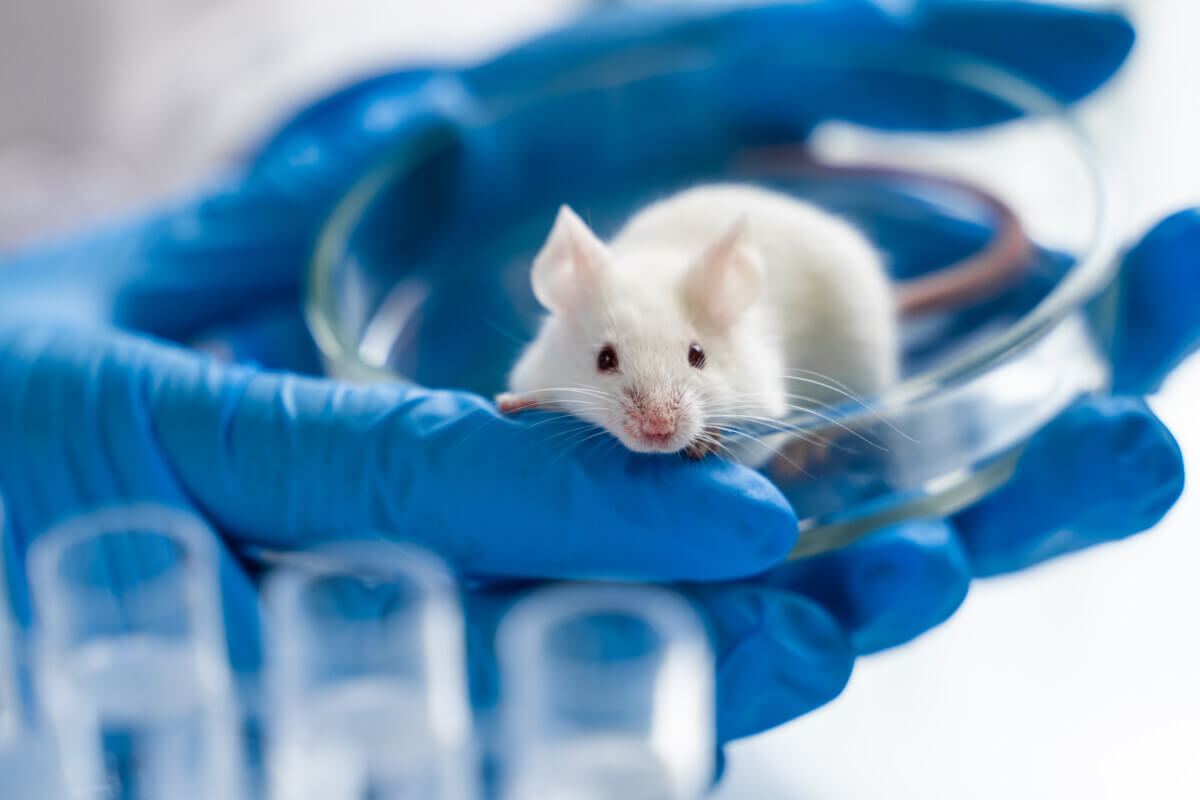
Lab mouse unrelated to study. (© filin174 - stock.adobe.com)
ANN ARBOR, Mich. — Superheroes have powers that defy belief, from super speed to X-ray vision and flight, just to name a few. While these powers seem more like science fiction, scientists may be close to making certain superpowers a matter of fact! In a recent study published in PLOS Biology, researchers have given super-hearing to mice.
“We knew that providing [neurotrophin-3] to the inner ear in young mice increased the number of synapses between inner hair cells and auditory neurons, but we did not know what having more synapses would do to hearing,” says Gabriel Corfas, PhD, director of the Kresge Hearing Research Institute at Michigan Medicine, who led the research team, in a university release.
Neurotrophin-3 (NT-3) is one of the proteins in the neurotrophin family, which plays a critical role in the development, function, and survival of neurons in the nervous system.
Now, scientists are not trying to make the first mouse superhero through gene therapy, but these creatures are making the world a better place in a different way. The superior hearing seen in mice is helping researchers investigate the cause of hidden hearing loss in humans.
Researchers had previously tried to increase hearing in mice before. Boosting the amount of neurotrophic factor neurotrophin-3 in the inner ear helped restore the auditory responses in mice with acoustic trauma. Additionally, increasing the expression of neurotrophin-3 improved hearing in middle-aged mice. The current study is the first to increase hearing beyond what is naturally possible in healthy young mice.
“We now show that animals with extra inner ear synapses have normal thresholds—what an audiologist would define as normal hearing—but they can process the auditory information in supranormal ways,” Corfas adds.
Methodology
The research team increased neurotrophin-3 expression to raise the number of synapses between inner hair cells and neurons. Inner hair cells are important for the ear to convert sound waves into neural signals. Synapses are like cellular highways that help deliver messages from the ear to the brain.
The study used two groups of young mice. The first group had decreased synapses in the inner ear, while the second group had increased synapse numbers.
“Previously, we have used that same molecule to regenerate synapses lost due to noise exposure in young mice, and to improve hearing in middle-aged mice, when they already start showing signs of age-related hearing loss,” explains Corfas. “This suggests that this molecule has the potential to improve hearing in humans in similar situations. The new results indicate the regenerating synapses or increasing their numbers will improve their auditory processing.”
Both groups of mice underwent a Gap-Prepulse Inhibition test, which measures an animal’s ability to detect very brief auditory stimuli. Each mouse was placed in a chamber with background noise followed by a loud tone to startle it or a very brief silent gap.
When the mouse detected the silent gap, their startle response was reduced. The research team then needed to figure out how long the silent gap would need to last until the mice could detect it.
Results
Mice with fewer synapses in their inner ears needed a much longer silent gap than the other group. The findings support a hypothesis that hidden hearing loss in humans might be related to the number of synapses available in the inner ear. Hidden hearing loss refers to people who have trouble hearing, but their condition is not measurable using standard auditory tests.
The researchers were surprised by the second group, who appeared to possess superhearing from the increase in synapses in the inner ear. They excelled on the Gap-Prepulse Inhibition test and showed better results when measuring their Acoustic Brain Stem response. According to the authors, the findings suggest increasing synaptic numbers translated to an improved ability to process more auditory information.
“We were surprised to find that when we increased the number of synapses, the brain was able to process the extra auditory information. And those subjects performed better than the control mice in the behavioral test,” Corfas says.
Discussion & Takeaways
Hair cell loss was traditionally thought to be the cause of age-related hearing loss. Now, modern science is stepping back from that old line of thinking and focusing more on the synapses of inner hair cells.
The study authors suggest the loss of inner hair cell synapses is the first step toward hearing loss. Creating therapies focused on reversing or preventing this loss could provide an alternative approach to treating certain hearing disorders. Additionally, the findings could extend to synaptic loss in other places.
“Some neurodegenerative disorders also start with loss of synapses in the brain,” Corfas concludes. “Therefore, the lessons from the studies in the inner ear could help in finding new therapies for some of these devastating diseases.”


