
(Credit: © Richard O'Donoghue(stock.adobe.com)
From ‘Fascism’ To ‘Propaganda,’ Google Data Analysis Reads More Like a National Anxiety Report
In a Nutshell
- “Gaslighting” topped the national list of most-searched word definitions in 2026 with roughly 287,000 monthly searches, narrowly beating “love.”
- Political and emotional vocabulary dominated the top 25 nationally, with fascism, democracy, narcissist, propaganda, and socialism all making the ranking.
- State-level results ranged from the expected (Georgia searching “democracy,” Alaska searching “fascism”) to the offbeat (Montana searching “gouache,” Maine searching “ursine”).
Forget “how do I make pasta” or “cheapest flights to Miami.” In 2026, the word Americans are Googling most just to understand what it means is “gaslighting.” Not love, not money, not any of the practical things that dominate everyday life — a term for psychological manipulation. And with fascism, democracy, propaganda, and narcissist all cracking the top 25, the list starts to read less like a vocabulary quiz and more like a ledger of which words, in 2026, were confusing enough to send people reaching for a search bar.
A new analysis from Unscramblerer.com, a word game website, tracked Google search data from Jan. 1 through July 7, 2026, to rank the most-searched word definitions in the U.S., both nationally and by state. Using Google Trends and keyword data from the tool Ahrefs, researchers compiled 130 search variations — everything from “define love” to “what is the definition of empathy” — to arrive at a picture of which words Americans most urgently need explained.
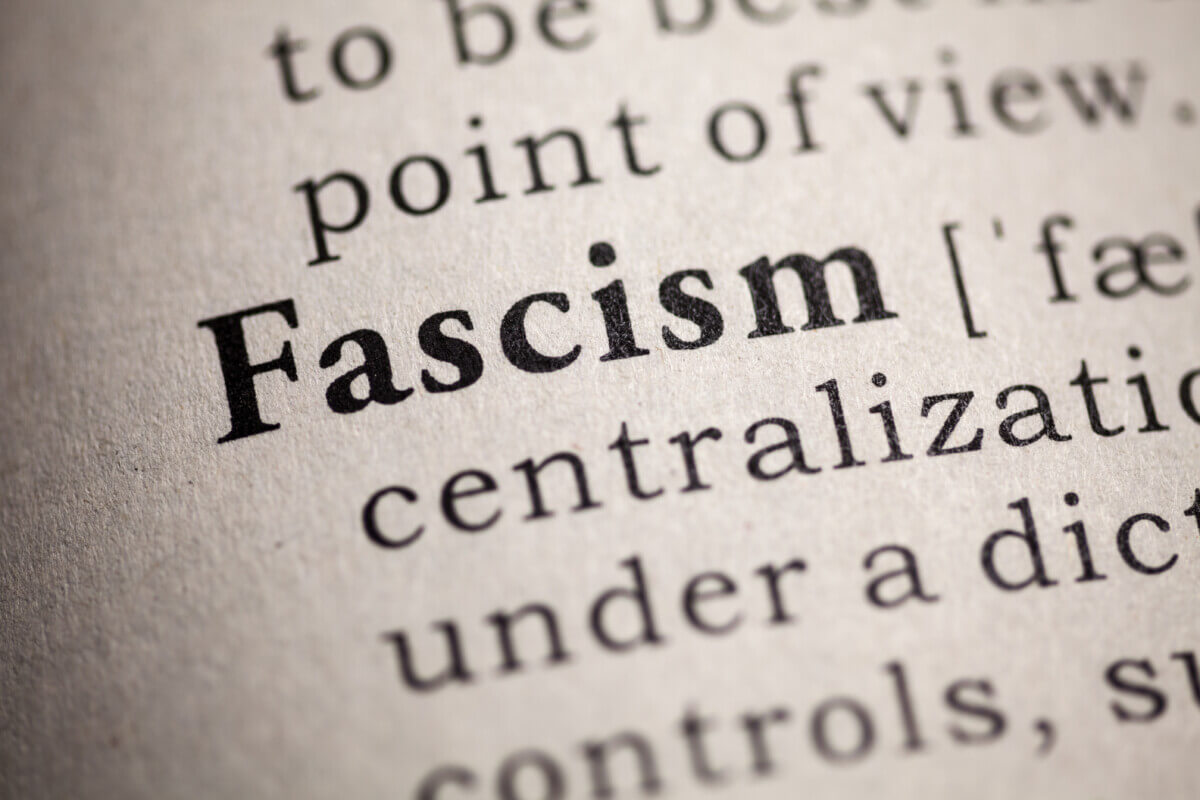
“Gaslighting” topped the national list with roughly 287,000 monthly searches, edging out “love” (about 275,000). After that, “fascism,” “empathy,” and “integrity” rounded out the top five, all within a few thousand searches of each other.
America’s Most Searched Word Definitions Lean Political and Emotional
Scrolling further down the top 25, civic and political terms make up the largest share of the list. “Democracy,” “bias,” “justice,” “equity,” “socialism,” “republic,” and “propaganda” all appear. Emotional vocabulary shows up alongside them: narcissist, anxiety, apathy, and stress. Everyday objects and tasks barely appear — though the list does include grammar terms like metaphor, adjective, and hyperbole, along with science, philosophy, and niche.
A spokesperson for Unscramblerer sorted the findings into three categories: emotional words (gaslighting, love, empathy, narcissist, anxiety, stress, apathy), societal words (fascism, democracy, justice, equity, culture, socialism, republic, bias, propaganda, inflation), and educational words (metaphor, hyperbole, adjective, science, philosophy, fiction). Taken together, the spokesperson noted, “people are searching for definitions to better understand personal experiences and public conversations.”
Societal and political vocabulary making up the largest slice of this list points to how frequently people are encountering those words in public life — and feeling uncertain enough about what they mean to look them up.
Most Searched Word Definitions by State Reveal Some Surprises
State-level data added texture, and a few genuine surprises. Indiana and Wyoming both led with “gaslighting.” Georgia and New Mexico pointed to “democracy,” while Alaska and Oregon went with “fascism.” Texas most searched “republic” and West Virginia “integrity” — a state-by-state vocabulary map that tracks, more or less, with the political stories dominating each region.
Some states broke the mold entirely. Montana’s most-searched definition was “gouache,” a type of opaque watercolor paint. Maine’s was “ursine,” meaning bear-like. Rhode Island’s top searched term was “providence” — which is both a philosophical concept and, perhaps not coincidentally, the state’s capital city. Whether those searches were philosophical or purely literal is anyone’s guess.
Delaware’s most-searched word was “sepsis,” a medical term for a life-threatening infection response. Minnesota led with “weather.” Not every American in 2026, it turns out, was consumed by the political vocabulary crisis.
A Search List That Captures a Particular Moment
Searches don’t reveal motive. Someone Googling “gaslighting” might be processing a personal experience, reading a news article, or hearing the word for the first time in a conversation and wanting to know exactly what it means. But collectively, the top of this list reads like a record of the concepts people are encountering and wanting to pin down: manipulation, contested political ideas, emotional states, civic vocabulary.
That gaslighting beats love as the country’s top searched definition in 2026 isn’t necessarily alarming on its own. Language evolves, and new terms enter mainstream use all the time. But paired with fascism, narcissist, propaganda, and apathy all cracking the top 25, the list adds up to a vocabulary record of a particular moment in American life — one where the words generating the most confusion also happened to be the ones at the center of every argument.
National ranking · Jan–Jul 2026
America’s 25 most-searched word definitions
Source: Unscramblerer.com analysis of Google Trends + Ahrefs data, 130 search variations
By state · most-searched word definition
One word per state
Hover a state to see its top word
Survey Notes
Methodology
Unscramblerer.com, a word unscrambling and word game website, conducted the analysis using Google Trends and Ahrefs keyword data. Researchers tracked searches from Jan. 1, 2026, through July 7, 2026, covering 130 search variations of word definition queries (e.g., “define love,” “what is the definition of empathy,” “definition of fascism”). Monthly search volumes were pulled from Ahrefs and combined across variations to produce final counts. The analysis covered all 50 U.S. states and produced a national ranking of the top 25 most-searched word definitions.
Funding and Disclosures
No external funding was disclosed. Research was conducted internally by Unscramblerer.com as a promotional data study. The company has a commercial interest in word-related content and search traffic.


