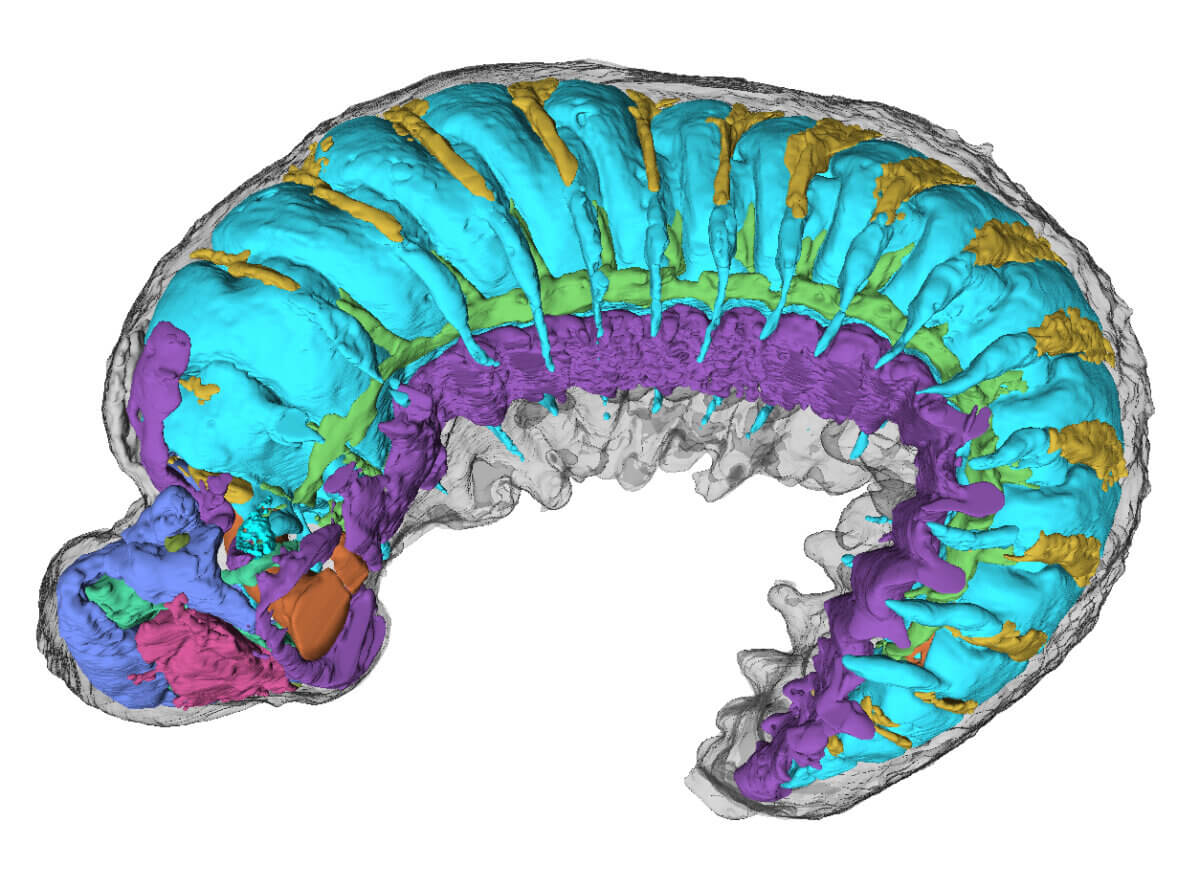
Side-on view of Youti yuanshi, showing internal organ systems. (Credit: Emma J. Long)
DURHAM, England — In the annals of paleontology, some discoveries are like finding a needle in a haystack. But imagine finding a needle so small, so exquisitely preserved, that it rewrites the story of life itself. That’s exactly what a team of international researchers has done, unearthing a fossil so minuscule yet so significant that it’s akin to discovering a microscopic time machine.
Meet Youti yuanshi, a creature smaller than a poppy seed that lived over 520 million years ago. This tiny larva, frozen in time since the Cambrian period, is not just any ordinary fossil. It’s a window into the dawn of complex life, a snapshot of the moment when the ancestors of today’s insects, spiders, and crustaceans were taking their first evolutionary steps. With its internal organs preserved in breathtaking detail, Youti yuanshi offers us a front-row seat to one of the greatest shows on Earth: the birth of biodiversity as we know it.
Scientists say Youti yuanshi, which means “primitive larva” in Chinese, is poised to rewrite textbooks and reshape our understanding of how life crawled, swam, and eventually flew its way into the dizzying array of forms we see today.
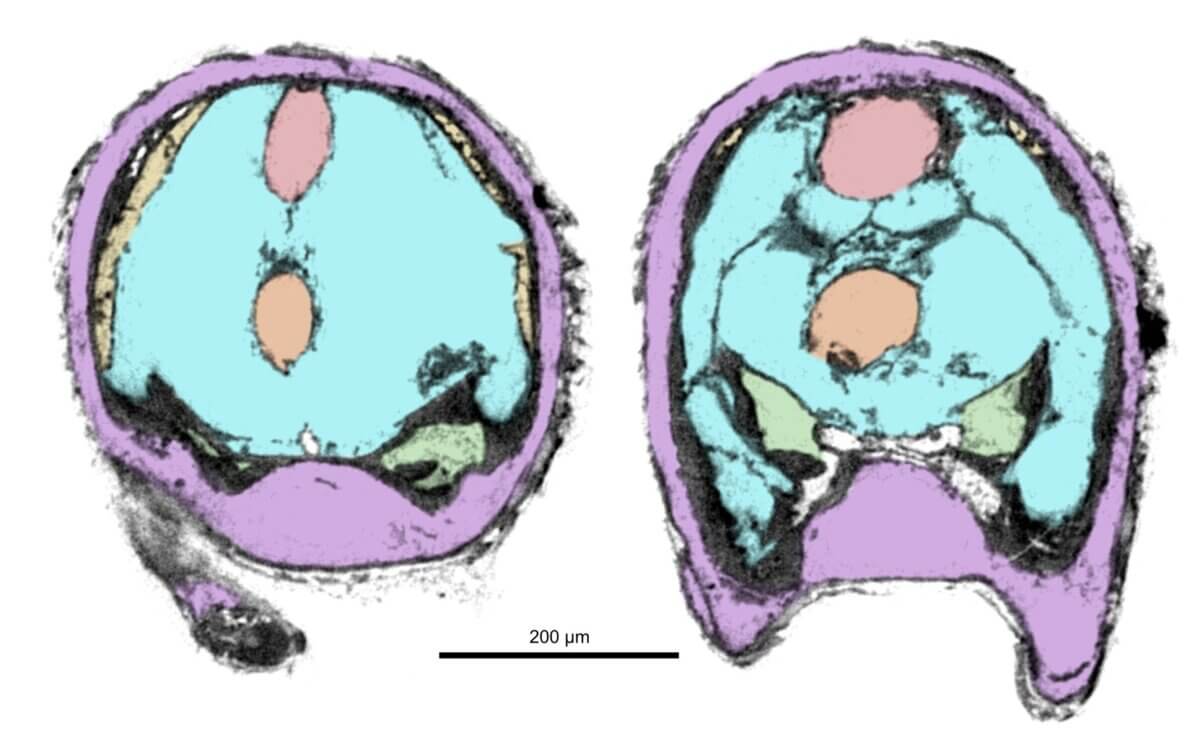
What makes it truly extraordinary is its exceptional three-dimensional preservation, allowing researchers to peer inside its body and examine its internal organs in exquisite detail. This level of preservation is extremely rare for fossils of this age, offering scientists a unique window into the distant past.
“When I used to daydream about the one fossil I’d most like to discover, I’d always be thinking of an arthropod larva, because developmental data are just so central to understanding their evolution,” says lead researcher Dr. Martin Smith of Durham University in a statement. “But larvae are so tiny and fragile, the chances of finding one fossilized are practically zero – or so I thought!”
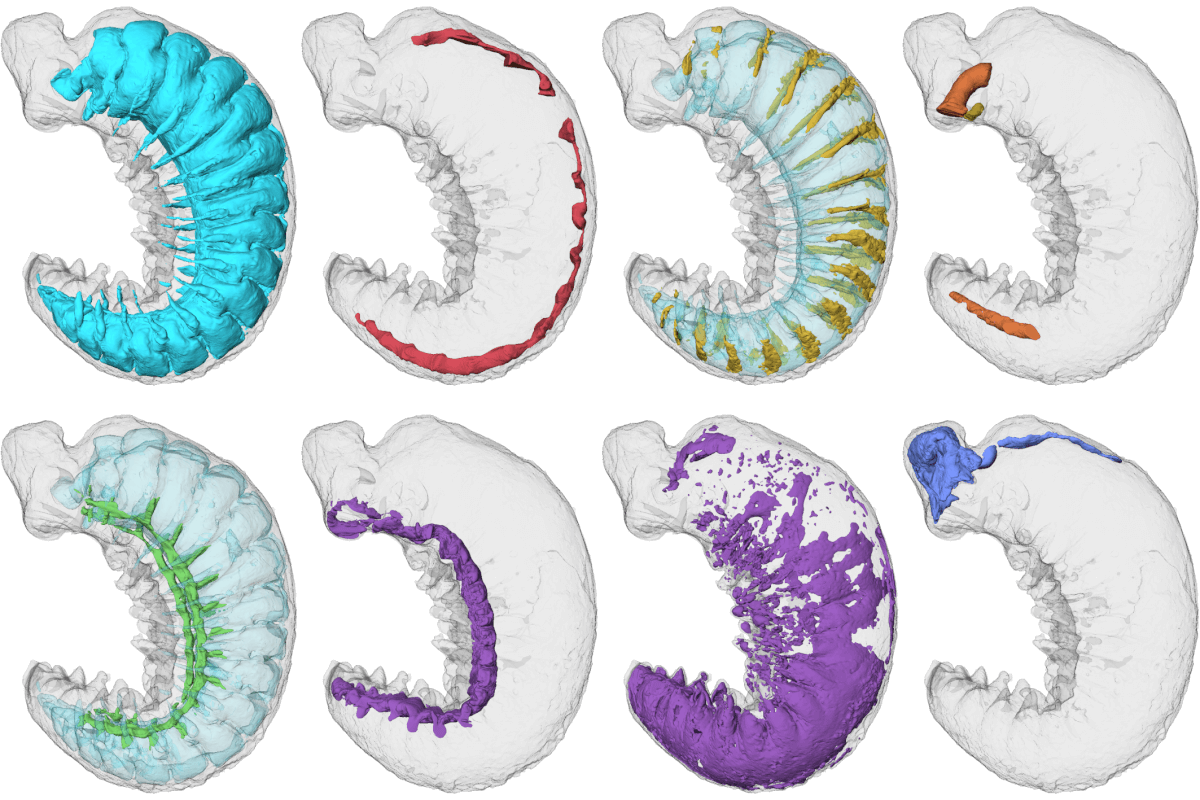
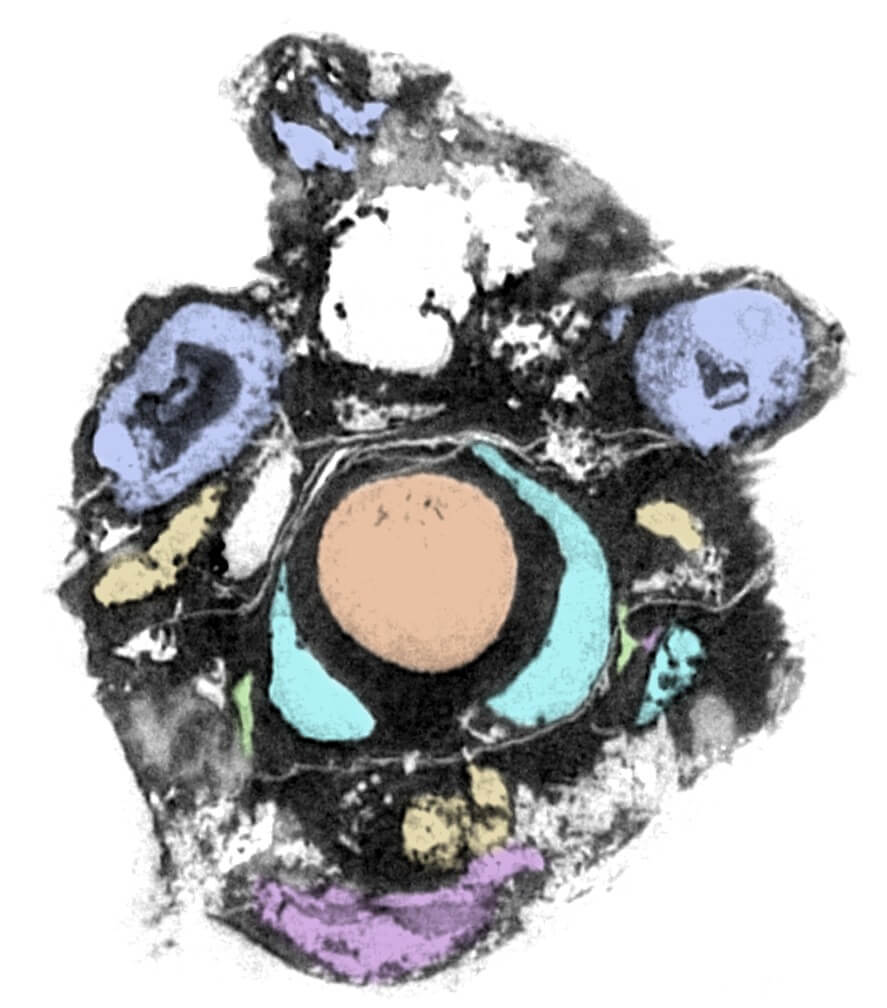
Using advanced scanning techniques at the UK’s Diamond Light Source synchrotron facility, the team generated 3D images that reveal miniature brain regions, digestive glands, a primitive circulatory system, and even traces of nerves supplying the larva’s simple legs and eyes. This unprecedented level of detail allows scientists to look under the skin of one of the first arthropod ancestors, revealing a level of anatomical complexity that has surprised researchers.
Published in Nature, the study represents a crucial missing link in our understanding of how simple, worm-like creatures evolved into the diverse array of jointed-limbed animals that dominate terrestrial and aquatic ecosystems today. It possesses a fascinating mix of primitive and advanced features, providing valuable clues about the step-by-step evolution of the arthropod body plan.
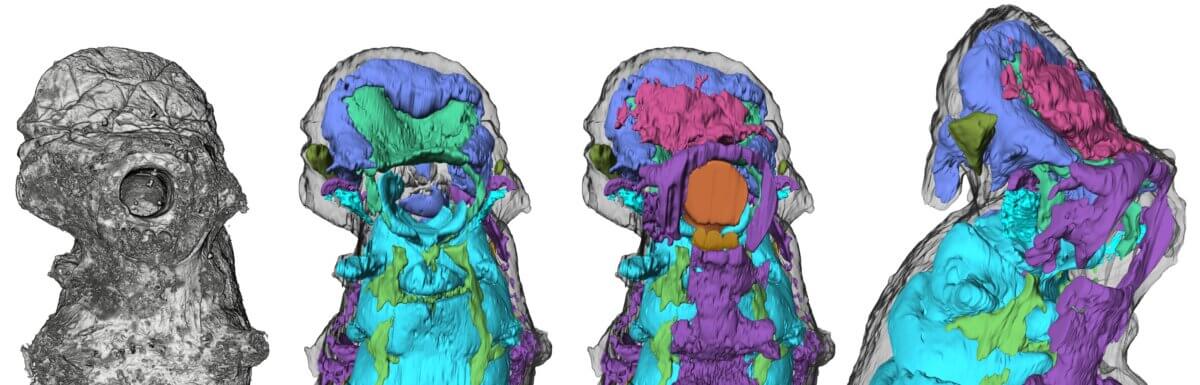
One of the most striking features of Youti yuanshi is its sophisticated head, complete with a complex brain, eyes, and specialized appendages. The fossil reveals an ancestral “protocerebrum” brain region that would later form the foundation of the segmented and specialized arthropod head with its various appendages like antennae, mouthparts, and eyes. This finding challenges previous assumptions about when and how these advanced structures evolved in early arthropods.
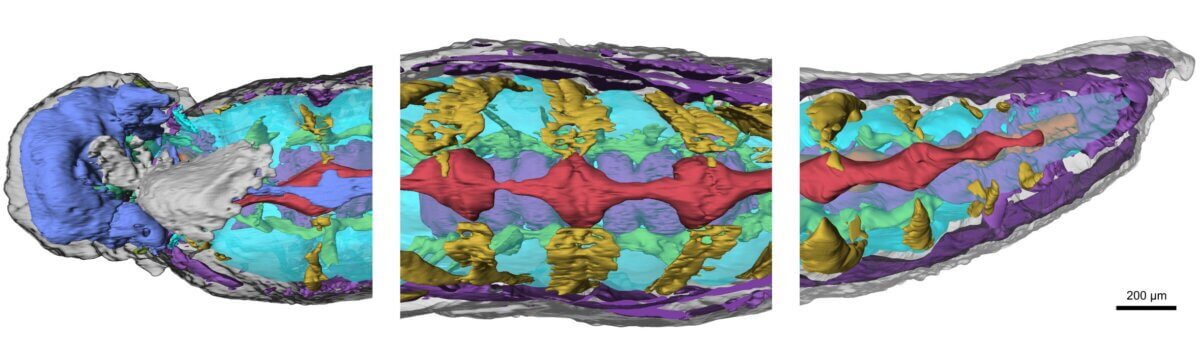
Another surprising discovery is the presence of a complex circulatory system, including a heart-like structure and blood vessels. This suggests that even at this early stage of arthropod evolution, these animals had already developed efficient ways to circulate nutrients and oxygen throughout their bodies.
The fossil also reveals a series of paired digestive glands along its body, a feature seen in modern arthropods. These glands likely helped Youti yuanshi break down food more efficiently, possibly indicating a predatory lifestyle.
“It’s always interesting to see what’s inside a sample using 3D imaging, but in this incredible tiny larva, natural fossilization has achieved almost perfect preservation,” says Dr. Katherine Dobson of the University of Strathclyde, a co-author of the study.
The discovery of Youti yuanshi is not just a fascinating glimpse into the past; it has adds to our understanding of evolution as a whole. It demonstrates how complex body plans and organ systems can arise through a series of incremental changes over millions of years. This fossil provides tangible evidence of the evolutionary process in action, showing how nature can build upon existing structures to create new forms and functions.
Moreover, the insights gained from Youti yuanshi may have practical applications in fields such as robotics and bioengineering. By understanding how nature solved problems of locomotion, circulation, and sensory perception millions of years ago, we may gain inspiration for developing new technologies or improving existing ones.
As we continue to unearth and analyze fossils like Youti yuanshi, we refine our understanding of life’s history on Earth. Each discovery adds a new piece to the grand puzzle of evolution, helping us to appreciate the incredible diversity of life around us and our own place in the tree of life. This tiny larva, frozen in time for over half a billion years, serves as a humbling reminder of the vast expanse of evolutionary history that has shaped our world.
Paper Summary
Methodology
The researchers used synchrotron X-ray tomography at the Diamond Light Source facility in the UK to study the fossil. This advanced technique is similar to a medical CT scan but with much higher resolution. The fossil was placed in a machine that rotated it while taking thousands of X-ray images using high-intensity synchrotron radiation. These images were then combined using powerful computers to create a detailed 3D model of the fossil, allowing the scientists to virtually “dissect” it and examine its internal structures without damaging the specimen. They also used scanning electron microscopy to study the fossil’s surface in great detail.
Results
The study revealed that Youti yuanshi had a complex brain with multiple distinct regions, eyes, and specialized head appendages. It possessed a sophisticated circulatory system, including a heart-like structure and blood vessels. The creature also had a series of paired digestive glands along its body and soft, leg-like structures. These features place Youti yuanshi at a crucial position in arthropod evolution, showing a mix of primitive and advanced characteristics that help explain how the complex arthropod body plan evolved.
Limitations
While the preservation of Youti yuanshi is exceptional, it is still incomplete. Some parts of the fossil are not preserved or are difficult to interpret. Additionally, as only one specimen has been found, it’s challenging to know how representative it is of its species or group. The fossil represents a larval stage, so some features may not be fully developed or may differ from the adult form. Finally, interpreting structures in fossils this old always involves some degree of uncertainty and inference.
Discussion and Takeaways
The discovery of Youti yuanshi provides crucial insights into early arthropod evolution. It shows that complex features like a sophisticated brain and circulatory system evolved earlier than previously thought. The fossil helps to bridge the gap between simple worm-like ancestors and more complex arthropods, demonstrating how the arthropod body plan may have evolved. This finding supports the idea that evolution often proceeds through a series of incremental changes, building upon existing structures to create new forms and functions. The study also highlights the importance of exceptional preservation in understanding ancient life and the value of advanced imaging techniques in paleontology.
Funding and Disclosures
The research was funded by several organizations, including Dong Energy, the Leverhulme Trust, and the Natural Environment Research Council (NERC). The fossil is housed at the Key Laboratory for Palaeobiology, Yunnan University, China. The authors declared no competing interests.


