
(Credit: Photo by an iva on Shutterstock)
Forget Step Counts: Smartwatches May Be Quietly Monitoring Cognitive Health
In A Nutshell
- A 10-month study found that consumer smartwatches could predict 21 measures of brain health (including memory, attention, anxiety, and stress) without any active effort from the wearer.
- Air quality data ranked among the strongest predictors of cognitive performance, suggesting that where you live may shape how well your brain functions day to day.
- Emotional states like anxiety and stress were more accurately predicted than objective cognitive test scores, pointing to wearables as especially promising tools for passive mental health monitoring.
- The models are not diagnostic tools and were tested only in healthy adults, but researchers say the findings support the feasibility of scalable, low-burden brain health monitoring using devices people already own.
Fitness trackers have long counted steps and logged sleep. Now, a study published in npj Digital Medicine pushes that premise into new territory. The same consumer devices millions of people already own may be capable of passively tracking how well the brain is working, and flagging when patterns begin to change.
Researchers at the University of Geneva followed 82 cognitively healthy adults for 10 months, pulling a continuous stream of data from a standard smartwatch and smartphone app. Using AI-powered models, they predicted 21 separate measures of cognitive performance and emotional well-being, including memory, attention, anxiety, and stress, with error rates ranging from about 3% to 25% depending on the measure. No clinic visits and no in-person testing by doctors. Just passive data from a device already on the wrist.
For a world confronting a rising tide of dementia, that matters. Alzheimer’s disease affects tens of millions globally and has no cure. A monitoring system that runs quietly in the background, at zero additional effort from the person wearing it, moves medicine closer to catching decline before it becomes irreversible.
How Wearable Brain Health Monitoring Works
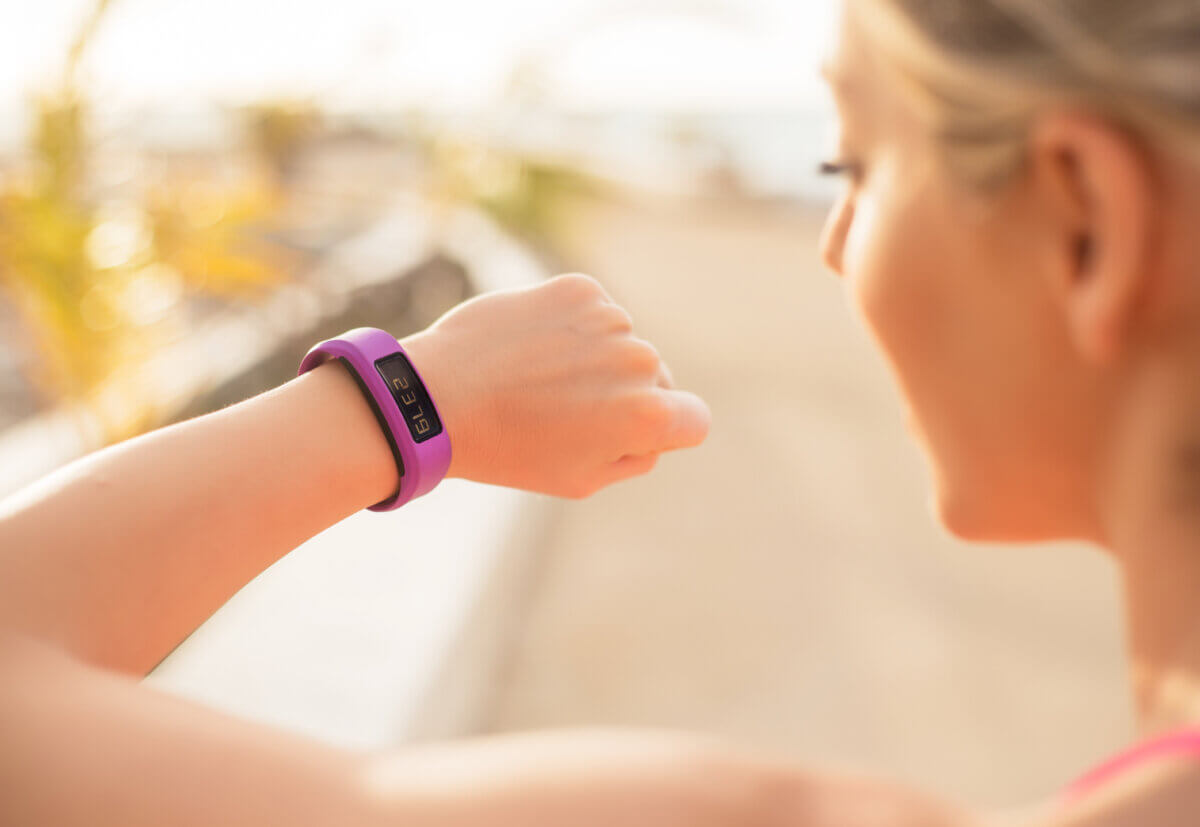
Participants were adults 45 and older, all cognitively healthy at enrollment, living in Switzerland and surrounding French regions. Each wore a Withings Steel HR, a commercially available hybrid smartwatch, alongside a custom smartphone app that collected environmental data and delivered periodic assessments.
Every three months, participants completed a battery of memory, attention, and processing tests, along with questionnaires measuring anxiety, depression, and stress. That active data was then paired against the continuous passive feed from the watch. On average, the device captured more than 96% of each participant’s day, giving researchers an unusually complete picture of daily life.
The passive inputs covered sleep quality, heart rate patterns, physical activity, air quality data, and weather conditions. AI models were trained to find consistent connections between those background signals and each of the 21 health outcomes.
What the Smartwatch Data Actually Predicted
All 21 outcomes were predictable, with error rates ranging from 3.22% to 25.33%. Self-reported measures, including anxiety, depression, and stress, were the most accurately predicted, typically falling under 10% error. For three outcomes specifically, attention, cognitive flexibility, and verbal fluency, the AI models performed significantly better than a simple baseline comparison.
Emotional states proved easier to capture than objective cognitive test scores. Mood and well-being tend to shift gradually and steadily, making them more responsive to the passive signals wearables collect well. Cognitive performance, by contrast, can swing sharply from session to session based on a poor night’s sleep or a distracted moment during a timed task. For tracking mental health over time, wearables may prove especially valuable.
Air Pollution Ranked Among the Top Predictors of Cognitive Performance
Among the more unexpected findings, air quality data, specifically carbon monoxide and nitrogen dioxide levels, repeatedly ranked among the top predictors of cognitive performance. People living in areas with chronically poor air quality tended to show lower baseline cognitive scores, consistent with existing research linking long-term pollution exposure to inflammation in the brain and reduced blood flow.
Heart rate patterns and sleep data, by contrast, were better at capturing changes within the same person over time. Put plainly: environmental data may help explain why one person thinks more sharply than another on average. Sleep quality and heart rate patterns may explain why the same person is sharper on one day than another.
That split has real practical weight. Environmental signals could help identify who is worth monitoring more closely. Physiological rhythms could then track how that specific person changes week to week.
Wearable Brain Health Monitoring: Promise and Real Limits
Researchers were careful to frame the results in proportion to what the data can actually support. All 82 participants were cognitively healthy at enrollment, so these models were not built or tested as diagnostic tools. What the study shows is that natural, day-to-day fluctuations in brain function, the kind that occur in healthy people long before any disease diagnosis, can be tracked passively with real accuracy.
As the authors write, the study demonstrates “the feasibility of low-burden, scalable approaches to continuous brain-health monitoring.” Primary care and telemedicine settings stand out as environments where continuous background monitoring could catch signals that would otherwise go unnoticed until symptoms become harder to ignore.
Real limits remain. Nearly 93% of participants were white, the group averaged close to 18 years of education, and all were residents of Western Europe, a profile researchers sometimes describe as WEIRD: Western, Educated, Industrialized, Rich, and Democratic. About a quarter of participants completed cognitive assessments in a non-native language, which may have affected some scores. Larger and more diverse studies are needed before these models can be considered broadly applicable.
What this research establishes, even within those limits, is a credible foundation. Millions of people already wear devices capable of collecting this type of data. Knowing that it may be quietly assembling a picture of their brain health, day by day, without asking anything extra of them, is exactly the kind of low-friction early warning system that dementia research has long needed.
Paper Notes
Study Limitations
The participant pool of 82 adults was predominantly white (nearly 93%), Western, highly educated (averaging nearly 18 years of schooling), and likely more tech-literate than the general population, limiting how broadly the findings can be applied. The authors flag their sample as fitting the WEIRD profile (Western, Educated, Industrialized, Rich, and Democratic). About 25% of participants completed cognitive assessments in a non-native language, which may have introduced inaccuracies into some performance scores. Self-reported questionnaire responses could be influenced by social desirability bias. Researchers relied on daily data summaries rather than finer hourly or minute-level data, which may have obscured shorter-duration patterns. Larger studies, particularly those including populations at elevated risk for cognitive decline, mild cognitive impairment, dementia, or depression, are needed to evaluate the generalizability and clinical relevance of the proposed models.
Funding and Disclosures
Funding was provided by AGE-INT Swissuniversities, the Centre Universitaire d’Informatique of the University of Geneva, the Société Académique de Genève, the EU SHIELD program (grant 101156751), and the Swiss National Centre of Competence in Research LIVES, financed by the Swiss National Science Foundation (grant 51NF40-185901). Eric J. Daza is a full-time employee of Boehringer Ingelheim Pharmaceuticals and founder of Stats-of-1. Katarzyna Wac serves as an Associate Editor of npj Digital Medicine but was not involved in any stage of peer review or editorial decision-making for this manuscript. All other authors declared no competing interests. Authors disclosed that ChatGPT was used to assist with drafting Python scripts for data analysis and to refine the writing of specific manuscript sections; all content was reviewed and edited by the authors, who take full responsibility for the final publication.
Publication Details
Authors: Igor Matias, Maximilian Haas, Eric J. Daza, Matthias Kliegel, and Katarzyna Wac. Affiliations: Quality of Life Technologies Lab and Cognitive Aging Lab, University of Geneva, Geneva, Switzerland; Faculty of Psychology, UniDistance Suisse; Stats-of-1, Menlo Park, California; Boehringer Ingelheim Pharmaceuticals Inc., Ridgefield, California. Journal: npj Digital Medicine (2026), Volume 9, Article 197. Title: “Digital biomarkers for brain health: passive and continuous assessment from wearable sensors.” DOI: https://doi.org/10.1038/s41746-026-02340-y. Published online: January 14, 2026.


