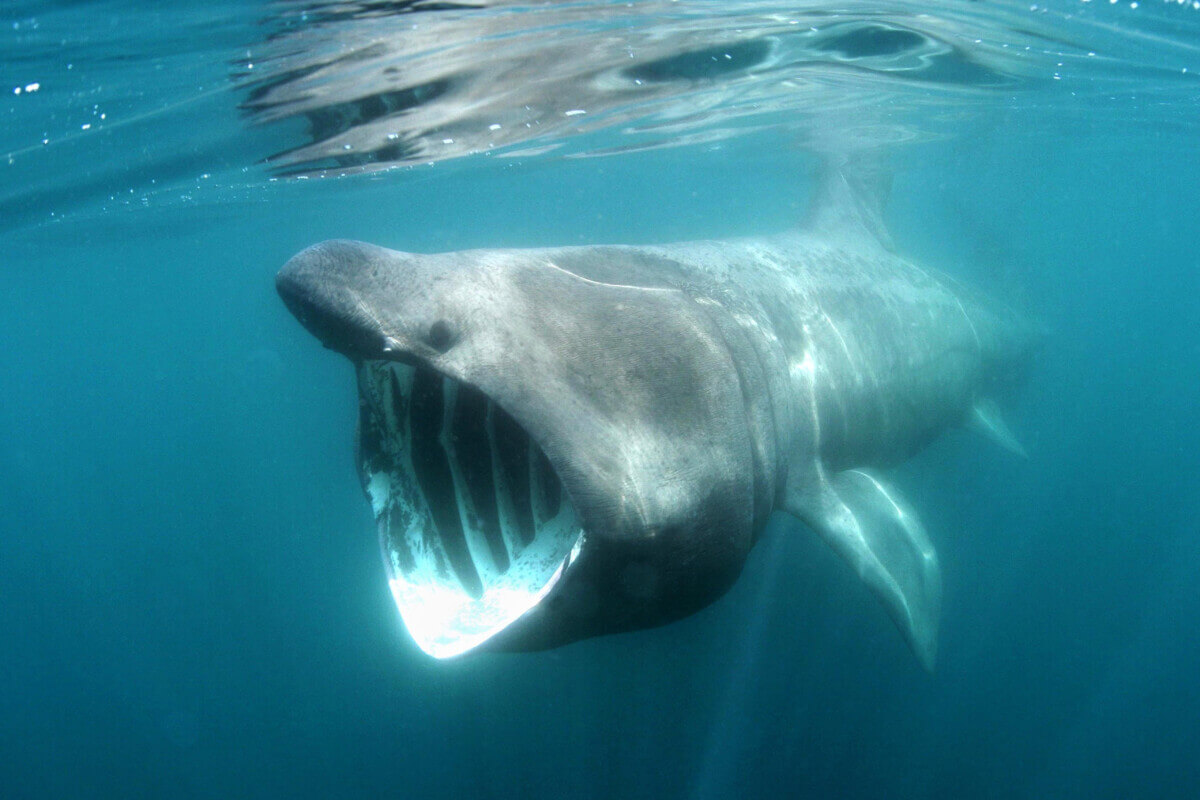
Basking sharks off Padstow, North Cornwall. (Photo credit: Simon Burt / stock.adobe.com)
Researchers map alarming behavior of massive marine mammal after taking direct hit to its back
CORVALLIS, Ore. — For the first time in marine research history, scientists have captured real-time footage of a large marine animal being struck by a boat, providing a chilling glimpse into an increasingly common yet rarely witnessed phenomenon. The victim: a majestic basking shark, the world’s second-largest fish species, already teetering on the brink of extinction.
The video, captured by researchers from Oregon State University, does more than document a fleeting moment of impact. It lays bare the unseen consequences of our expanding maritime footprint, offering irrefutable evidence of the immediate and potentially long-lasting effects of such encounters on marine life.
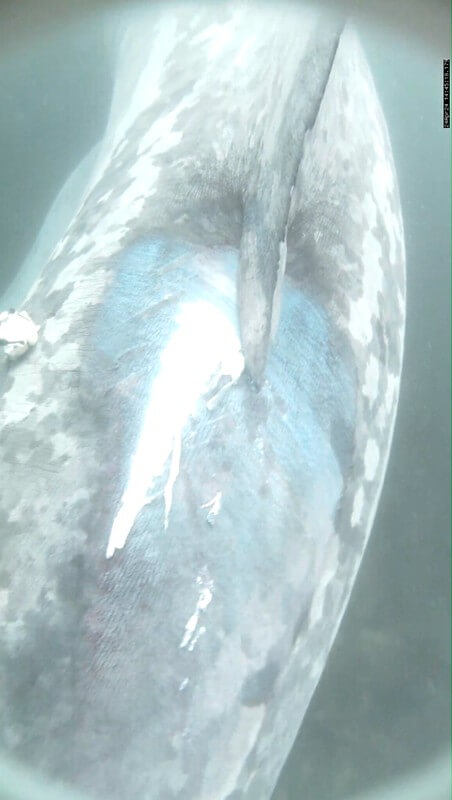
As the boat’s keel slams into the shark’s back, the camera records more than just the physical impact. It captures a stark behavioral shift – a dramatic deviation from the shark’s normal patterns that persists long after the initial strike. This isn’t just a collision of vessel and animal; it’s a collision of ecosystems, an eye-opening intersection of human progress and natural preservation.
“This is the first ever direct observation of a ship strike on any marine megafauna that we’re aware of,” says Dr. Taylor Chapple, a shark researcher at Oregon State University’s Hatfield Marine Science Center and lead author of the study. The gravity of this statement can’t be overstated – it’s akin to witnessing a car accident involving an endangered species, but in the vast blue highways of our oceans.
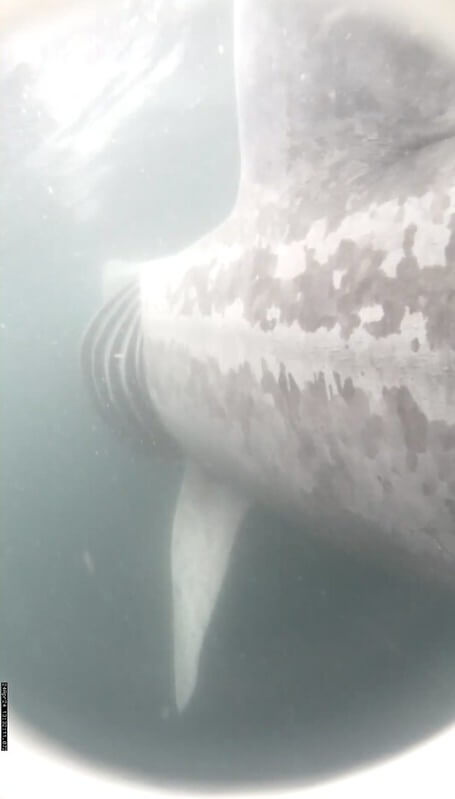
The basking shark, a gentle giant that can grow up to 40 feet long, was peacefully filter-feeding at the surface when disaster struck. What happened next provides crucial insights into how these animals respond to such traumatic events.
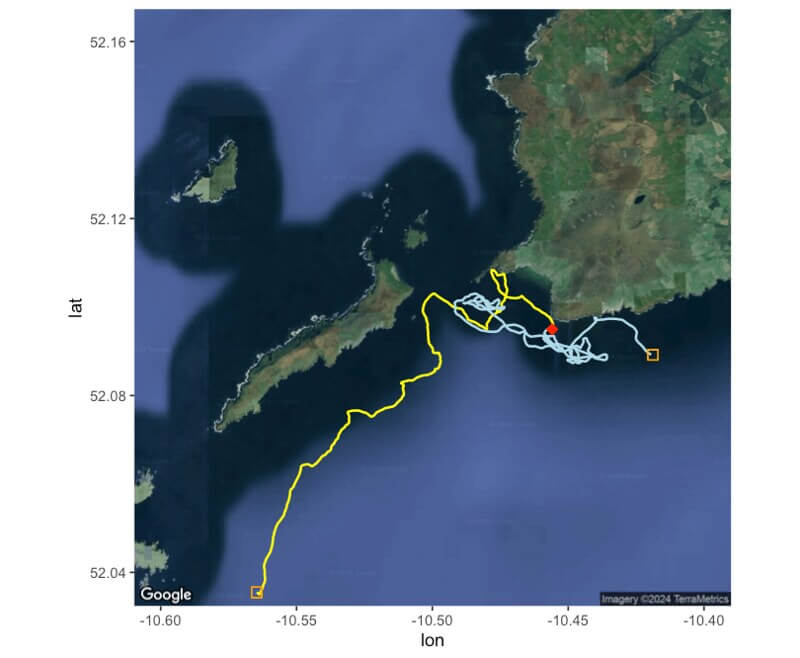
“The shark was struck while feeding on the surface of the water and it immediately swam to the seafloor into deeper, offshore waters, a stark contrast to its behavior prior to the strike,” Chapple explains. This dramatic change in behavior isn’t just a fleeting reaction – it could have long-lasting implications for the shark’s survival.
The timing of this discovery is particularly poignant. Ireland, one of the few places in the world where basking sharks still gather in large numbers, had just announced its first National Marine Park. This 70,000-acre sanctuary in County Kerry was meant to be a safe haven for these endangered creatures. Yet, within its very boundaries, this collision occurred, highlighting the challenges of protecting marine life in an increasingly busy ocean.
What makes this study, published in Frontiers in Marine Science, truly groundbreaking is the technology involved. The research team had fitted the shark with what can only be described as a “FitBit for sharks” – a sophisticated package of sensors and a camera that recorded the animal’s every move. This allowed scientists to not only witness the collision but also to quantify its effects in unprecedented detail.
The data paints a sobering picture. For hours after the strike, the shark’s behavior was markedly different. It ceased feeding entirely and drastically reduced its overall activity. “Our findings demonstrate the risk and impact of vessel strikes and the need for measures to reduce this risk,” Chapple emphasizes.
Dr. Nicholas Payne, an assistant professor at Trinity College Dublin’s School of Natural Sciences and co-author of the study, puts the incident into stark perspective: “The fact that a shark we fitted our ‘Fitbit’ to was struck in this area within a few hours underlines just how vulnerable these animals are to boats and highlights the need for greater education in how to mitigate against such strikes.”
This single event opens up a Pandora’s box of questions about the frequency and impact of such collisions. How many of these strikes occur unwitnessed? What are the long-term effects on individual animals and populations? And crucially, how can we better protect these endangered species in their critical habitats?
“This research raises additional questions about whether and how often the sharks are actually occupying such habitats when they are not clearly visible at the surface,” says co-author Alexandra McInturf, a research associate in Chapple’s Big Fish Lab at OSU.
The basking shark’s story is a microcosm of a larger issue facing our oceans. This extraordinary footage, capturing a moment of impact between human technology and ancient animal, should serve as a catalyst for change. It’s a call to action for better management practices, increased awareness, and more research to ensure that the resurgence of species like the basking shark isn’t just a fleeting moment before another decline.
In the vast blue wilderness of our oceans, every interaction matters. And now, for the first time, we have the footage to prove it.
Paper Summary
Methodology
The researchers used a sophisticated package of sensors and a camera attached to a basking shark. This package included accelerometers, gyroscopes, and magnetometers to measure the shark’s movements in three dimensions, as well as depth and temperature sensors. The camera provided visual confirmation of the shark’s behavior and surroundings. Data from these instruments were collected at high frequencies (up to 200 times per second) and later synchronized and analyzed using custom software. The researchers compared the shark’s behavior before and after the collision using various metrics, including overall dynamic body acceleration (a measure of energy expenditure), tailbeat frequency and amplitude, and vertical velocity.
Results
The study found significant changes in the shark’s behavior following the boat strike. Immediately after the collision, the shark showed a brief burst of high-energy movement as it dove to the seafloor. However, for the remaining 7.5 hours of the study, the shark’s activity levels were markedly reduced compared to pre-strike levels. It ceased feeding, remained in deeper water, and showed reduced movement across all measured parameters. The shark’s vertical velocity, overall dynamic body acceleration, tailbeat frequency, and tailbeat amplitude all decreased significantly after the strike.
Limitations
The study presents data from a single event involving one individual, which limits the ability to generalize these findings to all basking sharks or other marine species. The duration of the study (about 7.5 hours post-strike) was not long enough to determine if or when the shark might return to normal behavior. Additionally, while the collision appeared non-lethal in the short term, the study could not assess any potential long-term consequences of the strike or internal injuries that may not have been visible.
Discussion and Takeaways
This study provides the first direct evidence of how a boat strike can immediately alter the behavior of a large marine animal. It suggests that the impact of such collisions may be more widespread and significant than previously thought, as even strikes that don’t cause visible injuries can lead to substantial behavioral changes. The research highlights the need for more comprehensive protection measures in areas where human activities overlap with important habitats for marine megafauna. It also demonstrates the value of advanced biologging technologies in capturing rare events and quantifying their impacts on wildlife.
Funding and Disclosures
The study was funded by Future Legend Films, Oregon State University, National Geographic, and the Human Frontiers Science Project. The authors declared no conflicts of interest.


