(Credit: © Jean Paul Chassenet | Dreamstime.com)
Why Your Waistline May Reveal More Cancer Risk Than the Scale Does
In A Nutshell
- A study of over 450,000 people found excess body fat may be linked to more than 11% of all cancers, nearly double some earlier estimates.
- The jump comes from measuring body fat with waist size and quartile groupings instead of relying only on standard BMI categories.
- Women and people under 60 showed stronger links between excess weight and cancer risk than men and older adults.
- The findings are based on UK Biobank data and reflect an estimate, not a proven cause-and-effect relationship.
For decades, doctors have warned that carrying extra weight raises cancer risk. A new study suggests the real danger may have been undercounted, and the reason comes down to how “overweight” has been measured all along.
A team of researchers analyzed data from more than 450,000 people in the UK Biobank and found that excess body fat could be linked to more than 10% of all cancers, under the study’s most comprehensive method, a figure that nearly doubles some previous estimates. The findings, published in the journal Cancer Communications, suggest that if the estimate holds up, the cancer burden associated with excess weight has been substantially underestimated.
Getting heavier isn’t the whole story here, the researchers argue. It may be that researchers have relied too heavily on an incomplete measuring stick. For years, most studies have used body mass index, the familiar height-to-weight ratio known as BMI, to define who counts as overweight. But BMI misses a lot, especially where fat is stored in the body, which turns out to matter for cancer risk.
BMI Misses Where Fat Actually Sits on the Body
BMI has long been medicine’s go-to tool for categorizing weight, largely because it’s simple and cheap, but it’s an imperfect stand-in for actual body fat. A muscular athlete and a sedentary person of the same height and weight will have the same BMI, even though their health profiles look nothing alike.
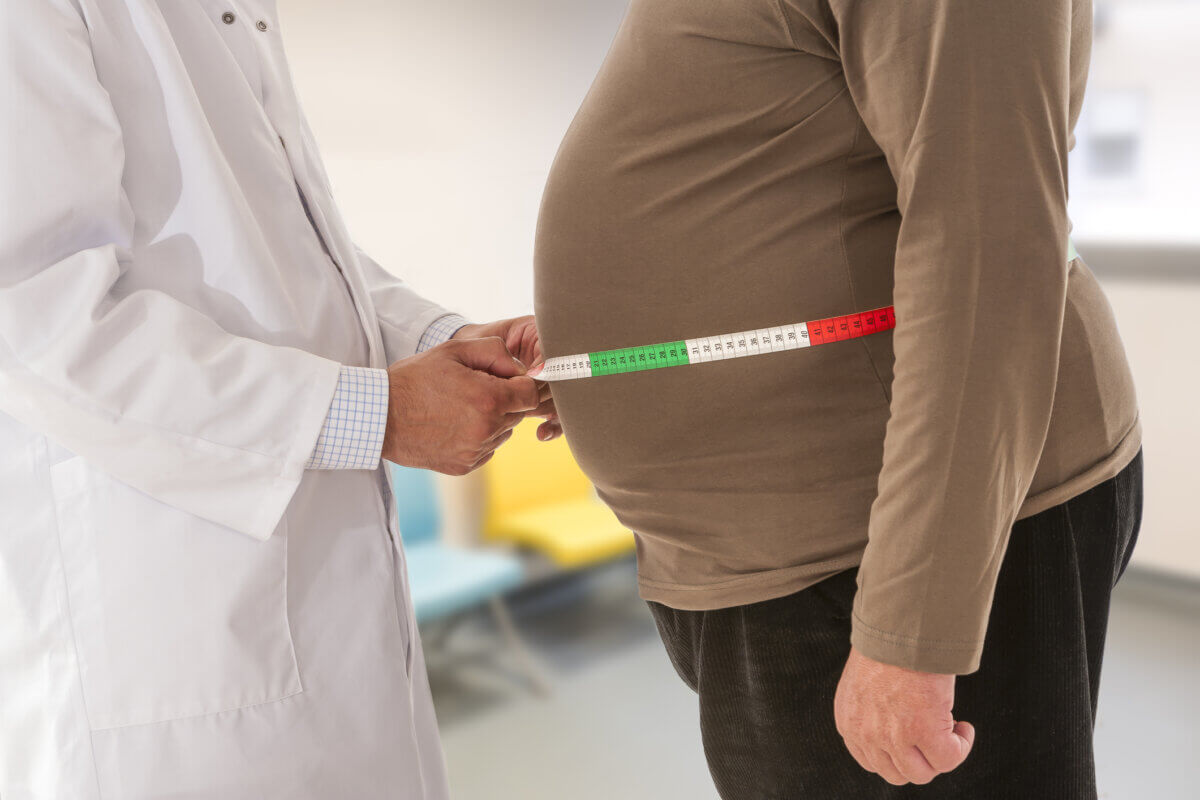
More importantly for this study, BMI doesn’t capture where fat sits on the body. Fat that accumulates around the waist and abdomen, sometimes called belly fat, behaves differently than fat elsewhere. It surrounds internal organs and is more closely associated with metabolic problems that have been linked to poorer health. Waist circumference and the ratio of waist size to hip size, by contrast, reflect this kind of central fat distribution more closely.
Nearly Half a Million People Tracked for a Decade
Researchers drew on the UK Biobank, a large long-term health study in the United Kingdom. After filtering out participants with prior cancer diagnoses or incomplete data, the final study group included 458,543 people. The median age at the start was 57, and 53.3% were women. Participants were tracked for a median of nearly 12 years, during which 50,136 were diagnosed with cancer.
Researchers put weight on the scale three different ways: BMI, waist circumference, and waist-to-hip ratio. They also tried two ways of grouping people, standard weight categories and a quartile-based approach that split everyone into four groups from leanest to heaviest. The quartile method captures differences across the full range of measurements rather than counting only people above a standard cutoff, so it can pick up gradual changes in risk that fixed categories miss.
A statistical problem had also been quietly skewing previous estimates, and the team tackled it head-on. When someone has an undetected cancer, the disease itself can cause weight loss before diagnosis, making that person appear thinner in the data and excess weight look less dangerous than it actually is. To correct for this, the researchers progressively excluded people diagnosed with cancer in the early years of follow-up, up to seven years out, removing cases where pre-diagnosis weight loss may have muddied the results.
Combined Adjustments Nearly Doubled the Cancer Estimate
When all three adjustments were made together, the estimated share of cancers attributable to excess weight climbed to 11.5%, more than double the 5.5% produced by the standard BMI-based estimate with no exclusions. In the United Kingdom specifically, prior research had estimated that roughly 6.3% of cancers were attributable to excess weight. This study’s methods pushed that figure well past 10%.
Waist-based measurements generally produced stronger associations than BMI, especially in the quartile comparisons. People in the heaviest quarter for waist circumference had a 27% higher cancer risk than those in the leanest quarter, during the seven-to-fourteen-year follow-up window. Those in the highest waist-to-hip ratio group showed a 25% higher risk over the same period.
Women showed higher cancer risk tied to excess weight than men, and people under 60 showed stronger associations than those 60 and older. Risk also increased steadily from the leanest to the heaviest participants across most measures, suggesting it rises gradually for many people rather than switching on sharply above a single threshold.
Obesity’s Cancer Toll Is Set to Grow
Global obesity rates continue to rise, and an aging population will only amplify the cancer burden ahead. The researchers emphasize the need for greater efforts to address the ongoing obesity epidemic in most countries around the globe, to help offset the rise in cancer burden expected from demographic changes in the decades to come.
Close to one in ten cancers is estimated to be linked to excess weight, and estimates could run higher in the wider UK population, where excess body fat is more common than it was in the study group. The findings suggest excess weight could be an important factor in efforts to reduce cancer rates, though the authors caution that observational research cannot rule out other unmeasured factors.
Disclaimer: This article summarizes findings from a peer-reviewed study and is intended for general informational purposes. It is not medical advice. Anyone with questions about personal cancer risk or weight management should speak with a qualified healthcare provider.
Paper Notes
Limitations
Several important limitations apply here, according to the researchers. The UK Biobank participants are known to be healthier and less economically disadvantaged than the broader UK population, which could mean the study underestimates cancer risk in the general public. The paper notes that obesity rates are actually higher in the general UK population than in this study group. Body fat measurements were only taken at the start of the study, so any changes in weight or fat distribution over time weren’t captured, which could have weakened some of the observed associations. The statistical estimates at the heart of this study, population attributable fractions, or PAFs, are calculated by assuming a causal relationship between adiposity and cancer. This is a standard methodological convention, but because the study is observational, it cannot confirm that excess weight truly causes these cancers, and other unmeasured factors may have influenced the results. The seven-year exclusion period reduces the chances that undetected pre-diagnosis weight loss skewed the results, but it does not guarantee that this bias was fully removed. Measurement error and model assumptions also apply. Additionally, while the analysis looked at overall cancer burden, it did not break down which specific cancer types were most responsible for the elevated figures, leaving that question for future research. The study’s findings reflect UK Biobank data and should not be read as a global estimate.
Funding and Disclosures
Funding for the UK Biobank, whose data formed the foundation of this research, came from the Wellcome Trust medical charity, the Medical Research Council, the Department of Health, the Scottish Government, and the Northwest Regional Development Agency. Additional funding for the UK Biobank has come from the Welsh Government, the British Heart Foundation, Cancer Research UK, Diabetes UK, and the National Institute for Health Research. The UK Biobank is also supported by the National Health Service. The authors declared no competing interests.
Publication Details
This study was authored by Luna Kiran Adhikari, Fatemeh Safizadeh, Marko Mandic, and Hermann Brenner, all affiliated with the German Cancer Research Centre (DKFZ) in Heidelberg, Germany. Adhikari also holds affiliations with LMU Munich and the Pettenkofer School of Public Health in Munich. The paper was published in Cancer Communications in 2026, under the title “Excess Weight May Account for More Than 10% of All Cancers: The Underestimated Impact of the Obesity Epidemic.” DOI: 10.34133/cancomm.0040. The paper was submitted January 19, 2026, revised June 10, 2026, accepted June 16, 2026, and published July 2, 2026.


