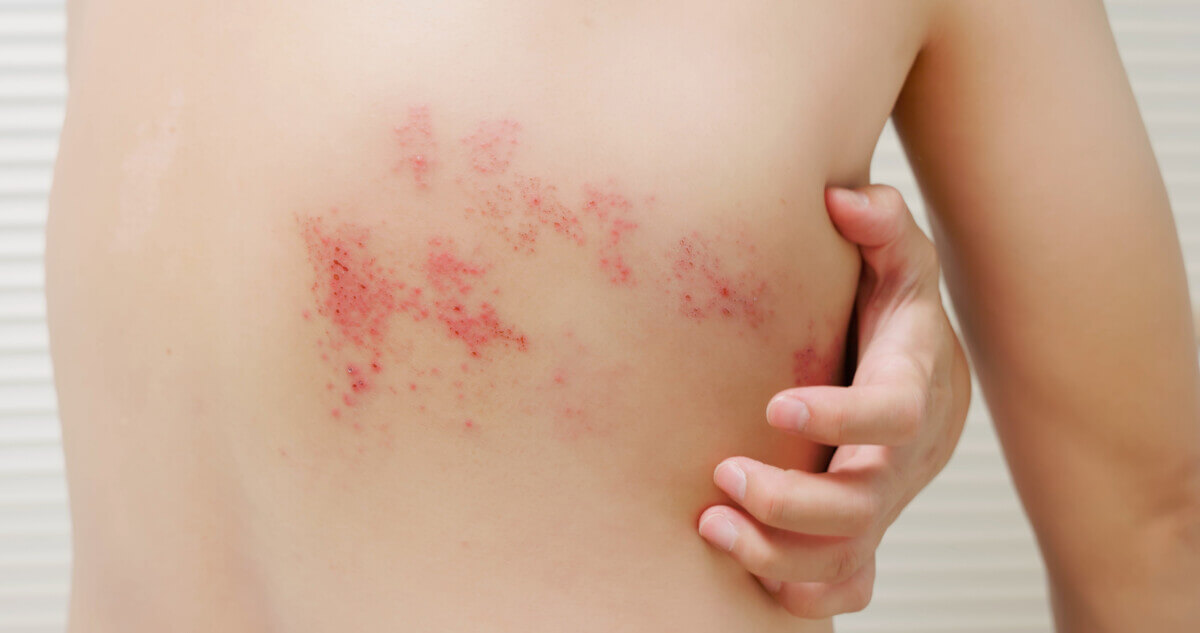
(© ryanking999 - stock.adobe.com)
Younger Adults With Eczema Face Surprisingly High Shingles Risk
In A Nutshell
- Adults with eczema had a 28% higher risk of developing shingles than adults without the condition, according to a study of more than 13.4 million people in England.
- The link held up even after researchers accounted for steroids and other immune-suppressing drugs already known to raise shingles risk on their own.
- Risk climbed with eczema severity, and the connection was actually stronger in adults under 50 than in older age groups.
- Researchers say the findings could help shape shingles vaccination guidance specifically for people with eczema.
For millions of adults living with eczema, the daily struggle involves cracked skin, relentless itching, and a medicine cabinet full of creams and prescriptions. Now, a large study points to another health risk worth watching: shingles. Adults with eczema were 28% more likely to develop the condition, and the link barely budged even after accounting for steroid and immune-suppressing drugs known to raise shingles risk on their own.
Researchers analyzed health records from more than 13.4 million people in England, and the study was published in the journal JDDG: Journal der Deutschen Dermatologischen Gesellschaft. The study is observational, meaning it cannot prove eczema itself causes shingles, but the connection held up after researchers ruled out a long list of other possible explanations.
Shingles is a painful viral illness caused by the same virus responsible for chickenpox. After someone recovers from chickenpox, the virus goes dormant in the nervous system and can reactivate years or decades later, producing a burning, blistering rash, typically on one side of the body. It tends to strike older adults and people with weakened immune systems, and it can cause lasting nerve pain long after the rash clears.
One of the Largest Studies on Eczema and Shingles Risk
Drawing on a database of routinely collected records from primary care doctors across England, the research team followed participants from 1997 through 2023. The study included more than 14 million observations from 13.4 million people. About 2.4 million observations were recorded while participants were in the eczema group, compared with 11.6 million in the matched comparison group. Each person with eczema was matched to up to five similar people without it, based on age, sex, and medical practice.
Over the course of the study, 329,821 shingles cases were recorded in total: 76,990 in people with eczema and 252,831 in the comparison group. Even before accounting for other health and lifestyle factors, people with eczema developed shingles at a higher rate than those without it, and that gap barely moved after researchers factored in age, smoking, alcohol use, obesity, and conditions like diabetes, depression, and heart disease.

Severity Made a Big Difference in Shingles Risk
Not all eczema is created equal, and the study found that worse eczema tracked with greater shingles risk. Researchers didn’t use a clinical severity scale, but instead judged severity by which treatments a patient had been prescribed. Mild eczema carried a 22% higher shingles risk, moderate eczema a 28% elevated risk, and the severe group, defined by patients who needed the strongest immune-suppressing drugs or phototherapy, had more than double the risk of people without eczema. That last number comes with an asterisk: since severe eczema and its treatment are so tightly bundled, the researchers say it’s genuinely hard to tell how much of the extra risk comes from the disease itself versus the drugs used to control it.
A Surprising Pattern in Younger Adults
Shingles is generally thought of as a condition of older age, and risk does increase with age across the board. This study, however, turned up an unexpected pattern: the connection between eczema and shingles was actually stronger in younger adults.
Adults aged 30 to 40 with eczema had a 51% higher risk of shingles than comparable peers without eczema. Those aged 40 to 50 showed a 42% elevation. The relative difference in risk was smaller among people over 50.
Researchers offered a few possible explanations. Adults over 70 in the UK have been eligible for shingles vaccination since 2013, which may have reduced the apparent risk in older age groups. It is also possible that eczema patients who developed shingles at a younger age were no longer in the pool when older age groups were analyzed, effectively underrepresenting the true risk at advanced ages.
Part of what makes this research timely is the growing use of a newer class of drugs called JAK inhibitors to treat moderate to severe eczema. These medications, introduced into UK clinical practice at the end of 2022, already carry a known risk of shingles as a side effect. Because most of this study’s data predates their widespread use, their direct influence on the results is likely negligible. The authors note, though, that eczema patients who go on to take JAK inhibitors may be especially vulnerable to shingles, given the elevated baseline risk the condition already appears to carry.
Shingles vaccines exist and are recommended in current guidelines, but that guidance isn’t specifically tailored to people with eczema. With an estimated 4.3% of UK adults living with the condition, these findings could change how those patients are counseled about preventive care.
Eczema is best known for what it does to the skin, but previous research has also linked the condition with greater susceptibility to infections beyond the skin. The authors suggest these findings could help shape vaccination guidelines for people with eczema, since current recommendations don’t single out the condition at all.
Disclaimer: This article is based on findings from an observational study and is intended for general informational purposes. It does not constitute medical advice. Anyone with questions about eczema, shingles risk, or vaccination should talk to a qualified healthcare provider.
Paper Notes
Limitations
Several factors may affect how the findings should be interpreted. Eczema is likely underdiagnosed or under-documented in some patients, which could have influenced the results. Patients with eczema are expected to visit their doctor more frequently than the general public, meaning shingles may have been detected more readily in the eczema group simply because those patients had more contact with the healthcare system. A sensitivity analysis that restricted the study to people with at least one documented medical encounter in the year before the study start date found a smaller effect, bringing the eczema group’s excess risk down to about 15%, suggesting the main results may somewhat overstate the true risk.
Information on deprivation levels and ethnicity was missing for a notable share of participants, so those factors were not included in the main analysis, though a sensitivity analysis incorporating them showed only modest changes to the effect estimates. Treatment prescriptions were drawn from primary care records only, so adherence to those prescriptions could not be confirmed. Hospital records and data from specialist referrals were not available, which limited the ability to more precisely characterize disease severity. Data on shingles recurrence, vaccination status, and newer targeted eczema therapies were also not available for inclusion in the analysis. Because voluntary GP practice participation and patient opt-outs are possible, full representativeness of the entire English population cannot be guaranteed.
Funding and Disclosures
The authors declared no conflict of interest.
Publication Details
Authors: Anna K. Schober, Sinéad M. Langan, Hywel C. Williams, Harriet Forbes, Julian Matthewman | Affiliations: Department of Non-Communicable Disease Epidemiology, London School of Hygiene and Tropical Medicine, United Kingdom; Centre of Evidence Based Dermatology, Lifespan and Population Health, School of Medicine, University of Nottingham, United Kingdom | Journal: JDDG: Journal der Deutschen Dermatologischen Gesellschaft | Paper Title: Atopic dermatitis is associated with herpes zoster in adults, A matched cohort study using electronic health records data in England | DOI: https://doi.org/10.1111/ddg.70329 | Received: September 8, 2025 | Revised: February 10, 2026 | Accepted: March 19, 2026


