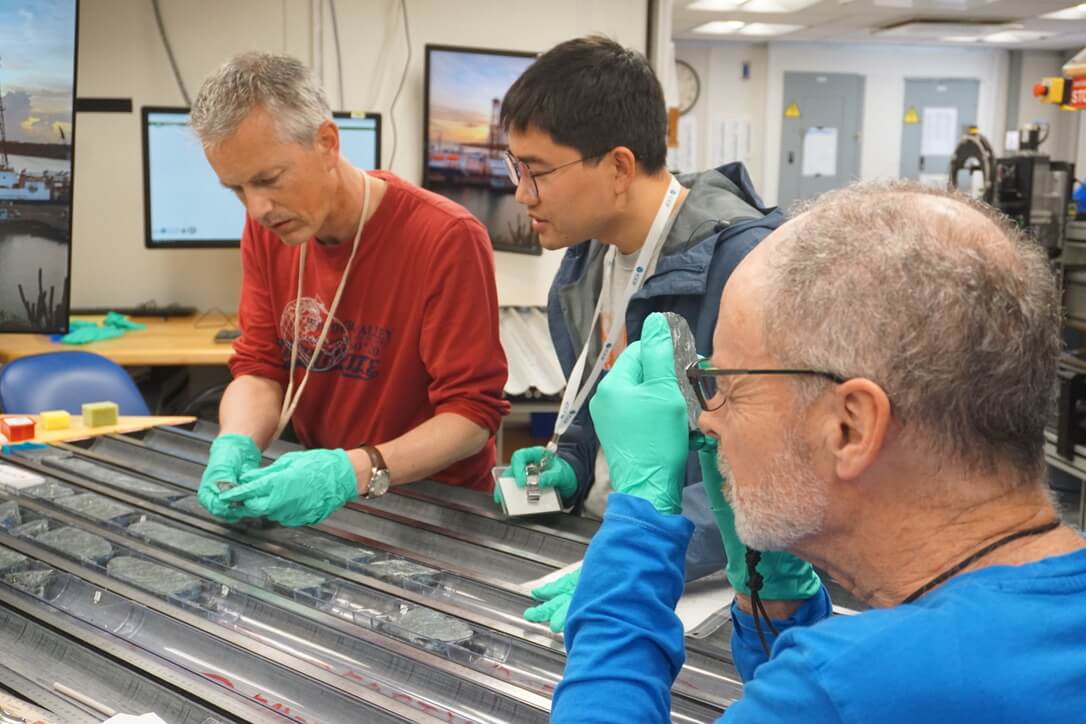
Professor Johan Lissenberg (left) and colleagues analyzing the cores, which were recovered from a “tectonic window” on the Mid-Atlantic Ridge. (Credit: Lesley Anderson, Exp. 399, JRSO_IODP)
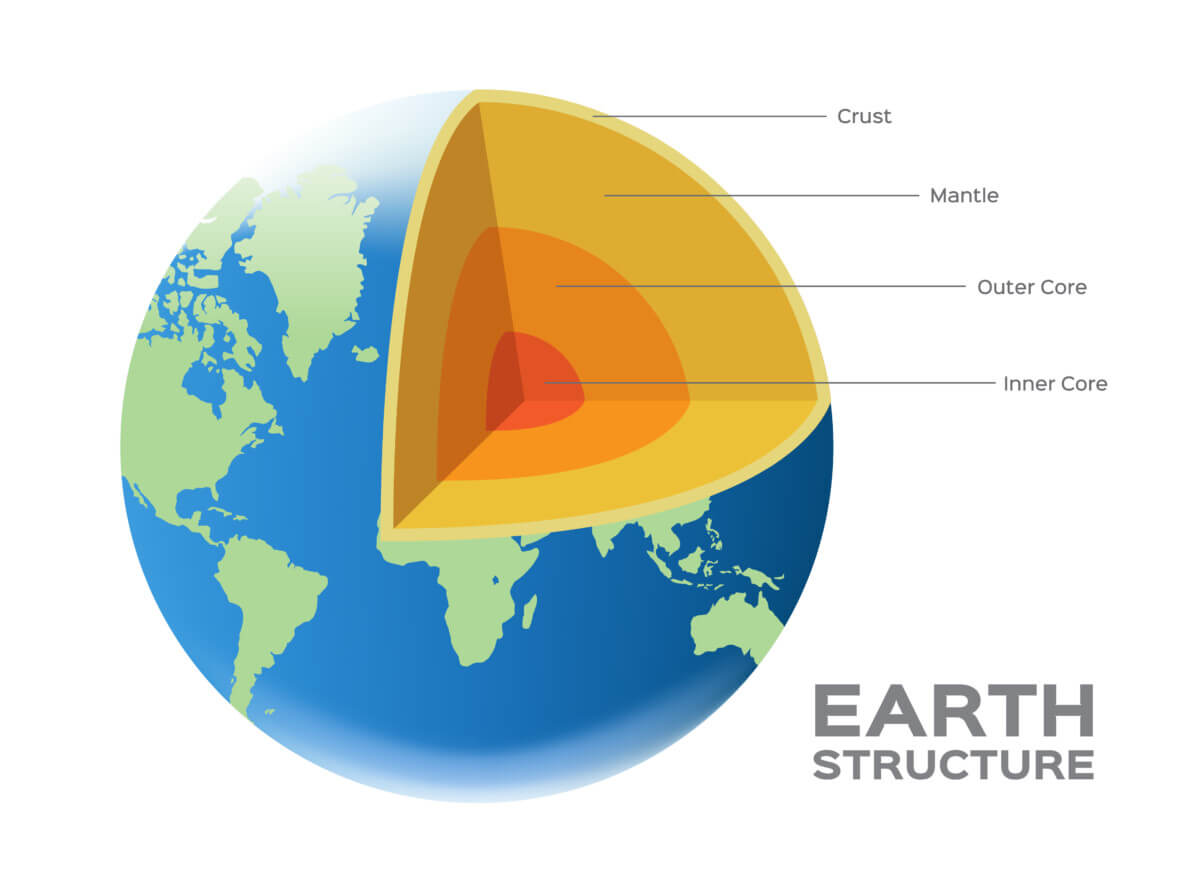
CARDIFF, Wales — Scientists have finally cracked open Earth’s secret vault. For the first time in history, researchers have pulled up a massive chunk of our planet’s mantle, the mysterious layer that lies beneath the crust and holds the keys to understanding Earth’s inner workings.
In the groundbreaking (literally) scientific expedition, researchers drilled deeper into the Earth’s mantle than ever before, uncovering a treasure trove of information about the hidden world under our feet. This remarkable achievement, detailed in a recent study published in Science, provides unprecedented insights into the composition and processes of the upper mantle, a critical component of our planet’s interior that plays a vital role in everything from volcanic activity to the evolution of life itself.
The upper mantle has long been a subject of fascination for geologists. It’s where the raw materials for volcanic eruptions are formed, where tectonic plates are born and recycled, and where complex chemical reactions influence the composition of our oceans and atmosphere. Yet, despite its importance, direct access to this region has been extremely limited. Most of our knowledge has come from indirect measurements or small samples brought to the surface by volcanic activity.
Enter the International Ocean Discovery Program (IODP) Expedition 399. In a feat of engineering and scientific determination, researchers drilled a staggering 1,268 meters (about 4,160 feet) into the seafloor of the Atlantic Ocean, recovering the longest continuous section of mantle rock ever obtained. This is more than six times deeper than previous attempts to sample the mantle directly.
Inside the expedition to Earth’s mantle
The site chosen for this ambitious project was the Atlantis Massif, an underwater mountain located near the Mid-Atlantic Ridge. This location is particularly special because tectonic activity has brought mantle rocks closer to the surface, making them more accessible to drilling. It’s also home to the Lost City hydrothermal field, a unique ecosystem where warm, alkaline fluids rich in hydrogen and methane support abundant life in the absence of sunlight.
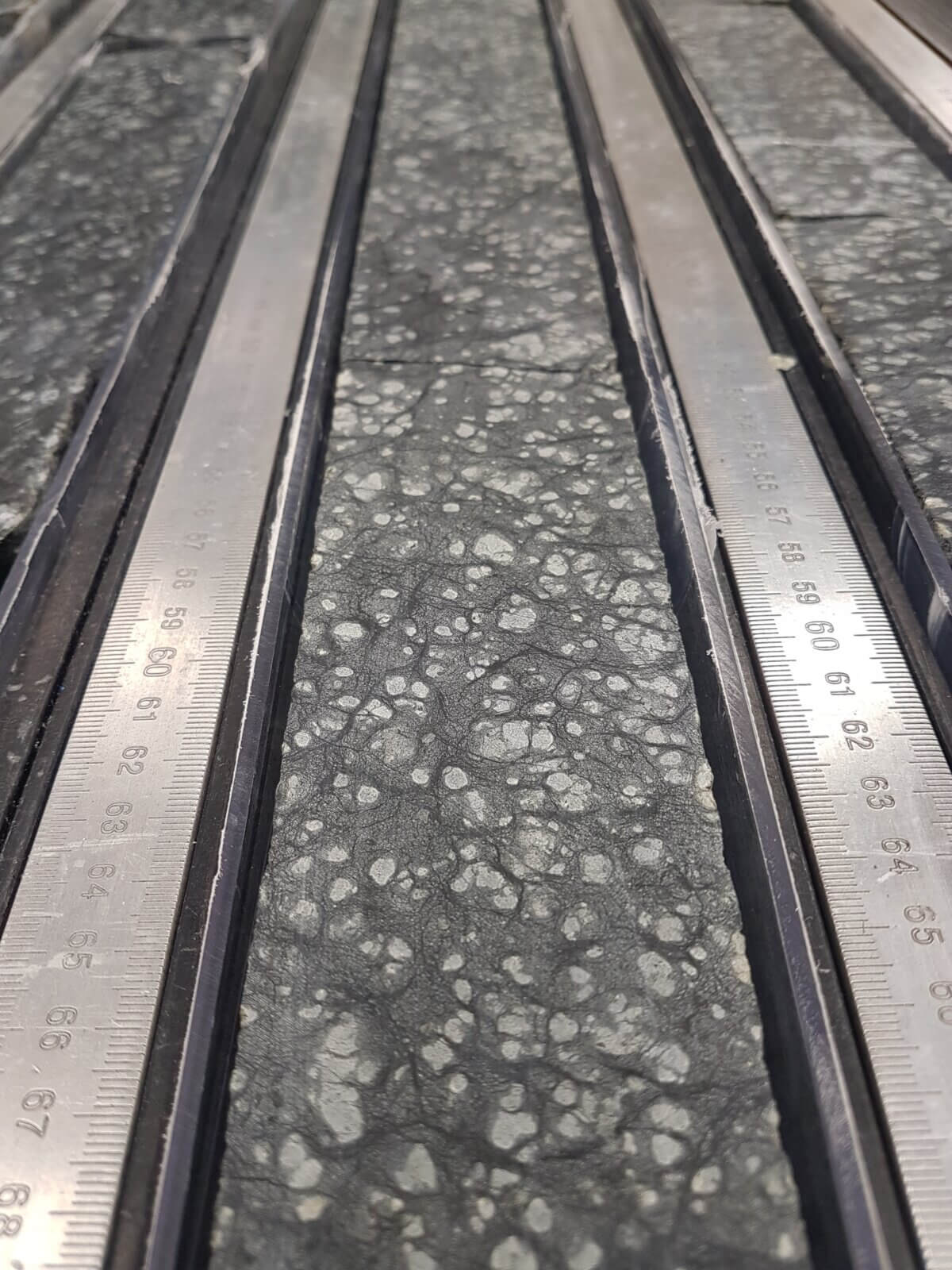
As the drill core was brought to the surface, scientists eagerly examined the rocks, which told a complex story of the mantle’s history and processes. The recovered section consisted primarily of peridotite, a dense, coarse-grained rock that makes up most of the Earth’s mantle. However, this wasn’t just any peridotite – it showed signs of extensive transformation.
Most of the peridotite had undergone a process called serpentinization, where the original minerals react with water to form new minerals, particularly serpentine. This process, which can occur when mantle rocks are exposed to seawater, has significant implications for life on Earth and potentially on other planets. Serpentinization produces hydrogen, a potential energy source for microorganisms, and can create conditions conducive to the formation of simple organic molecules – a possible first step in the origin of life.
“The rocks that were present on early Earth bear a closer resemblance to those we retrieved during this expedition than the more common rocks that make up our continents today,” says Dr. Susan Q. Lang, an associate scientist in Geology and Geophysics at the Woods Hole Oceanographic Institution. Lang was a co-chief scientist on the expedition and part of a team continuing to analyze rock and fluid samples.
“Analyzing them gives us a critical view into the chemical and physical environments that would have been present early in Earth’s history, and that could have provided a consistent source of fuel and favorable conditions over geologically long timeframes to have hosted the earliest forms of life,” she adds.
The researchers also found evidence of complex melt migration patterns within the mantle. As hot material rises from deep within the Earth, it partially melts, creating magma that eventually forms new oceanic crust at mid-ocean ridges. The study revealed that this melt doesn’t simply rise straight up but instead follows intricate, often oblique pathways through the mantle. This finding challenges some existing models of mantle dynamics and magma formation.
“When we recovered the rocks last year, it was a major achievement in the history of the Earth sciences, but, more than that, its value is in what the cores of mantle rocks could tell us about the makeup and evolution of our planet,” says lead author Professor Johan Lissenberg from Cardiff University’s School of Earth and Environmental Sciences.
“Our study begins to look at the composition of the mantle by documenting the mineralogy of the recovered rocks, as well as their chemical makeup,” he continues. “Our results differ from what we expected. There is a lot less of the mineral pyroxene in the rocks, and the rocks have got very high concentrations of magnesium, both of which results from much higher amounts of melting than what we would have predicted.”
Another surprising discovery was the extent of hydrothermal alteration throughout the entire depth of the core. Even at depths of over a kilometer, the researchers found evidence of extensive interaction between the mantle rocks and circulating fluids. This suggests that the “plumbing system” beneath the Lost City hydrothermal field extends much deeper than previously thought, with implications for understanding similar systems elsewhere on Earth and potentially on other planets.
“Everyone involved in Expedition 399, starting with the first proposal in 2018, can be proud of the achievements documented in this paper,” says Dr. Andrew McCaig, an associate professor in the School of Earth and Environment at the University of Leeds. McCaig was also the lead proponent of Expedition 399 and a co-chief scientist on the expedition.
“Our new deep hole will be a type section for decades to come in disciplines as diverse as melting processes in the mantle, chemical exchange between rocks and the ocean, organic geochemistry and microbiology,” adds McCaig. “All data from the expedition will be fully available, an exemplar of how international science should be conducted.”
The recovery of these mantle rocks marks the beginning of a new chapter in our understanding of Earth. As scientists from various disciplines pore over these samples in the coming years, we can expect a cascade of discoveries that may challenge our current theories and open up new avenues of research. In many ways, this expedition has not just brought up rocks from the depths of our planet – it has brought the depths of our planet to us, inviting us all to explore the wonders that lie beneath.
Paper Summary
Methodology
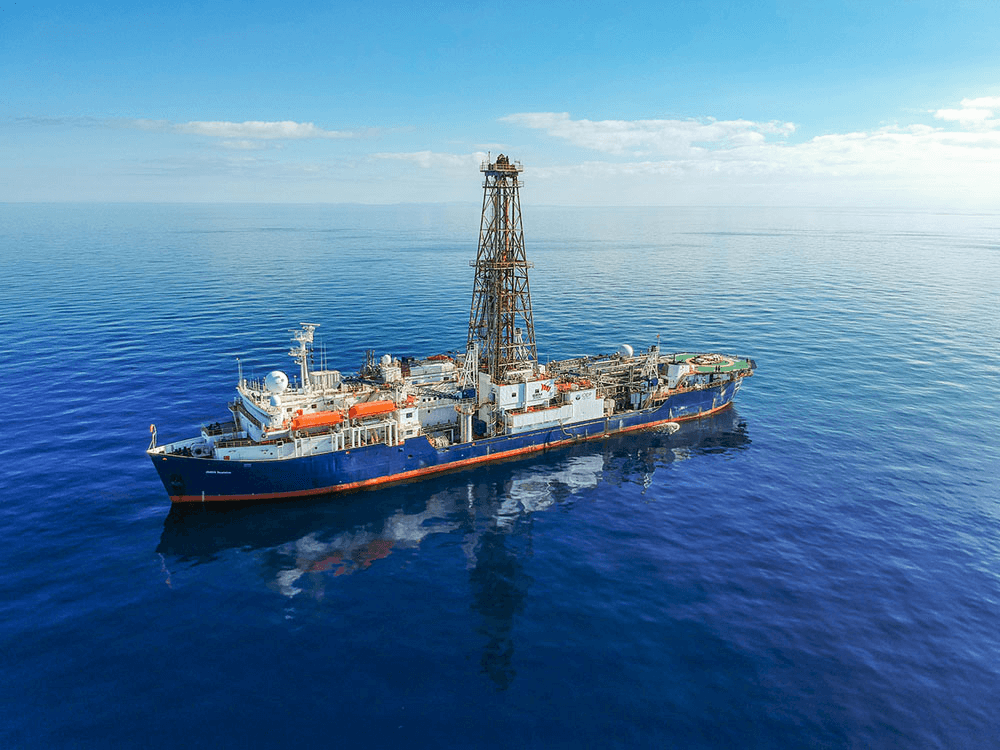
The researchers used a specialized drilling ship called the JOIDES Resolution to drill into the seafloor at the Atlantis Massif. They drilled two holes: a 55-meter pilot hole and the main 1,268-meter hole. As they drilled, they recovered cylindrical sections of rock (core samples) which were brought to the surface for analysis. The team used various techniques to study these cores, including visual examination, microscopic analysis, and geochemical testing.
Results
The core samples revealed a complex picture of the upper mantle. The rocks were primarily serpentinized peridotite, with some sections of gabbro (a type of igneous rock). The researchers found evidence of extensive melt migration, with variations in rock composition on scales ranging from centimeters to hundreds of meters. They also discovered that hydrothermal alteration extended throughout the entire depth of the core, and that the orientation of certain features suggested oblique melt transport through the mantle.
Limitations
While this study provides unprecedented access to the upper mantle, it’s important to note that it represents just one location on Earth. The mantle’s composition and processes may vary in different areas. Additionally, the act of drilling and bringing the rocks to the surface can potentially alter their properties, and some of the more delicate structures may not be preserved.
Discussion and Takeaways
This study challenges some existing models of mantle dynamics and provides new insights into processes like melt migration and hydrothermal alteration. The findings have implications for our understanding of crust formation, element cycling between the Earth’s interior and surface, and potentially even the origins of life. The study also demonstrates the value of deep drilling projects in advancing our knowledge of Earth’s interior.
Funding and Disclosures
The research was funded by various national science organizations, including the US National Science Foundation, the UK Natural Environment Research Council, and similar bodies in Japan, China, and other countries. The expedition was conducted by the International Ocean Discovery Program, a marine research consortium involving more than 20 countries. The authors declared no competing interests.


