
(Credit: Estrada Anton/Shutterstock)
NEW YORK — Should all drivers take a refresher course on how to actually drive a car? It turns out that many people with a driver’s license may have forgotten the rules of the road. In fact, a quarter of Americans think they’d fail the written exam for a driver’s license if they had to take it again today.
A survey of 2,000 adults who drive examined how savvy they are about the road and their car, finding that just 40% are absolutely certain that they remember and follow all of the safety precautions they learned about when first starting to drive. When it comes to their own cars, the average American hangs on to a vehicle for about five years. One in five have held onto a vehicle for at least twice as long.
After having their car for so long, the average driver claims they understand roughly 78% of their dashboard indicators and warning lights, with men feeling more confident in their ability to do so (82% vs. 76%).
The survey conducted by Talker Research for LIQUI MOLY put this knowledge to the test. While respondents were confident and correctly able to identify their oil pressure warning light (79%) and check engine light (64%), the test revealed that there’s certainly more to learn.
Just half of those surveyed were able to correctly name the temperature warning light (51%) and just 47% were able to pick out the tire pressure warning light.
Across the board, American drivers were clueless when it comes to the brake system warning light, which only 16% identified, while 40% revealed that they weren’t sure. Further, only 22% got the transmission temperature warning light correct, and another 23% confused it with the temperature warning light.
“Cars are an important part of our daily lives and many of us rely on them,” says Steffen Niemietz, an application engineer at LIQUI MOLY in a statement. “To prevent further damage, you should know what to do when a warning light lights up — especially if you are not familiar with it. And that is taking the car to the workshop for a professional check as soon as possible. Not only for the sake of your car, but for your safety, too.”
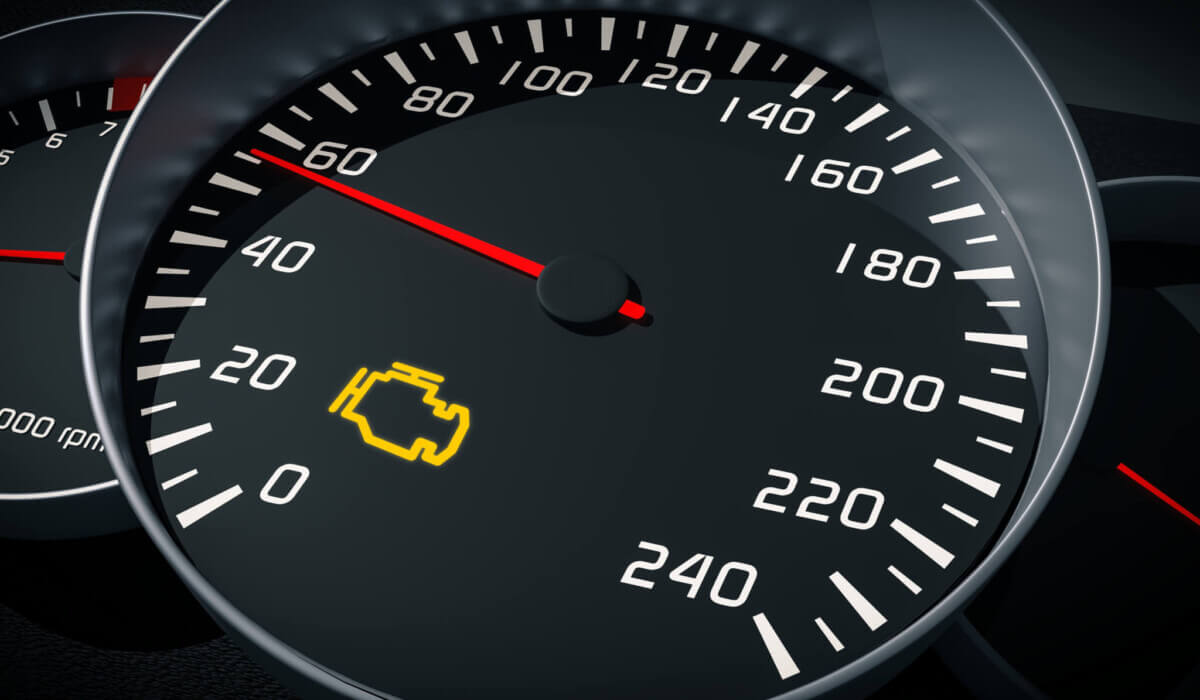
When asked about the current state of their car, 43% admit that there are dashboard warning lights lit up right now. On average, drivers will wait five days after a warning light turns on before dealing with it, with Gen Z and millennials waiting slightly longer — about a week — before getting to the issue.
In the event an unfamiliar dashboard light turns on, nearly a quarter of respondents went online looking for easy answers (23%). Although 43% of drivers claim they’d check the owner’s manual first, 15% shared that they’re not at all familiar with the contents of the book.
Despite all this uncertainty, 74% still feel knowledgeable about proper car maintenance. Gen Z (67%) and women drivers (68%) were the least likely to say they know how to take care of their cars.
When they do need advice, 39% rely on their auto mechanic most for car maintenance knowledge and one in six would immediately take their car to the auto shop for a professional opinion if a new issue arose. Despite most Americans feeling like they know how to best care for their car, nearly a third wait longer than the recommended six months to take their car for routine maintenance (28%).
Forty-four percent do some level of car maintenance on their own, with men being more likely to (59% vs. 34%). So, what prevents respondents from keeping up with their car’s needs? For 56%, the answer is simple — it’s money!
On average, drivers estimate spending $379.10 on car maintenance a year, with 26% spending upwards of $500 annually. This money primarily goes toward oil changes (41%), regular inspections (16%), and tire maintenance (13%).
“In order to maintain your car’s efficiency and increase its service life, it’s important to care for it in the right way,” Niemietz says. “Regular inspections and oil services guarantee safe function of the engine and the car as a whole. It is also important to use the right products for your vehicle, the wrong motor oil specification for example can lead to lower overall efficiency, increased wear, major engine damage and the loss of the warranty. Regular maintenance with the correct products helps you to prevent any serious and costly problems, so you can enjoy your car for a long time to come.”
Survey methodology
Talker Research surveyed 2,000 Americans who drive; the survey was commissioned by LIQUI MOLY and administered and conducted online by Talker Research between Sept. 23 and Sept. 27, 2024.


