(Credit: Nomad_Soul/Shutterstock)
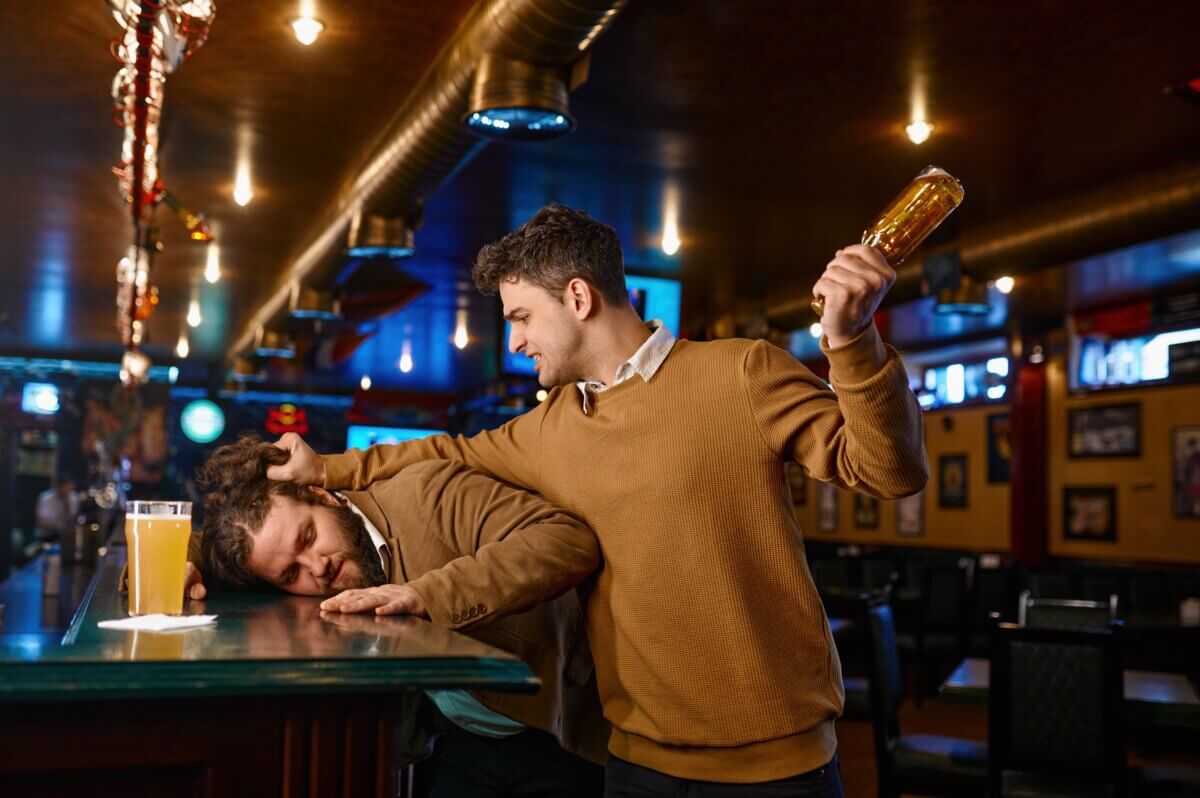
COLUMBUS, Ohio — Imagine a bar fight breaking out after someone has had a few too many drinks. We’ve all heard stories about alcohol fueling aggressive behavior, but a new study reveals a surprising scientific explanation for why things get so violent. Researchers say alcohol actually changes how we experience pain, making us less sensitive and potentially more likely to hurt others.
A team from The Ohio State University, the University of Kentucky, and First Choice Psychology Clinic, Inc. have uncovered a fascinating link between alcohol consumption, pain threshold, and aggressive behavior. Their study, published in the Journal of Studies on Alcohol and Drugs, suggests that when people drink, they become less sensitive to physical pain — and this numbness could be a key reason why alcohol often leads to increased aggression.
“We’ve all heard the idiom ‘I feel your pain,’” says study co-author Brad Bushman, a professor of communication at Ohio State, in a university release. “But if intoxicated people can’t feel their own pain, they might be less likely to feel empathy when others feel pain, and that could lead them to be more aggressive.”

The research involved two separate experiments with a total of 870 participants, all of whom were healthy social drinkers between 21 and 35 years-old. In each experiment, participants were randomly divided into two groups: one that drank alcoholic beverages and another that received a placebo drink that looked and tasted like alcohol but was completely non-alcoholic.
Here’s where it gets interesting. After drinking, participants underwent a series of electric shock tests to determine their pain threshold — the point at which mild sensations become painful. Then, they participated in a competitive reaction time task where they could choose the intensity of electric shocks to deliver to an opponent when they won a trial.
Participants who consumed alcohol had a significantly higher pain threshold, meaning they could tolerate more intense electric shocks before experiencing them as painful. Moreover, these same participants were more likely to deliver stronger, more painful shocks to their opponents during the competitive task.
“There are many reasons that intoxicated people are more likely to intentionally hurt others, but this research suggests pain tolerance is one possible reason,” Prof. Bushman says.
“The effects of alcohol on pain tolerance may be higher for those who drink more than what they did in these experiments,” Bushman continues. “That may make them even more willing to be aggressive against others.”
The study’s implications extend beyond bar fights and individual interactions. With rising rates of both chronic pain and alcohol consumption in the United States, understanding how these factors intersect could have broader public health consequences.
Paper Summary
Methodology
In simple terms, the researchers created a controlled environment where participants either drank alcohol or a placebo drink. They measured how much electric shock each person could tolerate before finding it painful, and then set up a competitive game where participants could choose how intensely to shock their “opponent” after winning each round.
Key Results
The experiments consistently showed that alcohol consumption increased participants’ pain threshold. The more alcohol consumed, the less sensitive people became to painful stimuli, and the more aggressive they were willing to be toward their opponents.
Study Limitations
The alcohol dose was relatively low compared to what people might consume outside a laboratory. Additionally, the study only used strangers as interaction partners, and didn’t explore how relationship dynamics might influence aggressive behavior.
Discussion & Takeaways
The research provides a new perspective on why alcohol is often associated with increased aggression. By reducing pain sensitivity, alcohol might be reducing our natural empathy and inhibitions against causing harm.
Funding & Disclosures
The study was funded by the National Institute on Alcohol Abuse and Alcoholism. The researchers declared no conflicts of interest, and the study was approved by the University of Kentucky Medical Institutional Review Board.


