pexels.com
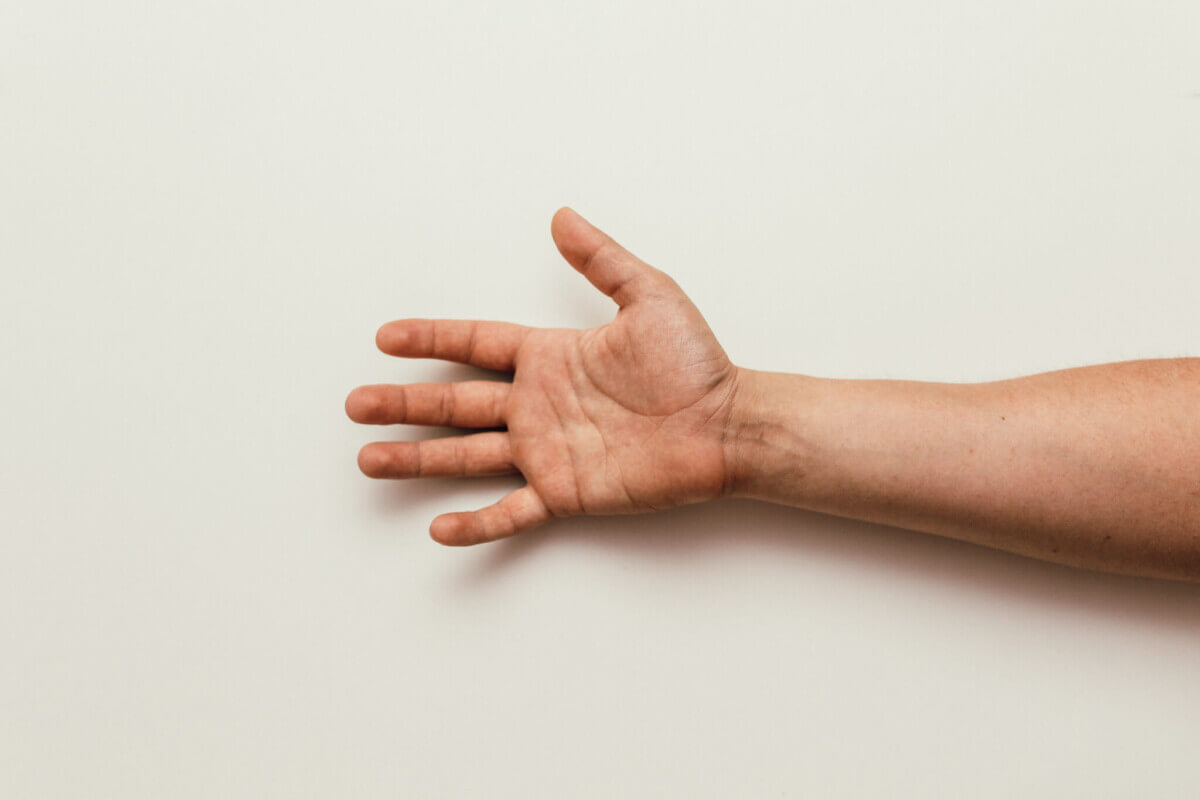
TORONTO — The old saying goes if you know something well, you know it “like the back of your hand.” But as it turns out, a new study finds that you probably don’t know your hands very well at all. It’s an odd statement; how could someone not know about their own hands? Well, according to researchers at York University, the way in which our brains perceive our hands isn’t accurate.
How the Brain Maps Our Hands
The study’s authors have discovered that the brain’s representation or visualization of the back of our hands actually changes depending on the position in which the hand is placed. Essentially, our ability to accurately judge the size of our hands fluctuates depending if our hands are in a familiar or unfamiliar position.
Participants perceived the width of the back of their hand differently when it was held upright than when it was being held sideways. Interestingly, this phenomenon was only observed for the back of the hand, not the palm.
In all, 40 people took part in the research. Each person was presented with two images of their hand, one that was legitimate and one that was distorted. Then they were asked to adjust the distorted image until they believed it closely matched how their hand really appeared.
A Surprising Distortion
“These findings are particularly surprising in view of the accuracy shown in positioning the hands when doing complex and precision actions, such as playing the piano or typing on a computer keyboard,” says Laurence Harris, York University’s Centre for Vision Research, in a release.
Our hands are quite important to almost everything we do, and how our brains perceive our hands is equally important. It’s these perceptions that allow us to gracefully operate machinery, cars, kitchen utensils, etc. Even simple tasks like reaching for an object or pointing at someone are facilitated by the mind’s understanding of the body and its limitations or proportions.
“We see the backs of our hands far more than our palms – and yet it is the backs of our hands that are inaccurately represented in the brain,” says graduate student & study co-author Sarah D’Amour.
Why Experience Shapes Perception
Additionally, the research team theorize that life-long experiences using and interacting with one’s hands helps the mind develop a greater sense of “flexibility and plasticity” in how it perceives their shape.
“These findings imply that the brain’s representation of the body is not built up entirely from vision and may not even involve vision at all – even for body parts that are regularly seen,” Harris concludes. “These findings may be extended toward helping people who have extremely distorted perceptions of their own body – misperceptions that cannot apparently be easily overcome by vision.”
The study is published in Public Library of Science (PLoS ONE).
This article was first published March 27, 2020.


