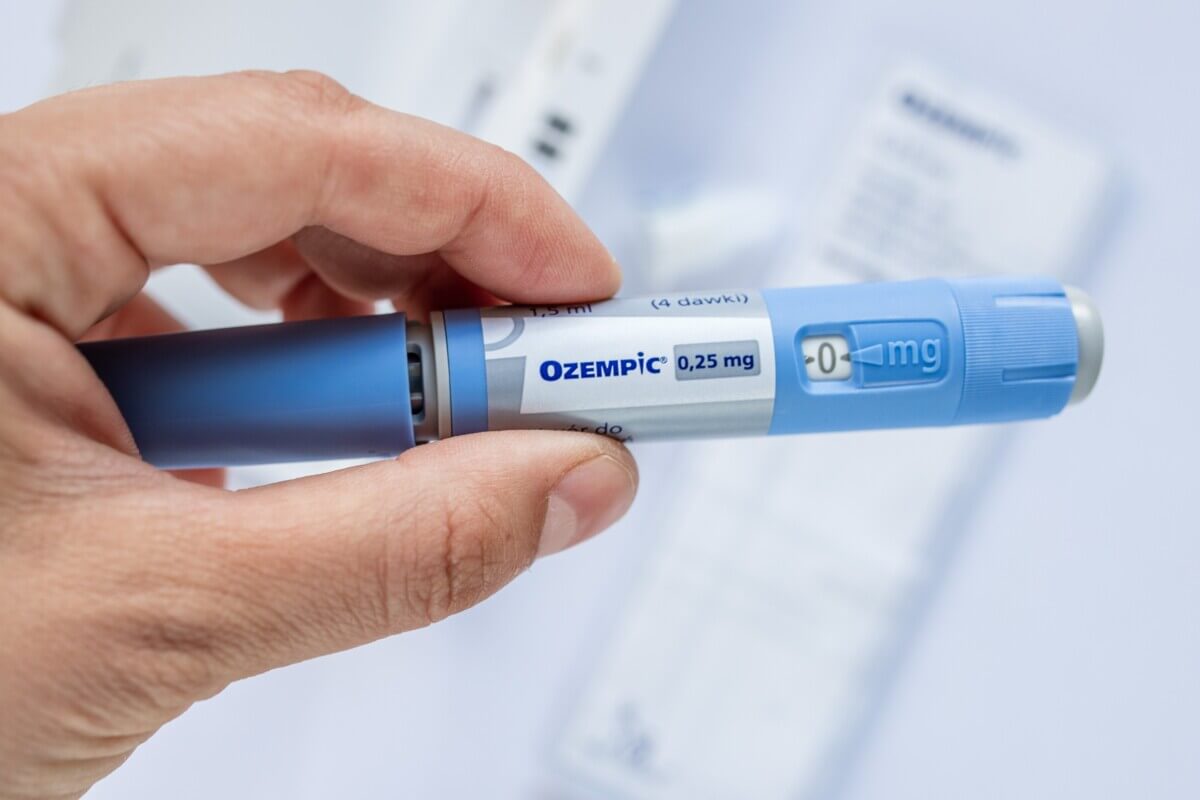
Ozempic, Wegovy, and Rybelsus all contain the same main ingredient: Semaglutide. (Photo by myskin on Shutterstock)
SOLNA, Sweden — The weight loss industry has become a multi-billion dollar business, and GLP-1 receptor agonists like Ozempic and Wegovy are the new stars of the show. Originally developed to treat diabetes, these drugs have skyrocketed in popularity because of their added ability to help people with and without diabetes lose significant amounts of weight. While most prescription drugs carry the risk of causing side effects, a new study examines the possibility that GLP-1 receptor agonists increase a user’s risk for certain mental health conditions or even suicide.
Published in JAMA Internal Medicine, the study was led by researchers from the Karolinska Institutet. The team carried out an investigation spanning two Nordic countries and nearly 300,000 adults to separate fact from fiction in the ongoing debate about the safety of GLP-1 receptor agonists.
The results? A collective sigh of relief for users and healthcare providers alike. The study found no significant link between these popular medications and an increased risk of suicide death, self-harm, or mental health disorders.
“We found no clear link between the use of the drugs and an increased risk of suicide death, self-harm or depression and anxiety-related disorders. This is reassuring,” says Björn Pasternak, principal researcher in the Department of Medicine at the Karolinska Institutet, in a media release.

This research comes on the heels of investigations by both American and European drug authorities into potential risks associated with GLP-1 analogs. Last year, the European Medicines Agency (EMA) launched an inquiry following approximately 150 reported cases of suicidal thoughts and self-injury potentially linked to these drugs.
The Karolinska study goes a long way in addressing these concerns. Researchers used nationwide health registers from Sweden and Denmark, examining data from 124,517 adults who started taking GLP-1 receptor agonists between 2013 and 2021. They compared them to 174,036 adults who began taking a different type of diabetes medication called SGLT2 inhibitors during the same period.
The study participants, with an average age of 60 and nearly half being women, were followed for an average of 2.5 years. During this time, the researchers tracked instances of suicide death, self-harm, and new diagnoses of depression or anxiety-related disorders.
The results of the study were largely reassuring. Among GLP-1 receptor agonist users, there were 77 suicide deaths, compared to 71 among SGLT2 inhibitor users. When accounting for other factors that might influence suicide risk, the researchers found no statistically significant difference between the two groups.
In fact, the study found that GLP-1 receptor agonist users had a slightly lower risk of self-harm compared to those taking SGLT2 inhibitors. There was also no significant difference in the rate of new depression or anxiety-related disorder diagnoses between the two groups.
“It is important to specifically examine people with previous self-harm or suicidal thoughts as they are at increased risk and it is possible that the drug’s safety profile differs in this group,” says Peter Ueda, assistant professor at Karolinska Institutet and co-lead author of the study.
As the obesity epidemic continues to grow, so too does the allure of quick-fix solutions. GLP-1 receptor agonists, with their dual benefits of blood sugar control and weight loss, seem almost too good to be true. This latest research suggests that, at least in terms of mental health risks, they might just live up to the hype.
The story doesn’t end here. As more people turn to these drugs for weight loss rather than diabetes management, the need for long-term safety data becomes ever more pressing. The battle of the bulge may have found a powerful new ally, but only time will tell if it’s truly a risk-free solution.
Paper Summary
Methodology
The researchers used a clever approach called an “active-comparator new-user design.” They looked at people starting either GLP-1 drugs or a similar diabetes medication (SGLT2 inhibitors) for the first time. This method helps ensure that the groups being compared are similar in terms of their health status and stage of treatment. They then used advanced statistical techniques to adjust for differences between the groups, such as age, gender, and pre-existing health conditions.
Key Results
Out of over 124,000 GLP-1 users and 174,000 users of the comparison drug, there were 77 and 71 suicide deaths, respectively, over an average follow-up period of 2.5 years. After accounting for other factors, this translated to a slight, but not statistically significant, increase in risk for GLP-1 users (25% higher). The absolute difference was very small: about 0.05 more events per 1,000 person-years for GLP-1 users.
Study Limitations
The study mainly included people with Type 2 diabetes, so the results might not apply perfectly to those using GLP-1 drugs just for weight loss. Also, while the follow-up time was substantial (averaging 2.7 years for GLP-1 users), longer-term effects couldn’t be assessed. The researchers also noted that some suicides might have been misclassified in the official records they used.
Discussion & Takeaways
The researchers emphasize that while their results are reassuring, they couldn’t rule out very small increases in risk. They suggest that future studies with more participants and longer follow-up times could help clarify any potential risks further. The slightly lower risk of self-harm among GLP-1 users was an unexpected finding that might warrant further investigation.
Funding & Disclosures
The study was supported by the Strategic Research Area Epidemiology program at Karolinska Institutet. Some of the researchers reported receiving grants or personal fees from various health-related organizations and pharmaceutical companies, including makers of diabetes medications. However, these were generally outside the scope of the current study.


