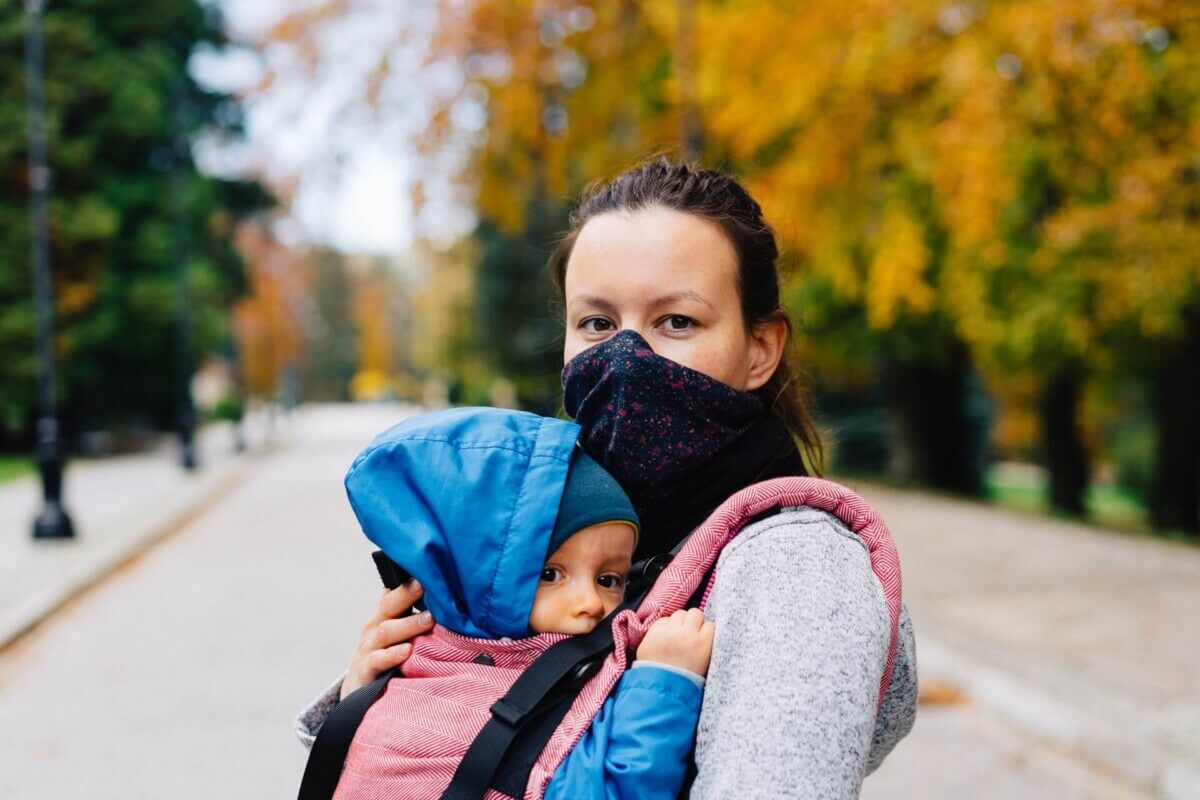
(Photo by Marcin Jozwiak from Pexels)
NEW YORK — Since the start of the COVID-19 pandemic in 2020, there have been several reports on the health emergency’s impact on child development. However, a new study is debunking fears that pandemic-era babies may face a higher likelihood of developing autism.
The research, conducted by a team at Columbia University Irving Medical Center in New York City, challenges concerns that the stress of the pandemic or exposure to the SARS-CoV-2 virus during pregnancy might lead to increased rates of autism in children. The study published in JAMA Network Open examined nearly 2,000 toddlers born before and during the pandemic, looking for early signs of autism using a common screening tool called the Modified Checklist for Autism in Toddlers, Revised (M-CHAT-R). This parent-report questionnaire helps identify children who may benefit from a more comprehensive evaluation for autism spectrum disorder.
Contrary to expectations, the researchers found no significant difference in positive autism screenings between children born before the pandemic and those born during it. Even more intriguingly, children whose mothers contracted COVID-19 during pregnancy actually showed lower rates of positive autism screenings compared to those whose mothers hadn’t been infected.
“Autism risk is known to increase with virtually any kind of insult to mom during pregnancy, including infection and stress,” says Dani Dumitriu, an associate professor of pediatrics and psychiatry and senior author of the study, in a university release. “The scale of the COVID pandemic had pediatricians, researchers, and developmental scientists worried that we would see an uptick in autism rates. But reassuringly, we didn’t find any indication of such an increase in our study.”
The study focused on children between 16 and 30 months-old, a crucial period when early signs of autism often become apparent. The research team analyzed data from two groups: one consisting of 1,664 children whose M-CHAT-R scores were obtained from electronic health records and another of 385 children whose parents completed the screening as part of an ongoing research study.
While the overall rates of positive autism screenings were higher in this study compared to general population estimates, the researchers attribute this to the unique characteristics of their sample. The study population was predominantly living in urban areas, with a high percentage of Hispanic participants and families from lower-income backgrounds — all factors associated with higher rates of autism diagnoses or positive screenings.
“There has been broad speculation about how the COVID generation is developing, and this study gives us the first glimmer of an answer with respect to autism risk,” Dumitriu adds.
These findings contribute to a growing body of evidence suggesting that prenatal exposure to mild or moderate COVID-19 infection may not significantly impact early childhood development. However, the researchers caution that longer-term follow-up is necessary, as some neurodevelopmental effects may not become apparent until later in childhood.
The study also highlights the complex relationship between biological and environmental factors in child development. While the pandemic caused widespread stress and disruption, it also led to some positive changes, such as more time at home for many parents.
“Children who were in the womb early in the pandemic are now reaching the age when early indicators of autism would emerge, and we’re not seeing them in this study,” Dumitriu concludes. “And because it’s well-known that autism is influenced by the prenatal environment, this is highly reassuring.”
Paper Summary
Methodology
The researchers used two approaches to gather data. First, they examined electronic health records of children born between 2018 and 2021 who had M-CHAT-R screenings as part of routine care. Second, they conducted a prospective study, enrolling mothers and children born during the pandemic and administering the M-CHAT-R at 18 months. They compared autism screening rates between children born before and during the pandemic and between those exposed and unexposed to COVID-19 prenatally. The team used statistical methods to account for various factors that might influence the results, such as the child’s age, sex, and family demographics.
Key Results
In both the electronic health records and prospective study groups, there was no significant difference in positive M-CHAT-R screenings between children born before and during the pandemic. Surprisingly, in the larger electronic health records group, children with prenatal exposure to COVID-19 had lower rates of positive screenings (12.3%) compared to unexposed children (24%). This unexpected finding persisted even after accounting for various demographic and medical factors.
Study Limitations
The study has several limitations. All children, including those born before the pandemic, were assessed during the pandemic, which may have affected how parents reported their children’s behavior. The study relied on a screening tool rather than definitive autism diagnoses. Additionally, most COVID-19 cases in the study were mild, so the findings may not apply to severe infections. Lastly, unmeasured differences between exposed and unexposed groups could have influenced the results.
Discussion & Takeaways
The researchers emphasize that while these results are reassuring, continued monitoring of children born during the pandemic is crucial. The unexpected finding of lower autism screening rates in COVID-19-exposed children requires further investigation. It’s possible that mothers who were more vigilant about avoiding infection might also be more likely to report concerning behaviors in their children. The study underscores the complex relationship between prenatal experiences and child development, highlighting the need for long-term follow-up studies.
Funding & Disclosures
The study was funded by grants from the National Institute of Mental Health, the National Institute of Child Health and Human Development, and other sources. Some researchers reported receiving grants or fees from various pharmaceutical companies and foundations, but these were generally outside the scope of the submitted work. The funders had no role in the design, conduct, analysis, or reporting of the study.


