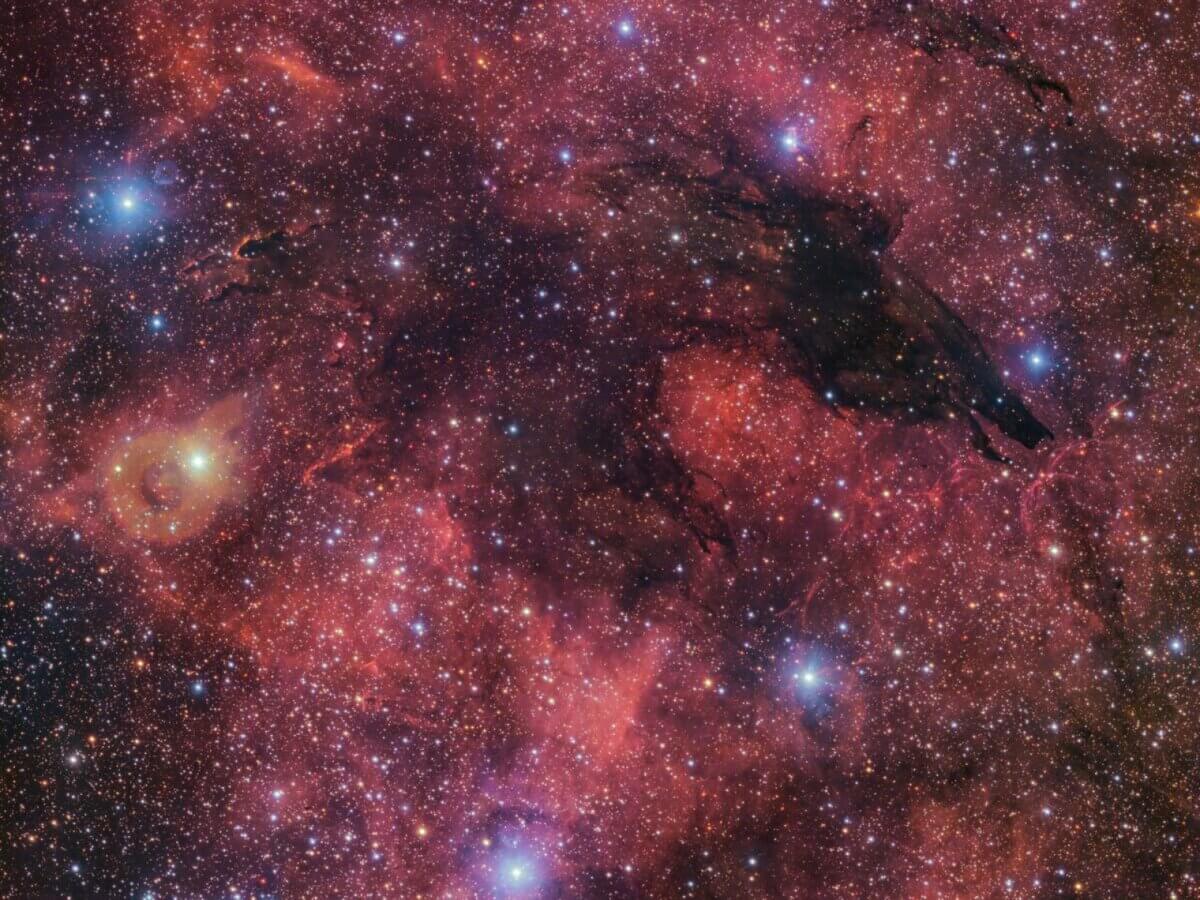
Fittingly nicknamed the Dark Wolf Nebula, this cosmic cloud was captured in a 283-million-pixel image by the VLT Survey Telescope (VST) at ESO’s Paranal Observatory in Chile. Located around 5300 light-years from Earth, the cold clouds of cosmic dust create the illusion of a wolf-like silhouette against a colorful backdrop of glowing gas clouds. (Credit: ESO/VPHAS+ team)
ANTOFAGASTA, Chile — Many people dress up for Halloween, and it turns out the cosmos does as well. Against the backdrop of colorful stars, the VLT Survey Telescope in Chile captured a spooktacular image of a nebula that looks like a dark wolf in the sky just in time for Oct. 31. The wolf-like image was given the haunting nickname Dark Wolf Nebula.
This “wolf” was not howling at the moon — not when it’s 5,300 light-years from Earth. The Dark Wolf Nebula was found in the constellation Scorpius, near the center of the Milky Way galaxy. One could argue this wolf-like outline is more of a werewolf, with a silhouette of dark hands created through cosmic dust clouds. On Halloween night, stranger things have happened.
Astronomers could trace the wolf-like silhouette because the cold clouds of cosmic dust contrasted with the bright background of glowing gas clouds. The colorful clouds are made up of hydrogen gas that glows in reddish tones because of the intense UV radiation from the newborn stars inside them.
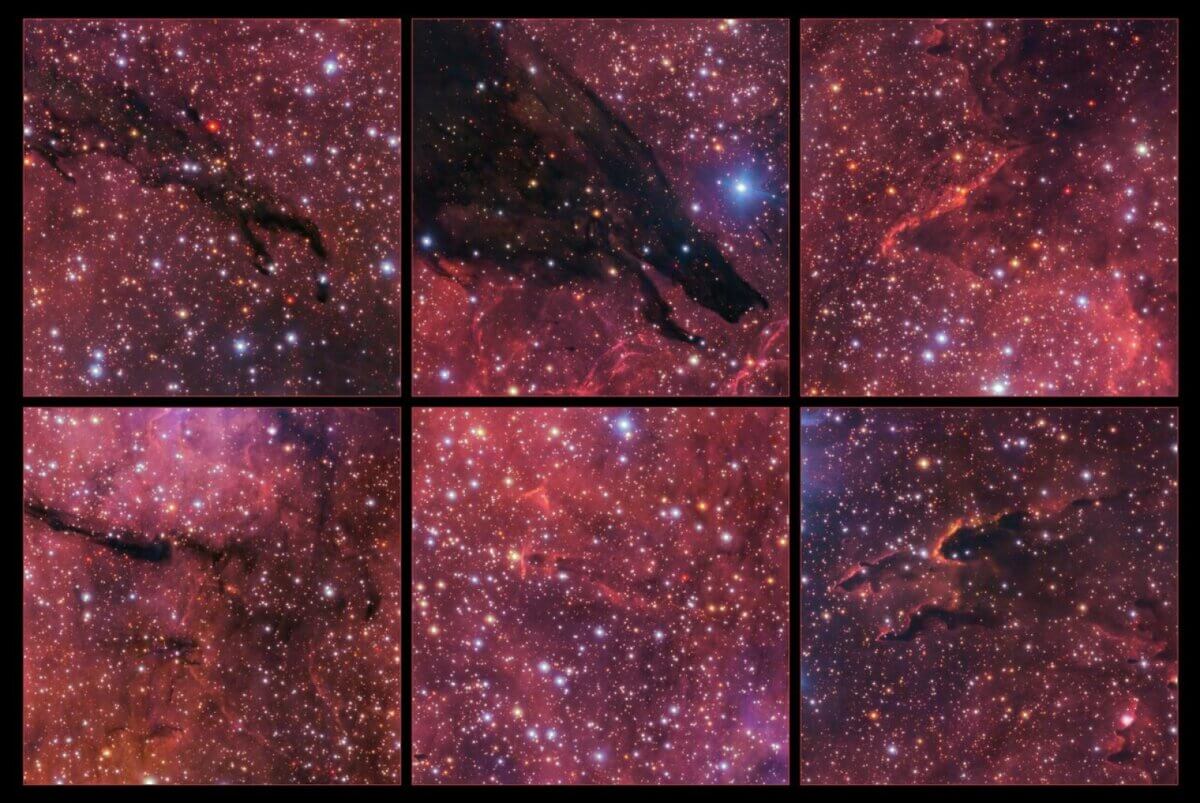
Typically, dark nebulae look like darkness. They are so dense that they block starlight and other objects behind them from our viewpoint. Dust grains inside these clouds absorb visible light and only reflect radiation of longer wavelengths, such as infrared light.
Some dark nebulae, such as the Coalsack Nebula, can be seen with the naked eye. For thousands of years, humans have looked to the stars, using them for navigation and even building ancient mythos around them. However, they likely didn’t see this Halloween spectacle. The Dark Wolf is a new image that astronomers believe was not visible to early humans.
The image of the Dark Wolf Nebula came from data collected via the VLT Survey Telescope in Chile’s Atacama Desert. The telescope contains a special camera to capture the southern sky in visible light.
The picture is actually multiple photos taken at different times, each one with a filter to let in a different color of light. Each image was captured during the VST Photometric Hα Survey of the Southern Galactic Plane and Bulge (VPHAS+), which is involved in studying around 500 million objects in the Milk Way. The data is available for public viewing through the European Southern Observatory’s science portal. Who knows what other spooky images are lurking in the night sky?


