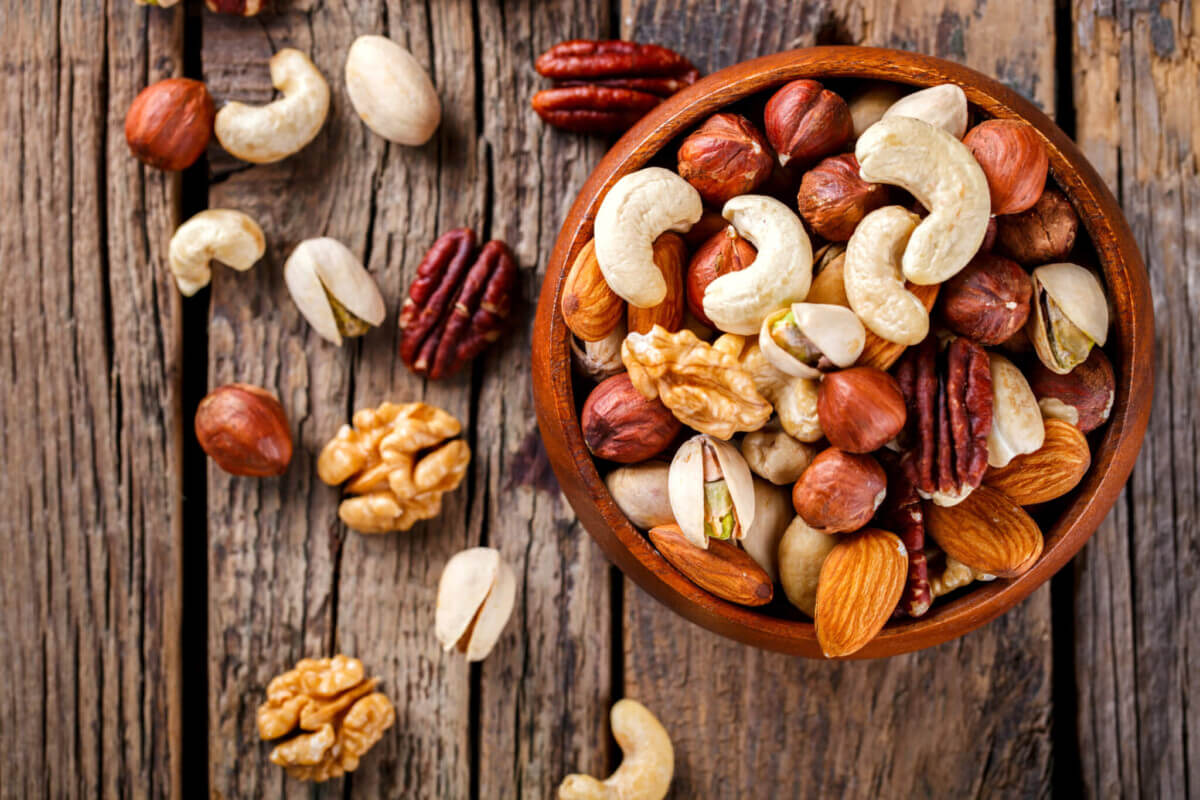
Mixed nuts (© lily_rocha - stock.adobe.com)
ADELAIDE, Australia — Nuts have always been viewed as a healthy snack and great source of protein, but new research suggests that a steady, hardy diet of nuts can also sustain mental sharpness and cognition as we age.
Conducted at the University of South Australia, the study found that consuming more than 10 grams of nuts per day led to improved mental functioning and thinking, and better memory and reasoning. The study consisted of 4,822 Chinese adults aged 55 or older.
“Population aging is one of the most substantial challenges of the twenty-first century. Not only are people living longer, but as they age, they require additional health support which is placing unprecedented pressure on aged-care and health services,” head researcher Dr. Ming Li comments in a release.
According to Dr. Li, the study is the first ever to establish a significant link between a heavy nut diet and improved mental functioning in older adults. The study’s authors say their findings could be especially helpful in fighting dementia, a common problem many people face as they enter old age.
“By eating more than 10 grams (or two teaspoons) of nuts per day older people could improve their cognitive function by up to 60 per cent– compared to those not eating nuts – effectively warding off what would normally be experienced as a natural two-year cognition decline,” Lee explains.
Peanuts specifically were singled out by the research team as especially helpful in warding off cognitive decline due to their ant-inflammatory properties and antioxidant effects.
Make no mistake, dementia is a global problem that only appears to be worsening; right now The World Health Organization estimates that 47 million people worldwide are living with the disease. As people continue to live longer than ever before, that number is expected to rise, with an estimate of 75 million dementia cases by 2030.
“As people age, they naturally experience changes to conceptual reasoning, memory, and processing speed. This is all part of the normal aging process,” Dr. Li says. “But age is also the strongest known risk factor for cognitive disease. If we can find ways to help older people retain their cognitive health and independence for longer – even by modifying their diet – then this absolutely worth the effort.”
The study is published in the Journal of Nutrition, Health, & Aging.


