
Scratching an itch has good and bad after effects. (Photo by Towfiqu barbhuiya from Pexels)
PITTSBURGH — Could itchy skin be a thing of the past? Imagine a simple daily cream that quiets the inflammatory storm of millions suffering from persistent and uncomfortable skin conditions. Researchers at the University of Pittsburgh believe they have just discovered a groundbreaking path to making that dream a reality.
In a breakthrough study published in Science Translational Medicine, a team of dermatologists has uncovered a novel way to potentially treat rosacea, eczema, and other inflammatory skin disorders by targeting the body’s microscopic troublemakers: mast cells.
These tiny cellular actors are like overzealous security guards in your skin. Normally, they play a crucial role in protecting the body from threats like bee stings or bacterial invasions. However, sometimes they go into overdrive, triggering uncomfortable and often embarrassing skin reactions such as redness, swelling, and itching.
“Currently, there aren’t a lot of good therapies that target mast cells, so we think that our approach could potentially have huge benefits in many skin conditions,” says Dr. Daniel Kaplan, the study’s senior author, in a university release.
The research centers on a compound called SYM2081, which acts like a molecular dimmer switch for these hyperactive immune cells. In experiments using mouse models and human skin samples, the researchers discovered that this compound could effectively calm mast cells, preventing them from releasing inflammatory signals that cause skin irritation.
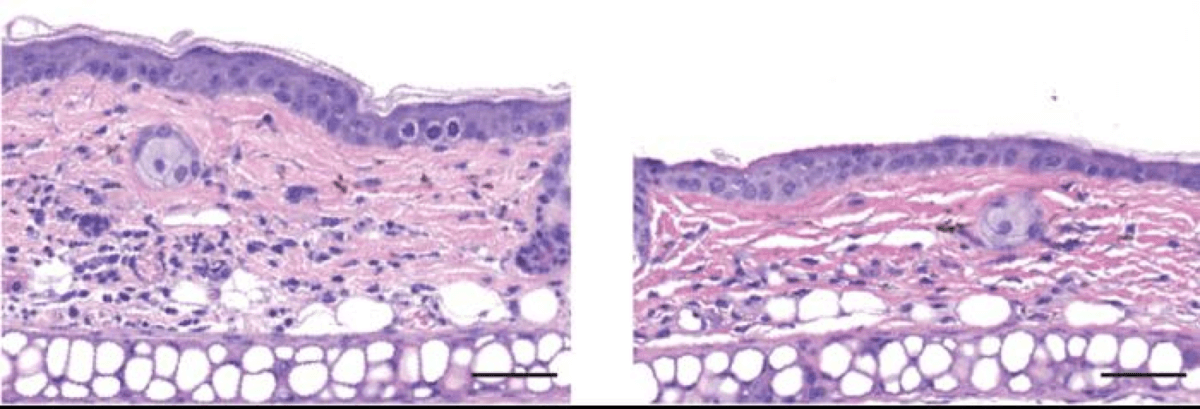
When mice were treated with a topical cream containing SYM2081 before inducing rosacea-like symptoms, the inflammation was dramatically reduced. This is particularly exciting for conditions like rosacea, which affects millions and can cause persistent facial redness, visible blood vessels, and acne-like breakouts.
“There are no good therapies for flushing, so this is a significant unmet need,” Dr. Kaplan explains.
The potential for a treatment that could address one of rosacea’s most persistent and embarrassing symptoms is a game-changer for patients.
The journey to this discovery began with an earlier observation that neurons in the skin release a neurotransmitter called glutamate that naturally suppresses mast cells. By developing a compound that activates a specific glutamate receptor found almost exclusively on mast cells, the researchers found a precise way to calm these inflammatory responses.
While the research is still in the early stages, the team has already applied for a patent and hopes to develop compounds that could eventually move to clinical trials. For the millions struggling with inflammatory skin conditions, this represents a beacon of hope — a potential future where a simple cream could provide relief from persistent, uncomfortable symptoms.
Paper Summary
Methodology
The study explored how specific glutamate receptors, particularly GluK2, influence mast cell behavior related to skin inflammation. The researchers used a special compound called SYM2081 to activate GluK2 receptors. Experiments were conducted on mouse models and human skin samples to observe the effects on mast cells, which are cells involved in allergic and inflammatory responses. The methods included applying SYM2081 topically or via injection and assessing skin inflammation, mast cell activity, and gene expression changes using tools like flow cytometry and RNA sequencing. Key experiments also examined how this treatment reduced the skin’s inflammatory response to irritants or allergens.
Key Results
The study found that activating the GluK2 receptor in mast cells reduced their activity, which in turn lessened skin inflammation. A compound called SYM2081 was used, and it successfully stopped mast cells from releasing harmful chemicals in mice and human skin samples. This reduced swelling and redness in models of dermatitis and rosacea. The research also showed that SYM2081 slowed mast cell growth without harming the skin or other cells. Overall, it offers a new way to control skin diseases caused by overactive mast cells.
Study Limitations
The study focused only on the GluK2 receptor and not other related receptors that might play a role. The experiments mostly involved short-term treatments, so the long-term effects remain unclear. Additionally, while human skin samples were used, most of the research was conducted in mice, which might not fully represent human biology. Also, potential impacts on the nervous system from GluK2 activation were not deeply explored.
Discussion & Takeaways
This study suggests a new way to treat skin diseases like dermatitis and rosacea by calming overactive mast cells. By targeting the GluK2 receptor, SYM2081 reduces inflammation and slows down mast cell growth, potentially providing a dual-action treatment. Unlike some treatments that might only address symptoms, this approach could prevent the root causes of inflammation. Future research could refine this method for broader use, particularly in humans.
Funding & Disclosures
This work was supported by grants from the National Institute for Health (NIH; R01AR071720, R01 AR077341, R01AR079233, R01AR074285, DP2AI164325, U01EY034711, and T32AI089443) and the Pitt Center for Research Computing, which is supported by the NIH (S10OD028483).


