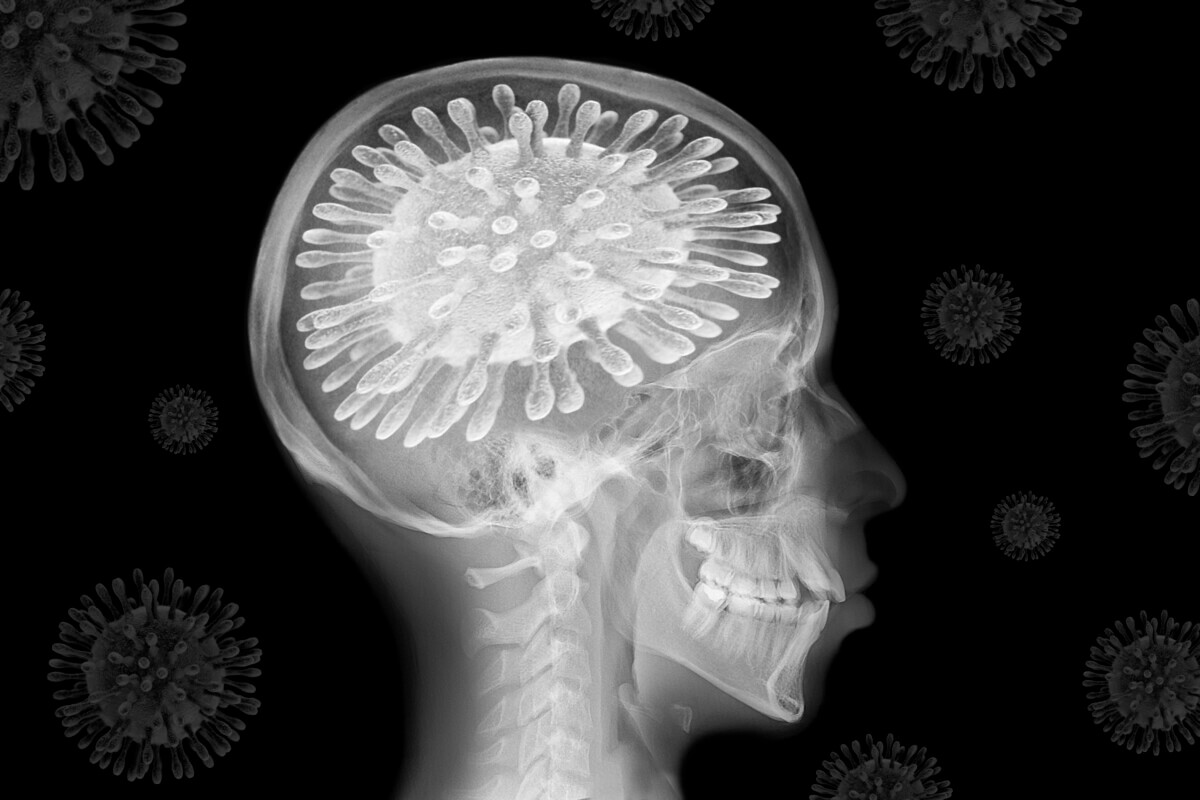
Whether you were infected with the virus or not, stress from the COVID-19 pandemic still led to brains aging faster. (© quickshooting - stock.adobe.com)
SAN DIEGO, Calif. — Can COVID-19 really make its way into the human brain? It’s a question that’s been on scientists’ minds for over a year. Now, a new study reveals that it is indeed possible for SARS-CoV-2 to infect certain brain cells. The revelation could go a long way to explaining the seemingly never-ending symptoms of “long COVID.”
Researchers from the University of California San Diego School of Medicine and Rady Children’s Institute for Genomic Medicine used a sophisticated stem cell model of brain cells and human neurons to make this discovery.
“Clinical and epidemiological observations suggest that the brain can become involved in SARS-CoV-2 infection,” says senior author and professor of neuroscience Joseph Gleeson, MD, in a university release.
“The prospect of COVID19-induced brain damage has become a primary concern in cases of ‘long COVID,’ but human neurons in culture are not susceptible to infection. Prior publications suggest that the cells that make the spinal fluid could become infected with SARS-CoV-2, but other routes of entry seemed likely.”
‘Trojan horse’ entering the brain?
A team of neuroscientists and infectious disease specialists first confirmed that human neural cells are actually resistant to the virus causing COVID-19. Unfortunately, their findings also reveal that other types of brain cells may be acting as a “Trojan horse” for coronavirus.
Study authors explain that pericytes are specialized cells that wrap themselves around blood vessels. These cells also carry the SARS-CoV2 receptor. Using a 3D neural cell culture, researchers added these pericytes to the mix to create “assembloids” — a realistic model of the human body. The assembloids contained several types of brain cells, in addition to the pericytes.
After exposing this model to coronavirus, they discovered SARS-CoV-2 can infect pericytes and other cells. These brain cells then acted as local “factories” for the virus to multiply and spread.
Moreover, scientists found that once the virus starts to spread, it attacks astrocytes, a group of supporting cells in the body. The results show that one potential route for COVID entering the brain involves blood vessels carrying coronavirus-infected pericytes into the brain. From there the virus attacks other brain cells vulnerable to infection.
“Alternatively, the infected pericytes could lead to inflammation of the blood vessels, followed by clotting, stroke or hemorrhages, complications that are observed in many patients with SARS-CoV-2 who are hospitalized in intensive care units,” Gleeson adds.
Moving forward, researchers plan to build new assembloids that include blood vessels capable of pumping blood. This will provide an even better simulation of what’s happening in the brain and how COVID-19 may be attacking people over the long haul.
The findings appear in the journal Nature Medicine.


