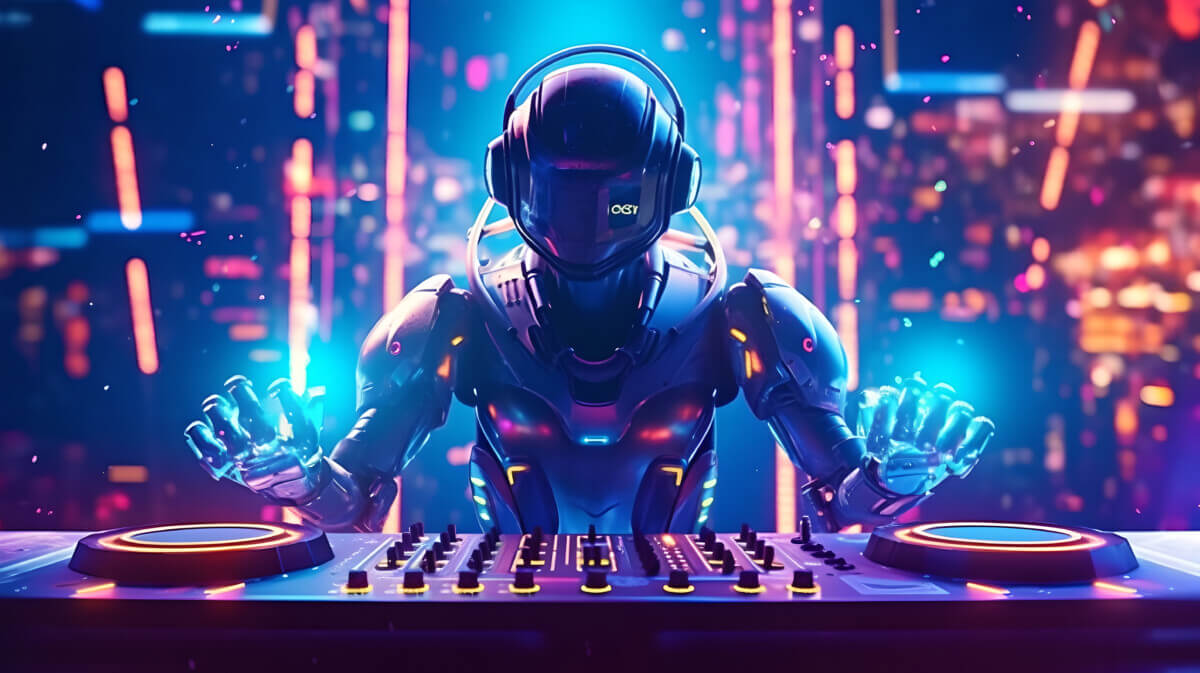
Futuristic robot DJ pointing and playing music on turntables. (© AspctStyle - stock.adobe.com)
SYDNEY, Australia — A pioneering computer algorithm is about to revolutionize music mashups, which DJs use to blend vocals and instrumentals from multiple tracks. Creating these seamless blends has traditionally demanded expert knowledge in selecting and merging tracks. However, this new innovation streamlines this process, focusing on integrating drum tracks from one song with the vocals and instrumentals from another.
“Imagine trying to make a gourmet meal with only a microwave — that’s sort of what automated mashup software is up against compared to a pro chef, or in this case, a professional music composer,” says algorithm creator Xinyang Wu, from the Hong Kong University of Science and Technology, in a media release. “These pros can get their hands on the original ingredients of a song — the separate vocals, drums, and instruments, known as stems — which lets them mix and match with precision.”
Comparable to a professional chef using fresh ingredients, the algorithm accesses original song components, enhancing precision in merging different musical elements. Wu’s software identifies dynamic segments, adjusts instrumental track tempos, and impeccably intertwines drum beats for maximum impact.
“From what I’ve observed, there’s a clear trend in what listeners prefer in mashups,” explains Wu. “Hip-hop drumbeats are the crowd favorite — people seem to really enjoy the groove and rhythm that these beats bring to a mashup.”
Having proven effective with drum tracks, Wu’s team aims to extend the algorithm’s capability to bass mashups.
“Our ultimate goal is creating an app where users can pick any two songs and choose how to mash them up — whether it’s switching out the drums, bass, instrumentals, or everything together with the other song’s vocals,” concludes Wu.
The research was presented at Acoustics 2023 in Sydney.


