
(Photo by Alexander Sinn on Unsplash)
By expanding dynamical systems theories that account for forgetting rates, attraction levels, and reaction patterns, maths can now calculate ‘relationship danger zones’
What if the secret to lasting love could be found in mathematical equations? A growing body of research spanning three decades suggests that the trajectory of romantic relationships follows predictable patterns, and that mathematics can help couples identify warning signs.
Professor Laurent Pujo-Menjouet from the University of Lyon I, along with other international researchers, has been developing sophisticated models that treat romantic feelings as dynamical systems.
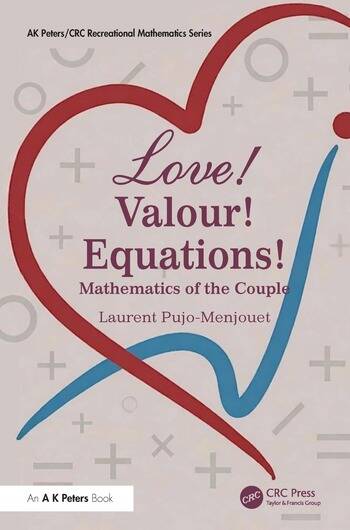
As he explains in his book Love! Valour! Equations! where mathematics meets literature, psychology, cinema and everyday life: “There is no mysterious enchantment or magic potion. By now, that would be known. Is all hope lost then? Certainly not. That is precisely where everything becomes interesting.”
From rabbits to romance
The story begins surprisingly, not with couples, but with rabbits.
The journey from population dynamics to predicting relationship outcomes starts indeed with the Malthus and predator prey models, originally used to study expansion of the Australian rabbits or the chase of snowshoe hare by Canadian lynxes. It continues with the Allee effect, a mathematical concept describing how populations below a critical threshold face extinction, while those above it thrive, a pattern that researchers have found remarkably applicable to romantic relationships.
“Just as we can predict population growth or endangered species, we can model the evolution of feelings within a couple,” explains Pujo-Menjouet, “We’re not trying to predict who you’ll fall in love with, we’re trying to understand why some couples remain stable despite life’s inevitable shocks while others slowly drift apart.”
The researcher’s theory builds upon a mathematical legacy spanning from Thomas Malthus’s 18th-century population models and the Lotka-Volterra predator-prey equations developed in the 1920s, through to modern applications by psychologist John Gottman, economist José Manuel Rey, and physicist Sergio Rinaldi or mathematician Steven Strogatz, who first applied dynamical systems theory to romantic relationships.
The critical threshold
Psychologist Dr John Gottman, known as ‘Doctor Love’, demonstrated that mathematical models could predict relationship outcomes by coding couples’ interactions and plotting them on graphs.
Modern models have grown increasingly sophisticated, incorporating factors like delayed reactions (introduced by Polish researchers Bielezyk, Forys, and Marek Bodnar), which recognise that the time we take to reflect on conflicts can either intensify or defuse relationship tensions.
At the heart of his model, however, is a simple concept: every relationship has a critical threshold, or a minimum level of relationship strength below which the relationship is mathematically doomed to fail.
“If your feelings fall below this threshold and stay there, the mathematics predicts an inevitable decline toward separation,” says Pujo-Menjouet. “However, understanding this threshold gives couples a powerful tool: they can recognise danger zones and take corrective action.”
Pujo-Menjouet’s team has developed a model that account for typical disruptions, such as arguments, stress and external pressures, and how couples recover.
“The important question isn’t whether couples argue,” says Pujo-Menjouet. “It’s whether they have enough resilience to return to equilibrium afterwards.”
This mathematical model identifies three ingredients that largely determine a couple’s long-term stability: the partners’ mutual attraction; the natural erosion of feelings over time; the way each person reacts to the other’s emotions. Together, these determine how resilient a relationship becomes.
Pujo-Menjouet compares the idea to the story of The Three Little Pigs: “Life will always send its wolves: stress, illness, work, children, financial difficulties. Mathematics helps us understand how to build the brick house rather than the straw one.”
Next steps for the model
The future possible developments combine traditional mathematical modelling with artificial intelligence to provide a sort of early warning system to couples, which Pujo-Menjouet says could give “time to course-correct.”
“Think of it as a relationship GPS,” says Pujo-Menjouet. “It shows you where you are, where you’re heading, and suggests routes to reach your desired destination. The models don’t tell you who to love, it helps explain how love evolves and what couples can do to protect it.”
Caveats and limitations
While the mathematical models offer valuable insights, researchers emphasise several critical limitations.
The models are based primarily on Western relationship patterns. Reasons for relationship success and failure vary enormously across cultures, religions, socioeconomic backgrounds and generations, meaning a universal model may require even more complex models.
What’s more, human behaviour is inherently unpredictable and irrational. The models predict tendencies, not certainties. Couples can defy mathematical predictions through commitment, therapy or personal growth.
“Mathematics can illuminate patterns and provide guidance,” Pujo-Menjouet explains, “but ultimately, the success of a relationship depends on two people choosing, every day, to nurture their connection. The equations can show you the path, but you still have to walk it together.”
Further information:
LOVE! VALOUR! EQUATIONS! Mathematics of the Couple, by Laurent Pujo-Menjouet (CRC Press, 2026)
ISBN: Paperback: 9781041281702 | Hardback: 9781041281696 | eBook 9781003758105
DOI: https://doi.org/10.1201/9781003758105
About the author:
Laurent Pujo-Menjouet is a Professor of Mathematics at Claude Bernard University Lyon 1 (France). Trained in applied mathematics, he conducted postdoctoral research at McGill University (Canada) and was an Assistant Professor at Vanderbilt University (USA) before returning to France. His work uses dynamical systems to explore complex biological and medical phenomena, from epidemics and neurodegenerative diseases to radiobiology, bone formation, and blood disorders. More recently, he has turned his mathematical lens toward human behavior, including the dynamics of romantic relationships.
Taylor & Francis contact:
Becky Parker-Ellis, Media Relations Manager
Email: [email protected]
Tel.: +(44) 7818 911310
Follow us on Twitter: @tandfnewsroom
Follow us on Bluesky: @tandfresearch / @routledgebooks
About Taylor & Francis:
Taylor & Francis supports diverse communities of experts, researchers and knowledge makers around the world to accelerate and maximize the impact of their work. We are a leader in our field, publish across all disciplines and have one of the largest Humanities and Social Sciences portfolios. Our expertise, built on an academic publishing heritage of over 200 years, advances trusted knowledge that fosters human progress.
Our 2,400+ people, based in a global network of offices in more than 15 countries, use their skills and the latest technology to curate, validate and share impactful advanced, emergent and applied knowledge. Under the Taylor & Francis, Routledge and F1000 imprints, we publish over 2,500 journals, 8,400 new books each year and partner with more than 700 scholarly societies.
Taylor & Francis is proud to be a Global Certified Accessible™ publisher and to have achieved CarbonNeutral® certification for our operations and print publications in accordance with The CarbonNeutral Protocol.
END


