(Credit: © Lopolo | Dreamstime.com)
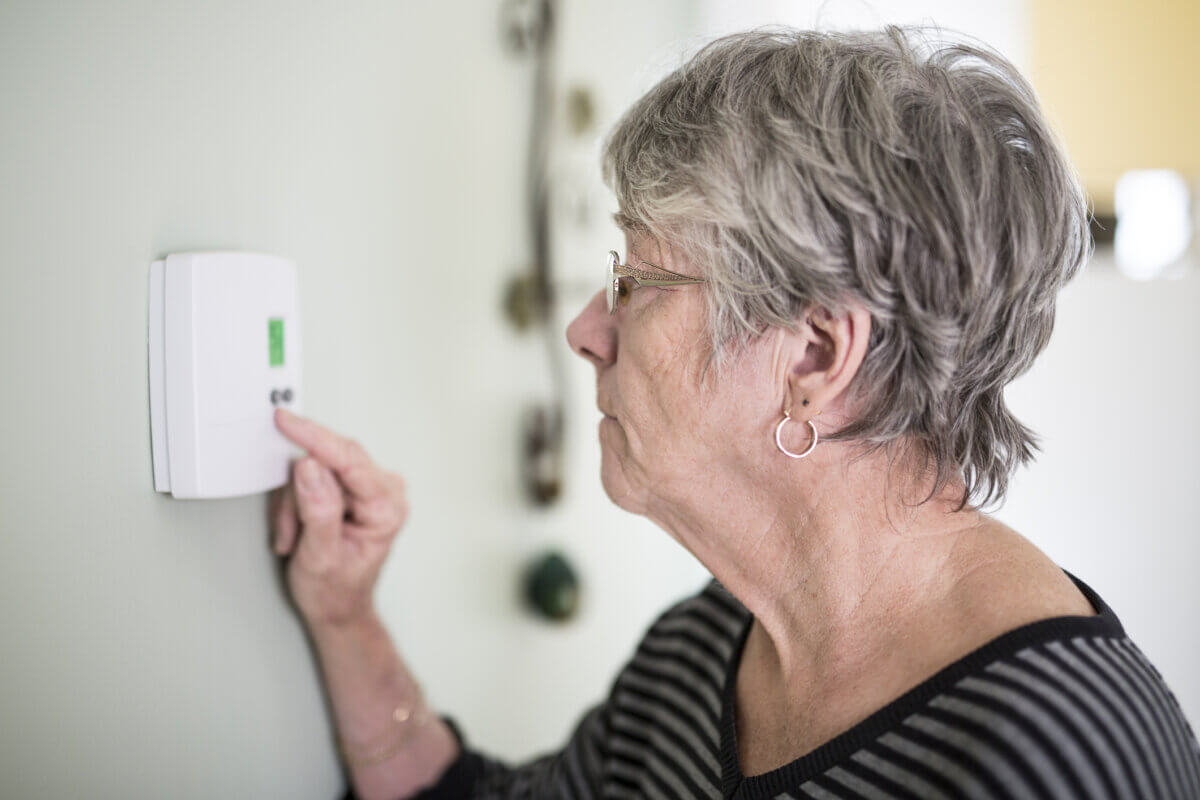
BOSTON — That perfect thermostat setting might be more important than you think, especially at grandma and grandpa’s house. A new study finds that indoor temperature significantly affects older adults’ ability to concentrate, even in their own homes where they control the climate. The research suggests that as climate change brings more extreme temperatures, elderly individuals may face increased cognitive challenges unless their indoor environments are properly regulated.
Researchers at the Hinda and Arthur Marcus Institute for Aging Research, the research arm of Hebrew SeniorLife affiliated with Harvard Medical School, conducted a year-long study monitoring 47 community-dwelling adults aged 65 and older. The study tracked both their home temperatures and their self-reported ability to maintain attention throughout the day. What they discovered was a clear U-shaped relationship between room temperature and cognitive function. In other words, attention spans were optimal within a specific temperature range and declined when rooms became either too hot or too cold.
The sweet spot for cognitive function appeared to be between 20-24°C (68-75°F). When temperatures deviated from this range by just 4°C (7°F) in either direction, participants were twice as likely to report difficulty maintaining attention on tasks. This finding is particularly concerning given that many older adults live on fixed incomes and may struggle to maintain optimal indoor temperatures, especially during extreme weather events.

Many previous studies have examined temperature’s effects on cognition in controlled laboratory settings, but this research breaks new ground by studying people in their natural home environments over an extended period. The research team used smart sensors placed in participants’ primary living spaces to continuously monitor temperature and humidity levels, while participants completed twice-daily smartphone surveys about their thermal comfort and attention levels.
The study’s findings revealed an interesting asymmetry in how people responded to temperature variations. While both hot and cold conditions impaired attention, participants seemed particularly sensitive to cold temperatures. When reporting feeling cold, they showed greater cognitive difficulties across a wider range of actual temperatures compared to when they felt hot. This suggests that maintaining adequate heating may be especially crucial for preserving cognitive function in older adults during winter months.
“Our findings underscore the importance of understanding how environmental factors, like indoor temperature, impact cognitive health in aging populations,” said lead author Dr. Amir Baniassadi, an assistant scientist at the Marcus Institute, in a statement. “This research highlights the need for public health interventions and housing policies that prioritize climate resilience for older adults. As global temperatures rise, ensuring access to temperature-controlled environments will be crucial for protecting their cognitive well-being.”
This study follows a 2023 investigation measuring how temperature affected older adults’ sleep and cognitive ability, building a growing body of evidence that climate change impacts extend beyond physical health. While much attention has been paid to the direct health impacts of heat waves and cold snaps, this research suggests that even moderate temperature variations inside homes could affect older adults’ daily cognitive functioning.
The participant group, while relatively small, was carefully monitored. With an average age of 79 years, the cohort completed over 17,000 surveys during the study period. Most participants lived in private, market-rate housing (34 participants) rather than subsidized housing (13 participants), suggesting they had reasonable control over their home environments. This makes the findings particularly striking: if even relatively advantaged older adults experience cognitive effects from temperature variations, more vulnerable populations may face even greater challenges.
The connection between temperature and cognition isn’t entirely surprising. As we age, our bodies become less efficient at regulating temperature, a problem often compounded by chronic conditions like diabetes or medications that affect thermoregulation. What’s novel about this research is its demonstration that these physiological vulnerabilities may extend to cognitive function in real-world settings.
As winter gives way to spring and thermostats across the country get adjusted, this research suggests we might want to pay closer attention to those settings — especially in homes where older adults reside. The cognitive sweet spot of 68-75°F might just be the temperature range where wisdom flourishes.
Paper Summary
Methodology Explained
The researchers recruited participants through senior living facilities and community centers in Boston. Each participant had environmental sensors installed in their main living area and received twice-daily smartphone surveys between 9 AM and 6 PM. These surveys asked about their thermal comfort on a seven-point scale from “very cold” to “very hot” and whether they were having difficulty maintaining attention. The study tracked participants for up to 12 months, with some having shorter participation periods due to rolling enrollment.
Results Breakdown
The study found that the odds of reporting difficulty with attention were lowest when room temperatures were between 20-24°C (68-75°F) and doubled when temperatures deviated by 4°C in either direction. Participants reported feeling cold about 16.8% of the time and feeling hot about 6.5% of the time. Overall, participants reported attention difficulties in about 5.7% of their responses.
Study Limitations
The research had several important limitations. The sample size was relatively small at 47 participants and consisted primarily of well-educated individuals living in market-rate housing in Boston. The study relied on self-reported attention difficulties rather than objective cognitive tests, and researchers couldn’t monitor participants’ medication changes during the study period. The findings may not generalize to other cities with different climates or housing characteristics.
Discussion and Takeaways
The research suggests that maintaining optimal indoor temperatures could be an important and relatively simple way to support cognitive function in older adults. The findings have implications for public health policy, housing regulations, and healthcare practices, particularly as climate change threatens to increase temperature extremes. The researchers recommend developing technological, financial, and policy interventions to help older adults maintain comfortable home environments.
Publication Information
This study was published in The Journal Of Gerontology: Series A on December 3, 2024. The article is titled “Home Ambient Temperature and Self-reported Attention in Community-Dwelling Older Adults” and was authored by researchers from the Marcus Institute for Aging Research and Harvard Medical School.
Funding and Disclosures
The research was supported by a T32 fellowship (T32AG023480) through the U.S. National Institute on Aging and funding from the TMCITY foundation. Other researchers on the study included Wanting Yu, BSc, Project Director I; Thomas Travison, PhD, Senior Scientist; Ryan Day; Lewis Lipsitz, MD, Director, Marcus Institute and Chief Academic Officer, Irving and Edyth S. Usen and Family Chair in Medical Research, Hebrew SeniorLife; and Brad Manor, PhD, associate scientist.


