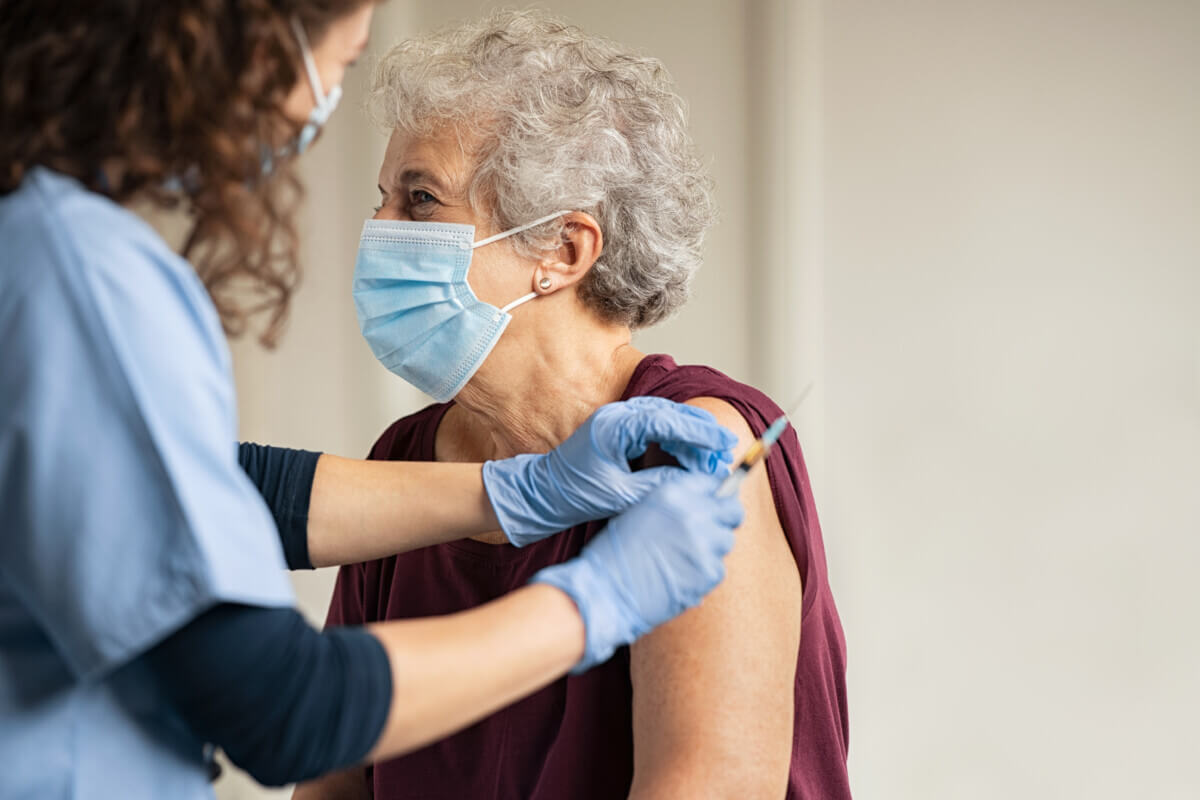
A patient is given the COVID-19 vaccine or booster shot. (© Rido - stock.adobe.com)
In A Nutshell
- Boosters work: COVID-19 vaccines significantly reduce hospitalizations in cancer patients, with a 29–30% drop in risk after monovalent or bivalent boosters.
- Low uptake: Only 38% of eligible cancer patients received the updated bivalent booster, despite strong evidence of benefit.
- High-impact protection: Doctors need to vaccinate just 166 cancer patients with a monovalent booster to prevent one hospitalization—far fewer than the 1,107 needed in the general population.
- More outreach needed: The study highlights the need for targeted efforts to improve vaccination rates in this high-risk group.
LOS ANGELES — Despite being at increased risk for severe COVID-19, nearly one-third of cancer patients skipped their recommended booster shots, and an alarming 62% never received the updated bivalent vaccine. A vast new study involving more than 160,000 cancer patients reveals that while COVID vaccines provide significant protection for this vulnerable population, the sheer number of people going without boosters means thousands of preventable hospitalizations and deaths.
Cancer patients who received booster shots were 29% less likely to end up hospitalized with COVID compared to those who only got their initial vaccine series. Even more telling, doctors would only need to vaccinate 166 cancer patients with a monovalent booster to prevent one hospitalization. That’s a remarkably low number which shows how effective these shots are for people fighting cancer.
Why COVID-19 Hits Cancer Patients Harder Than Most
Cancer patients encounter unique dangers when battling COVID-19. Their disease and treatments — chemotherapy, immunotherapy, and steroids — weaken their immune systems, making them vulnerable to severe infections. Unlike healthy adults who might experience COVID as a bad cold, cancer patients face substantially higher rates of hospitalization and intensive care admission.
The numbers tell a sobering story. During the study period examining boosters from January through August 2022, cancer patients suffered COVID hospitalizations at a rate of 41.9 per 1,000 person-years among the unvaccinated versus 30.5 per 1,000 among those who got boosters. For comparison, healthy adults saw hospitalization rates of just 3.6 per 1,000 person-years without boosters and 2.1 per 1,000 with them.
While vaccine effectiveness was actually higher in healthy people (51% versus 29% in cancer patients), the number needed to vaccinate was substantially lower for cancer patients. Doctors would need to vaccinate 1,107 healthy adults to prevent one hospitalization, but only 166 cancer patients — meaning the vaccines deliver much more protection per shot in this high-risk group.

How This Study Tracked 160,000 Cancer Patients Over Time
The research team, led by Dr. Jacek Skarbinski from Kaiser Permanente Northern California, analyzed data from four major health care systems between January 2022 and August 2023. They tracked 72,831 cancer patients during the monovalent booster period and 88,417 during the bivalent vaccine period, accumulating over 115,000 person-years of follow-up data.
Cancer patients included in the study had received chemotherapy or immunotherapy within the past year for various cancers including lung, breast, prostate, colorectal, and blood cancers like leukemia and lymphoma. The researchers excluded patients with skin cancer only or those receiving just surgery or radiation, focusing on people with the most compromised immune systems.
Results varied by cancer type, but protection held across the board. Patients with blood cancers saw particularly strong benefits, with boosters preventing ICU admissions 36% of the time and requiring vaccination of only 115 patients to prevent one hospitalization. Lung cancer patients saw their hospitalization risk drop by 36% with boosters.
Most Cancer Patients Skip COVID Boosters: Why That Matters
The bivalent vaccine period, covering September 2022 through August 2023, painted an even more concerning picture. Only 38% of cancer patients received the updated shot. Despite this low uptake, the bivalent vaccines proved just as effective as the earlier boosters, reducing hospitalizations by 30% and requiring vaccination of 451 patients to prevent one hospitalization.
The study, published in JAMA Oncology, found that those receiving different types of treatment, whether chemotherapy, immunotherapy, or steroids, all saw meaningful protection from boosters. This shows that regardless of their specific treatment regimen, cancer patients should prioritize staying current with COVID vaccinations.
The researchers concluded that “COVID-19 booster vaccinations were associated with significant protection against severe COVID-19, with a favorable NNV among persons with cancer. However, uptake of COVID-19 vaccine boosters was low, and interventions are therefore justified to increase COVID-19 uptake in this high-risk population.”
Oncologists Urgently Need to Prioritize COVID Booster Outreach
The research provides compelling evidence that COVID vaccines should be a priority for cancer patients. The combination of high baseline risk and strong vaccine effectiveness creates an urgent need for systematic vaccination protocols in cancer centers and oncology practices.
With COVID-19 becoming endemic, it’s tempting to treat it as just another seasonal virus. But for cancer patients, COVID remains a serious threat that vaccines can substantially reduce. Cancer patients experienced hospitalization rates more than 10 times higher than healthy adults, creating preventable strain on healthcare systems and suffering for patients and families.
Given the substantial difference in risk and proven vaccine effectiveness in this population, the low uptake rates represent a significant gap in protection that needs addressing through targeted interventions in this high-risk group.
Disclaimer: This article summarizes findings from a peer-reviewed observational study. The results show associations, not causation, and are based on data from four major U.S. health systems. While the study supports the benefit of COVID-19 boosters in cancer patients, it does not explore all possible factors affecting vaccine uptake or individual treatment decisions. Patients should consult their healthcare providers for personalized medical advice.
Paper Summary
Methodology
Researchers conducted a retrospective study using electronic health records from four major U.S. health systems: Cedars-Sinai, Kaiser Permanente Northern California, Northwell Health, and Veterans Health Administration. They tracked adult cancer patients aged 18-89 who had received chemotherapy or immunotherapy within the past year. The study examined two time periods: January-August 2022 for monovalent boosters and September 2022-August 2023 for bivalent vaccines. Statistical analysis used Cox proportional hazards modeling to compare outcomes between vaccinated and unvaccinated patients while controlling for age, sex, race, ethnicity, and health conditions.
Results
Among 72,831 cancer patients in the monovalent period, 69% received boosters, which reduced COVID hospitalizations by 29.2% with a number needed to vaccinate of 166. The bivalent period included 88,417 cancer patients, with only 38% receiving the updated vaccine, which reduced hospitalizations by 29.9% with a number needed to vaccinate of 451. Both vaccines significantly reduced ICU admissions (35.6% for monovalent, 30.1% for bivalent) and diagnosed COVID cases. Benefits were consistent across different cancer types and treatment regimens.
Limitations
As an observational study, it cannot prove causation, only association between vaccination and outcomes. The research relied on electronic health records, potentially missing unreported at-home test results. Sample sizes for some specific cancer subtypes were small. The study couldn’t assess optimal timing of vaccination relative to cancer treatment and didn’t stratify by specific cancer therapies. Results may not generalize beyond the four health systems studied.
Funding and Disclosures
The study was supported by the National Cancer Institute Serological Sciences Network, the Physician Researcher Program of The Permanente Medical Group, and the U.S. Veterans Health Administration. One researcher reported receiving personal fees from multiple pharmaceutical companies and institutional funding from several drug manufacturers. No other significant conflicts of interest were reported.
Publication Information
The study “COVID-19 Vaccine Booster Uptake and Effectiveness Among US Adults With Cancer” was published online July 17, 2025, in JAMA Oncology. The research was led by Dr. Jacek Skarbinski from Kaiser Permanente Northern California’s Division of Research and involved researchers from Northwell Health, Cedars-Sinai Medical Center, and the Cleveland Veterans Affairs Medical Center.


