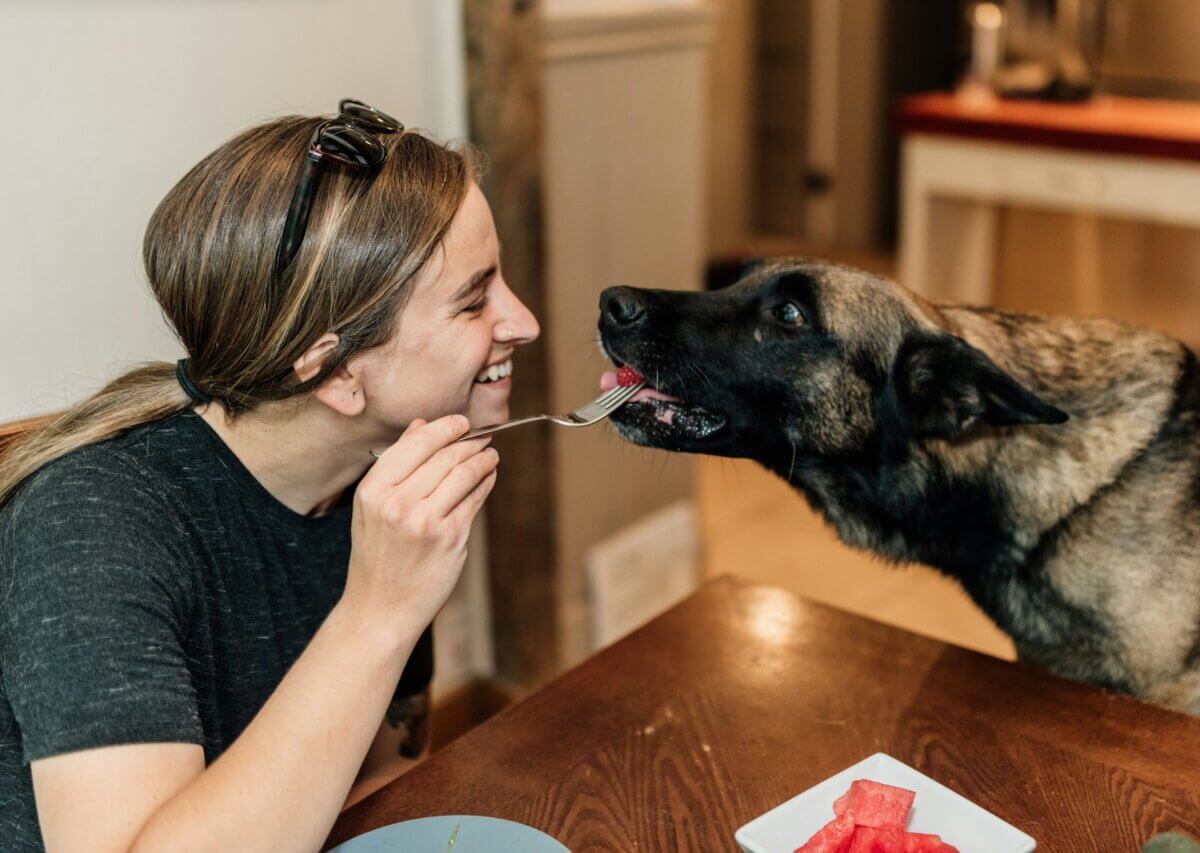
(Photo by Unsplash+ in collaboration with Sandra Seitamaa)
In A Nutshell
- Dogs are wired to sense human emotions through voice tone, facial expressions, and even scent thanks to thousands of years of co-evolution with humans.
- Brain scans show dogs have dedicated regions for processing human voices and emotions, especially emotionally charged sounds like laughter or crying.
- Emotional contagion is real: Dogs can mirror our stress levels, sometimes even syncing their heartbeats with ours during tense moments.
- Eye contact triggers oxytocin surges in both dogs and humans, creating a hormonal feedback loop that deepens the bond, something not seen in wolves.
- Domestication enhanced dogs’ emotional intelligence, tuning their brains to better read and respond to human social cues.
Your dog tilts its head when you cry, paces when you’re stressed, and somehow appears at your side during your worst moments. Coincidence? Not even close.
Thousands of years of co-evolution have given dogs special ways to tune in to our voices, faces and even brain chemistry. From brain regions devoted to processing our speech to the “love hormone” or oxytocin that surges when we lock eyes, your dog’s mind is hardwired to pick up on what you’re feeling.
The evidence for this extraordinary emotional intelligence begins in the brain itself. Dogs’ brains have dedicated areas that are sensitive to voice, similar to those in humans. In a brain imaging study, researchers found that dogs possess voice-processing regions in their temporal cortex that light up in response to vocal sounds.
Dogs respond not just to any sound, but to the emotional tone of your voice. Brain scans reveal that emotionally charged sounds – a laugh, a cry, an angry shout – activate dogs’ auditory cortex and the amygdala – a part of the brain involved in processing emotions.
Dogs are also skilled face readers. When shown images of human faces, dogs exhibit increased brain activity. One study found that seeing a familiar human face activates a dog’s reward centers and emotional centers – meaning your dog’s brain is processing your expressions, perhaps not in words but in feelings.
Dogs don’t just observe your emotions; they can “catch” them too. Researchers call this emotional contagion, a basic form of empathy where one individual mirrors another’s emotional state. A 2019 study found that some dog-human pairs had synchronized cardiac patterns during stressful times, with their heartbeats mirroring each other.
This emotional contagion doesn’t require complex reasoning – it’s more of an automatic empathy arising from close bonding. Your dog’s empathetic yawns or whines are probably due to learned association and emotional attunement rather than literal mind-mirroring.
The Oxytocin Effect
The most remarkable discovery in canine-human bonding may be the chemical connection we share. When dogs and humans make gentle eye contact, both partners experience a surge of oxytocin, often dubbed the “love hormone.”
In one study, owners who held long mutual gazes with their dogs had significantly higher oxytocin levels afterwards, and so did their dogs.
This oxytocin feedback loop reinforces bonding, much like the gaze between a parent and infant. Astonishingly, this effect is unique to domesticated dogs: hand-raised wolves did not respond the same way to human eye contact. As dogs became domesticated, they evolved this interspecies oxytocin loop as a way to glue them emotionally to their humans. Those soulful eyes your pup gives you are chemically binding you two together.
Beyond eye contact, dogs are surprisingly skilled at reading human body language and facial expressions. Experiments demonstrate that pet dogs can distinguish a smiling face from an angry face, even in photos.
Dogs show a subtle right-hemisphere bias when processing emotional cues, tending to gaze toward the left side of a human’s face when assessing expressions – a pattern also seen in humans and primates.
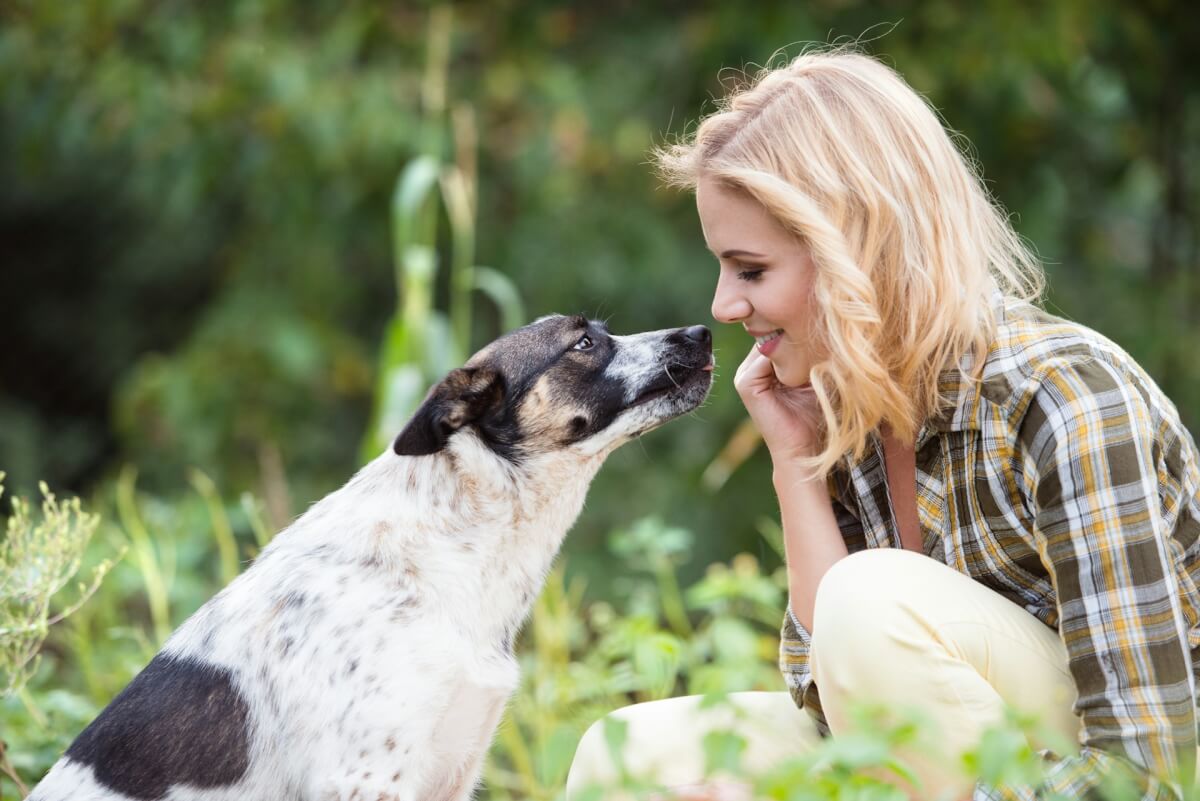
Dogs rely on multiple senses to discern how you’re feeling. A cheerful, high-pitched “Good boy!” with a relaxed posture sends a very different message than a stern shout with rigid body language. Remarkably, they can even sniff out emotions. In a 2018 study, dogs exposed to sweat from scared people exhibited more stress than dogs that smelled “happy” sweat. In essence, your anxiety smells unpleasant to your dog, whereas your relaxed happiness can put them at ease.
Bred For Friendship
How did dogs become so remarkably attuned to human emotions? The answer lies in their evolutionary journey alongside us. Dogs have smaller brains than their wild wolf ancestors, but in the process of domestication, their brains may have rewired to enhance social and emotional intelligence.
Clues come from a Russian fox domestication experiment. Foxes bred for tameness showed increased gray matter in regions related to emotion and reward. These results challenge the assumption that domestication makes animals less intelligent. Instead, breeding animals to be friendly and social can enhance the brain pathways that help them form bonds.
In dogs, thousands of years living as our companions have fine-tuned brain pathways for reading human social signals. While your dog’s brain may be smaller than a wolf’s, it may be uniquely optimized to love and understand humans.
Dogs probably aren’t pondering why you’re upset or realizing that you have distinct thoughts and intentions. Instead, they excel at picking up on what you’re projecting and respond accordingly.
So dogs may not be able to read our minds, but by reading our behavior and feelings, they meet us emotionally in a way few other animals can. In our hectic modern world, that cross-species empathy is not just endearing; it’s evolutionary and socially meaningful, reminding us that the language of friendship sometimes transcends words entirely.
Laura Elin Pigott, Senior Lecturer in Neurosciences and Neurorehabilitation, Course Leader in the College of Health and Life Sciences, London South Bank University. She does not work for, consult, own shares in or receive funding from any company or organization that would benefit from this article, and has disclosed no relevant affiliations beyond their academic appointment.
This article is republished from The Conversation under a Creative Commons license. Read the original article.


