
3D illustration of a brain tumor. (Credit: Kateryna Kon on Shutterstock)
In A Nutshell
- Glioblastoma is linked with thinner skull bones at suture points in mice and in patient CT scans.
- Tiny skull-to-brain channels widen in tumor-bearing mice, suggesting faster immune-cell traffic.
- Skull marrow shifts toward neutrophils while B-cell subsets deteriorate; femur marrow responds differently.
- Blocking bone resorption erased a checkpoint benefit in one mouse model and warrants careful clinical study.
NEW YORK — The deadliest type of brain cancer does something doctors didn’t expect: it thins the skull. New research shows glioblastoma goes beyond just attacking the brain; it also weakens the bone protecting it and opens up pathways that may actually help the tumor grow.
Scientists at Albert Einstein College of Medicine found that brain tumors trigger bone loss across the skull, especially where the bones connect at the back of the head. Patients with glioblastoma had noticeably thinner skulls compared to people without brain tumors, even though overall bone density stayed the same.
How Tumors Change the Skull
The research team used powerful scanners to monitor the progression of glioblastoma in mice. They observed bone changes beginning early and progressing as the disease advanced. The cancer woke up cells called osteoclasts, which act as the body’s demolition crew of sorts for old bone, and got them working in overdrive.
The bone loss wasn’t random. It focused on the skull’s seams, the spots where separate bone plates fused together during our infancy. These areas connect to the dura, a tough covering over the brain, through tiny tunnels less than the width of a human hair.
Glioblastoma made these tunnels bigger and created more of them. That could mean wider highways for immune cells to travel from the skull’s bone marrow straight to the tumor.
The pattern was specific to brain tumors. When researchers caused strokes or other brain injuries in mice, nothing happened to the skull. Even breast cancer cells in the brain created a completely different pattern. And when they grew glioblastoma tumors under the skin instead of in the brain, the skull stayed normal.

The Skull’s Hidden Immune System
Most people don’t realize the skull contains bone marrow just like the long bones in your legs. But it turns out skull marrow and leg marrow are completely different worlds when it comes to fighting cancer.
In healthy mice, the skull marrow was packed with B cells, a type of immune cell that helps fight infection. Glioblastoma wiped out most of these protective cells. At the same time, another type of immune cell called neutrophils nearly doubled in number.
The leg bone marrow changed differently. Some cells that grew in skull marrow actually shrank in leg marrow.
Here’s the problem: many of these skull neutrophils weren’t helping. They carried markers that actually shut down other immune responses. When researchers used an immunotherapy drug called anti-PD-L1, mice lived longer — but only if nothing interfered with the bone changes.
The Osteoporosis Drug Surprise
Knowing the tumors were eating away at skull bone, researchers tried something logical: give drugs that prevent bone loss. They tested two FDA-approved medications: zoledronic acid (the osteoporosis drug many people take) and an antibody that blocks bone breakdown.
The results were shocking.
In mice with the most aggressive type of glioblastoma, zoledronic acid actually made things worse. The drug stopped the skull from thinning, but tumors grew faster and mice died sooner.
Even worse, these bone drugs completely canceled out the benefits of immunotherapy. Anti-PD-L1 normally helped mice live longer. But add a bone drug to the mix, and that advantage disappeared.
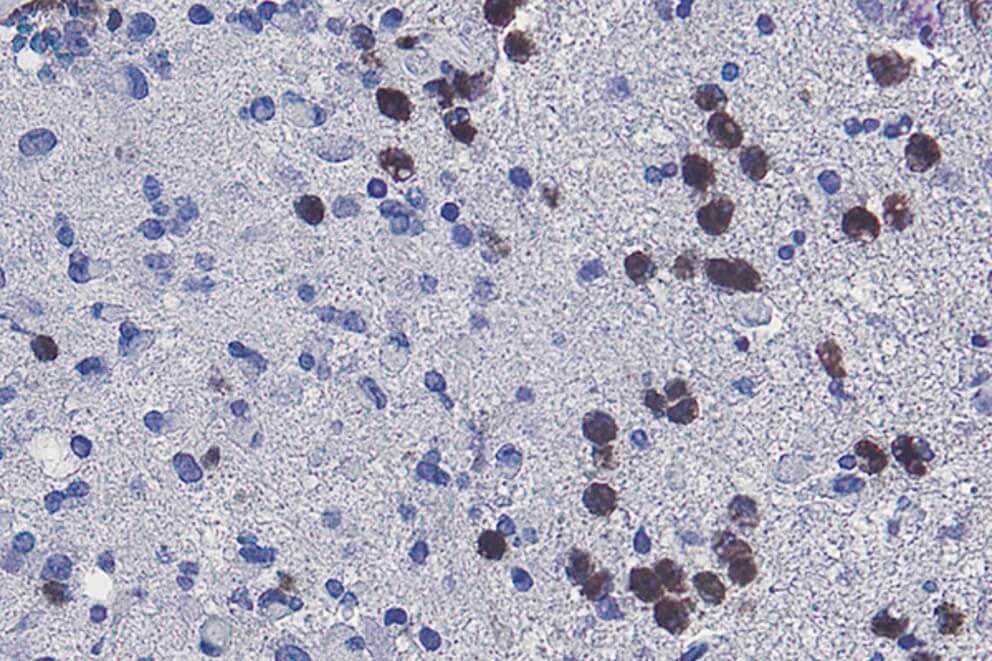
Lab tests showed why: bone drugs flooded the tumors with those problematic neutrophils and sent suppressive signals to tumor cells. The T cells that immunotherapy was supposed to activate couldn’t do their job anymore.
This might explain a puzzling human trial from years ago. When glioblastoma patients took zoledronic acid for bone health, only 46% survived six months. In other trials where patients got standard treatment without the bone drug, 83% made it to six months. The bone drug trial was stopped early because tumors were growing too fast.
Two Types of Tumors, Two Different Stories
Not all glioblastomas act the same. The study looked at two types, and they behaved very differently.
The more aggressive type (called mesenchymal) caused worse skull damage and had more than ten times as many neutrophils. This matters because about one-third of human glioblastomas are this aggressive type.
The genetic differences were huge too. Researchers found over 5,500 genes acting differently between the two tumor types, affecting hundreds of immune system pathways.
The Same Thing Happens in People
To make sure their findings weren’t just a mouse phenomenon, researchers looked at CT scans from 26 glioblastoma patients and compared them to 22 people without brain cancer.
The skull thinning was clear. Patients with glioblastoma had thinner bone where the skull plates meet at the back of the head and at several other connection points.
What’s strange: tumor size didn’t matter. Small tumors thinned the skull as much as large ones. Location didn’t matter either. A tumor on the left side of the brain affected the skull the same way as a tumor on the right.
Normally, women have thicker bone at the base of the skull than men. But in glioblastoma patients, that difference vanished. The disease somehow overrode normal bone structure.
Age wasn’t the culprit either. Older people in the comparison group didn’t have thinner skulls than younger ones, so this was definitely the disease, not just aging.
What This Means Going Forward
These findings raise important questions for doctors. Millions of people take bone-strengthening drugs like zoledronic acid and denosumab to prevent fractures. Cancer patients often get them too, to protect bones weakened by treatment.
But if these drugs help glioblastoma grow, especially the aggressive types, doctors might need to rethink prescribing them to brain cancer patients.
The research also explains why immunotherapy hasn’t worked well for glioblastoma when it’s been a game-changer for other cancers. The skull marrow might be sabotaging treatment by sending in cells that protect the tumor instead of attacking it.
Better treatments might need to target specific troublemaking neutrophils without completely stopping bone remodeling. The immunotherapy drug worked great in mice, just not when bone drugs were in the picture.
There’s also something unique about skull anatomy. Those tiny channels connecting bone marrow to the brain’s covering provide direct routes for immune cells to reach tumors. In tumor-bearing mice, these channels got bigger and more numerous, potentially delivering more tumor-protecting cells right where they’d do the most harm.
Disclaimer: This article is for general information and not medical advice. Patients should discuss any treatment decisions with their doctor and care team.
Paper Summary
Methdology
Researchers created brain tumors in mice by injecting 50,000 cancer cells into the brain. They compared these mice to controls that had fake surgeries, strokes, or tumors grown under the skin. Using powerful scanners that can see details as small as 9 micrometers (about one-tenth the width of a human hair), they measured bone structure changes over time. They also used special microscopes to watch bone-remodeling cells in living mice and analyzed individual cell genetics from skull marrow and leg marrow. For the human part of the study, they examined CT scans from 26 glioblastoma patients and 22 similar people without brain cancer, measuring skull thickness at five specific spots. Some mice received osteoporosis drugs, immunotherapy drugs, or both, to test which treatments helped or hurt.
Results
Scans showed significant bone loss at skull seams in both mouse tumor types, starting as early as day 8-15 and continuing through late-stage disease. The back of the skull, far from where tumors were injected, showed the worst damage. The tiny channels connecting skull marrow to the brain increased in both number and width. Human CT scans confirmed patients with glioblastoma had thinner skulls at the back of the head compared to controls, with no connection to tumor size, location, or patient age. Genetic analysis revealed skull marrow B cells dropped dramatically while neutrophils nearly doubled; skull marrow and leg marrow responded completely differently to tumors. Microscope studies showed bone-remodeling cells changed their behavior during tumor growth. When mice got zoledronic acid, survival actually got worse in the aggressive tumor type despite the drug preventing bone loss. Combining bone-blocking drugs with immunotherapy eliminated the immunotherapy’s survival benefit. Lab tests showed bone drugs increased problematic neutrophils while decreasing helpful T cells.
Limitations
The study used only two types of mouse brain tumors, which might not represent all human glioblastoma varieties. Only 26 human patients had CT scans available because most glioblastoma patients get MRI scans instead of CT scans. The comparison group had mostly stroke and epilepsy patients rather than completely healthy people, though these conditions didn’t affect the skull in mice. Genetic snapshots were taken at specific times rather than continuously throughout the disease. Extracting skull marrow was technically difficult and might have introduced some inconsistency. Drug tests focused on two bone medications and one immunotherapy rather than testing many treatment combinations. The study measured survival but not quality of life. Researchers couldn’t prove whether bone erosion happens because tumors directly attack bone or because the bone marrow changes first. Most experiments used female mice, so results might differ in males.
Funding and Disclosures
The Marie Skłodowska-Curie Actions Global Fellowship and several NIH grants funded the work, including money for advanced imaging equipment and support for the Einstein Cancer Center. Additional help came from core facilities at Albert Einstein College of Medicine. The researchers reported no financial conflicts of interest.
Publication Details
Dubey, A., Yamashita, E., Stangeland, B., Abbas, I., Fooksman, D., Harris, R.A., Palmer, G.M., Koba, W.R., Zhang, J., Himes, B.T., Lu, O.R., Ho, W.S., Kuiper, R.V., Huffman, D., Wu, Z., Uchida, Y., Ishii, M., Welch, R.L., Fiedler, A.F., Reynolds, D., Hosainey, S.A.M., Dobrenis, K., Ye, Q., Fisher, K., Killian, N., Stanley, E.R., Eskandar, E., & Behnan, J. (2025). Brain tumors induce widespread disruption of calvarial bone and alteration of skull marrow immune landscape. Nature Neuroscience. DOI: 10.1038/s41593-025-02064-4


