
(© SciePro - stock.adobe.com)
???? Key Findings:
- The superior colliculus is a pea-sized brain region connected to eyesight
- It receives visual information directly from the retina
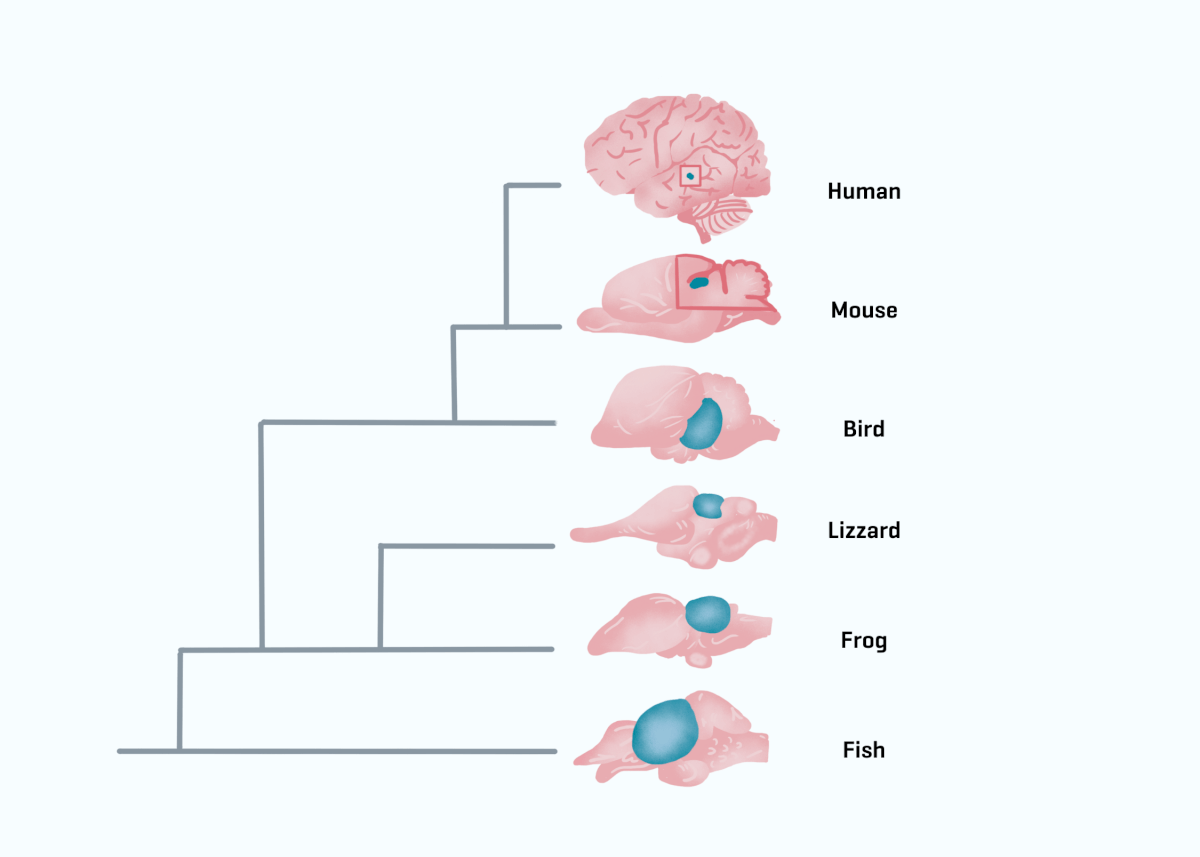
- Compared to other species, the superior colliculus in humans is incredibly small
AMSTERDAM, Netherlands — A groundbreaking brain discovery is challenging our understanding of how vision works. Researchers at the Netherlands Institute for Neuroscience have found that the superior colliculus, an ancient brain area preserved through evolution, still plays a significant role in our eyesight than previously believed. This revelation could have profound implications for understanding visual processing in both humans and animals.
Traditionally, the visual cortex has been recognized as the critical area for processing visual information, enabling us to distinguish objects from their background. However, this explanation does not account for animals with less developed visual cortices, raising the question: How do these creatures perceive the world around them?
The superior colliculus, a structure known to receive visual information directly from the retina, has been identified as a potential answer. This structure is a staple of the vertebrate nervous system, varying in size across species — from prominent in fish and birds to a modest presence in human brains.
Scientists conducted experiments with mice to explore the superior colliculus’s function in visual perception. By training mice to differentiate between figures and backgrounds presented on screens, the researchers could assess how disabling the superior colliculus affected their ability to perform this task.
Using a technique called optogenetics, which involves controlling neurons with light to turn them on or off, the team discovered that mice struggled with object detection when the superior colliculus was deactivated. This finding suggests that the superior colliculus is not just a passive relay station but actively involved in processing visual information.
“Previous research already showed that a mouse can still complete the task if you turn off its visual cortex, which suggests that there is a parallel pathway for visual object detection. In this study, we switched off the superior colliculus using optogenetics to see what effect that would have,” says study author Alexander Heimel, founder of the Cortical Structure & Function group at the Netherlands Institute of Neuroscience, in a media release.
“Contrary to the previous study, the mice became worse at detecting the object, indicating that the superior colliculus plays an important role during this process. Our measurements also showed that information about the visual task is present in the superior colliculus, and that this information is less present the moment a mouse makes a mistake. So, its performance in the task correlates with what we’re measuring.”
While it’s clear that the superior colliculus plays a crucial role in the visual systems of animals like mice, its function in humans, who have a more developed visual cortex, has been less understood. The research suggests that the superior colliculus could direct our gaze towards sudden movements, such as someone waving their hand. Interestingly, individuals who are blind due to damage to the visual cortex can still navigate and avoid obstacles, hinting that the superior colliculus may facilitate this ability.

“Our research shows that the superior colliculus might be responsible for this and may therefore be doing more than we thought,” explains Heimel.
This study opens new pathways for understanding how the brain processes visual information and suggests that the superior colliculus might be doing more heavy lifting than previously thought. It underscores the importance of revisiting and exploring the functions of ancient brain structures in modern species, potentially offering insights into vision-related disorders and rehabilitation for visual impairments.
The study is published in the journal eLife.


