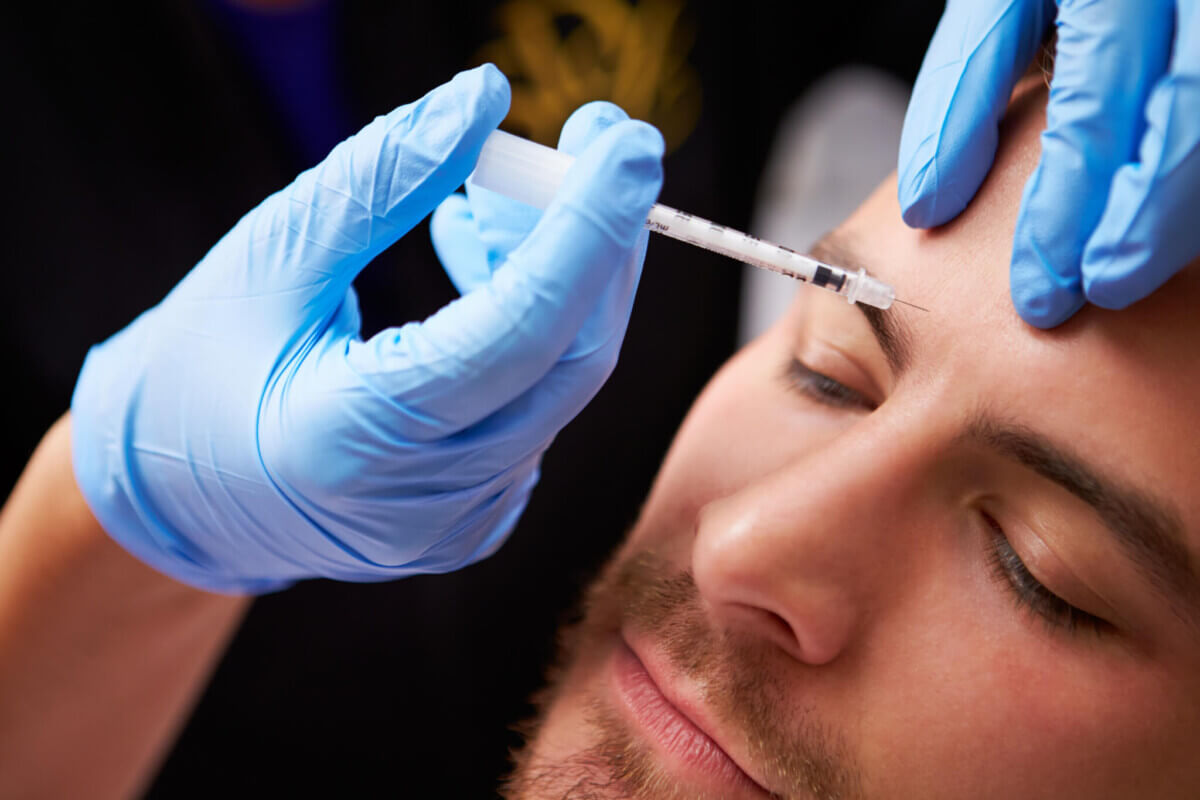
(© Monkey Business - stock.adobe.com)
SAN DIEGO — Botox is famous for easing wrinkles, but can it also be good for your mental health as well? A new study finds many patients taking the injections are also enjoying fewer symptoms of depression.
Botox, of course, is a medication that comes from the Botulinum toxin. Aside from its cosmetic uses, doctors use the drug to treat migraines, muscle spasms, excessive sweating, and even incontinence. The injections are also given in other places besides your forehead, like the neck, limbs, and bladder.
Researchers at the University of California, San Diego say an examination of almost 40,000 Botox users finds a significant drop in depression, regardless of what patients are taking the drug for. For six of the eight conditions treated with Botox, patients report a 40- to 88-percent decline in feelings of depression.
“It’s been thought that easing severe frown lines in forehead region disrupts a feedback loop that reinforces negative emotions,” study author Ruben Abagyan says in a university release. “But we’ve found here that the mechanism may be more complex, because it doesn’t really matter where the Botox is injected.”
Surprising side-effects of Botox
The San Diego team used data from the U.S. Food and Drug Administration’s Adverse Effect Reporting System (FAERS) to find this link. The database gathers information on patients who have negative reactions to medications.
Of the 13 million reports, the study looks that the thousands of Botox patients having adverse effects to their injections. Despite problems with the intended use of the drug, the improvement to mental health is giving researchers a reason of optimism.
“This finding is exciting because it supports a new treatment to affect mood and fight depression, one of the common and dangerous mental illnesses — and it’s based on a very large body of statistical data, rather than limited-scale observations,” FDA research fellow Tigran Makunts explains.
Heading for clinical trials
The study cautions that the FAERS data only looks at a small segment of Botox users. Researchers did not include information from patients also taking antidepressants. There may be underreporting of the use of over-the-counter drugs as well.
To test how much of a connection there really is between injections and depression, a clinical trial is now underway. Abagyan says the trial is looking specifically at forehead injections. He adds further trials may be necessary to discover the best place in the body and dosage size to make Botox an effective treatment for depression.
The study appears in the Scientific Reports.
[fb_follow /]


