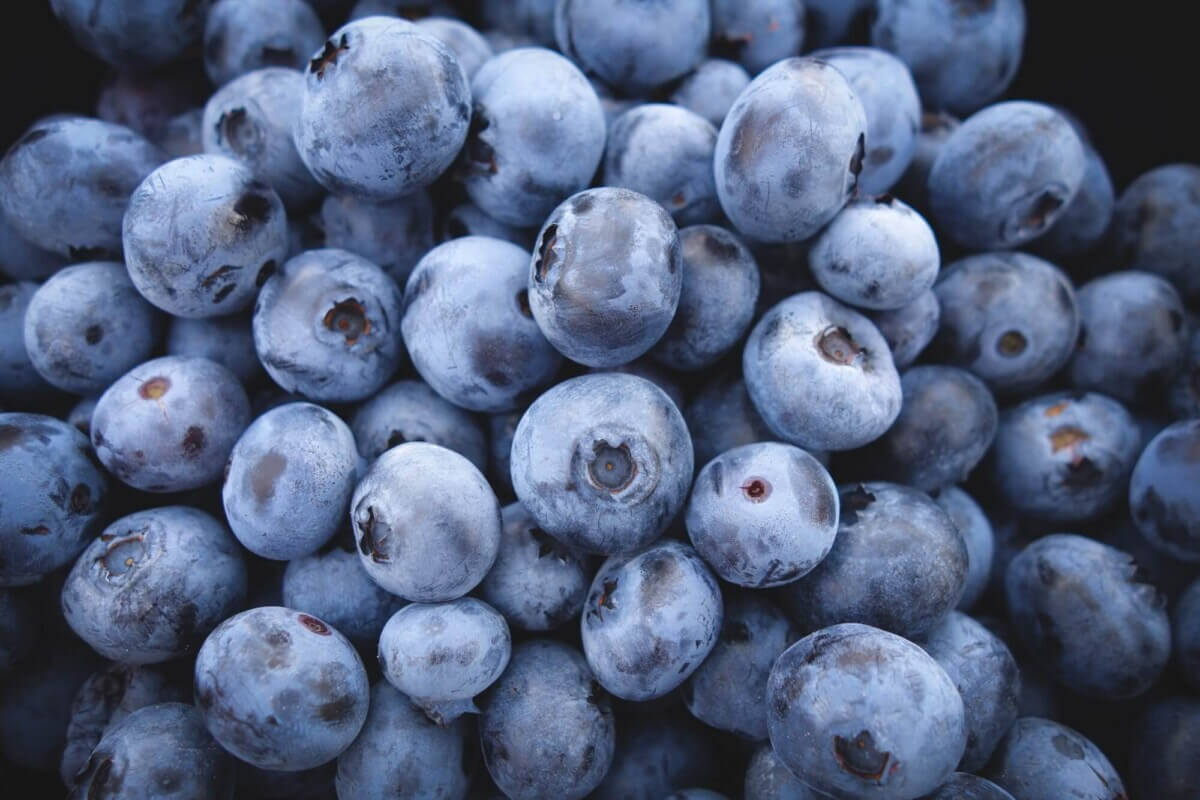
Photo by Jeremy Ricketts on Unsplash
TOKYO — Nature does a pretty great job of providing us with everything we need to stay healthy and nutritiously satisfied. For example, plenty of fruits and plants contain “bioactive” ingredients that help our bodies ward off and fight various diseases. Most of these so-called phytocompounds contain either anti-cancer, anti-inflammatory, or antioxidant properties. Now, researchers in Japan have uncovered a new compound in blueberries with robust immunosuppressive properties.
The compound, called pterostilbene (PSB), may prove useful as a therapeutic or treatment option for inflammatory bowel disease (IBD) and other chronic inflammatory diseases. PSB is actually quite similar to another phytocompound known as resveratrol (RSV).
“RSV, a polyphenol, was known to have pronounced immunomodulatory and anti-inflammatory effects on animal models of colitis ulcer. Therefore, we investigated the possibility of other compounds structurally similar to RSV as a new type of treatment for IBD,” explains corresponding study author Dr. Takuya Yashiro in a release.
Testing PSB from blueberries on mice with IBD proves successful
IBD sufferers battle painful, long-lasting ulcers within the gastrointestinal tract lining due to chronic inflammation. The source of that inflammation? An excessive bodily immune response. A big part of all this is the overproduction of immune molecules called cytokines. Dendritic cells (DCs) and T cells are also heavily involved in producing this harmful, “hyper” immune reaction. So, it was imperative that researchers test out the blueberry compound on all of these cells to see if it would produce a beneficial result.
Those experiments strongly indicated that PSB is capable of subduing harmful, excessive immune responses.
Further research using lab mice confirms these initial results. The rodents saw improved IBD symptoms after orally ingesting PSB. This validates two main findings: PSB indeed works as an anti-inflammatory property, and it’s easily absorbed by the body. In combination, those two elements make PSB a perfect candidate for future inflammatory disease drugs.
“For disease prevention, it is important to identify the beneficial components in foods and to understand the underlying mechanism by which immune responses and homeostasis are modulated in body. Our findings showed that PSB possesses a strong immunosuppressive property, paving the way for a new, natural treatment for IBD,” Dr. Yashiro concludes.
The study is published in The FASEB Journal.


