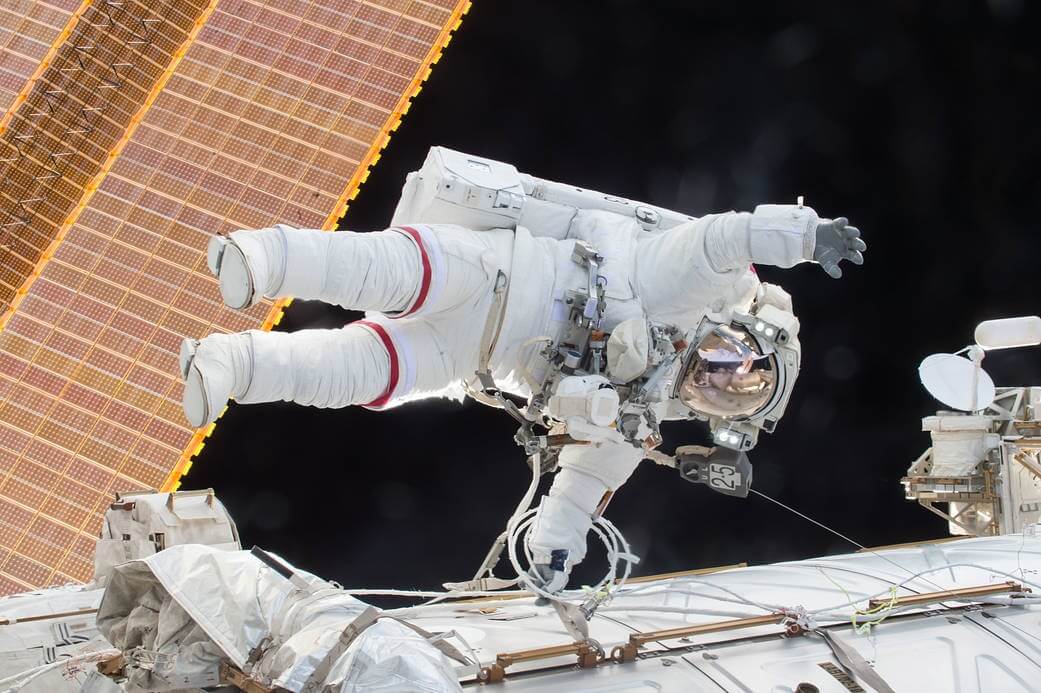
Astronaut Scott Kelly on a Spacewalk. (Copyright: NASA)
HOUSTON — Many of the astronauts going up to space are among the smartest people on the planet. However, a new NASA study has found a surprising effect of space travel — it may actually slow down the human brain.
Contrary to what you might expect, researchers discovered that while space travelers orbit the Earth, they experience some temporary mental slowdowns, including processing information slower and difficulties with attention and memory. Luckily, the study also finds spending months in space doesn’t permanently scramble an astronaut’s cognitive abilities. Their overall brain performance remains remarkably resilient.
The study, published in Frontiers in Physiology, examined 25 professional astronauts who spent an average of six months aboard the International Space Station (ISS). Scientists tracked their cognitive performance through a series of rigorous tests designed to measure everything from processing speed to memory and attention.
“We show that there is no evidence of any significant cognitive impairment or neurodegenerative decline in astronauts spending six months on the ISS,” explains Dr. Sheena Dev, the study’s lead researcher, in a media release.

So what exactly changed? Think of it like your brain running in “low power mode.” Astronauts completed tasks just as accurately as they would on Earth, but they took slightly longer to process information. Processing speed, working memory, and attention were the most affected cognitive domains — similar to how you might feel after a stressful, sleep-deprived day.
The most intriguing finding is how quickly the brain adapts. Some performance changes, like slower attention spans, were only noticeable early in the mission. Others, like reduced processing speed, took a bit longer to return to normal after the astronauts returned to Earth.
These insights are more than just scientific curiosity. As humanity looks toward ambitious missions to the Moon and Mars, understanding how the human brain responds to extreme environments becomes crucial. This research provides a baseline for future space explorers, helping mission planners anticipate and mitigate potential cognitive challenges.
Dr. Dev notes an important caveat: the study didn’t investigate whether these slight cognitive changes actually impacted the astronauts’ ability to perform their jobs in space.
“It could be that even in areas with observed declines, astronauts were still able to compensate and effectively complete their tasks,” the researcher says.
The research highlights the incredible adaptability of the human brain. Despite radiation, altered gravity, disrupted sleep, and the psychological stress of living in a confined space hundreds of miles from home, our cognitive capabilities remain remarkably stable.
For aspiring astronauts and space enthusiasts, the message is clear: the human mind is far more resilient than we might imagine. Our brains can adjust to environments that seem utterly alien, continuing to function with impressive precision even when pushed to extraordinary limits.
Paper Summary
Methodology
To understand how spaceflight affects cognition, the study examined 25 professional astronauts during 6-month missions to the International Space Station (ISS). Participants completed the Cognition Battery, a series of computer-based tests assessing cognitive functions like memory, attention, and problem-solving. Tests were conducted at five distinct phases: before the mission, early in-flight, late in-flight, shortly after landing, and later post-mission. The researchers calculated z-scores to measure changes from the astronauts’ pre-mission baseline, correcting for practice effects. Advanced statistical models then evaluated performance changes across the phases.
Key Results
The astronauts’ overall cognitive performance remained stable across the mission. However, specific areas showed temporary changes:
- Early Flight Effects: Slower processing speed, reduced visual working memory performance, and decreased sustained attention were noted.
- Late Mission Changes: Reduced risk-taking behavior emerged later in the flight.
- Post-Flight Recovery: Most cognitive abilities returned to baseline shortly after landing, but some aspects of visual working memory and processing speed took longer to recover.
Interestingly, only 11.8% of the tests showed significant declines (defined as 1.5 standard deviations below baseline), indicating that astronauts generally maintain strong cognitive functioning in space.
Study Limitations
The study’s sample size was relatively small, consisting of 25 astronauts, which limits generalizations. The early post-flight testing did not capture potential acute effects immediately after landing. Also, individual differences in factors like stress, workload, or sleep were not fully explored. These limitations suggest more comprehensive future studies are needed.
Discussion & Takeaways
The findings are encouraging, as they indicate that astronauts can maintain robust cognitive functioning during six-month ISS missions. Specific vulnerabilities — like slower processing speed and reduced risk-taking—highlight areas where targeted interventions, such as enhanced rest or focused training, could further optimize performance. This research is crucial for planning longer missions to destinations like Mars, where cognitive demands and stressors will be even greater.
Funding & Disclosures
The research was funded by NASA’s Human Research Program under the Standard Measures Cross-Cutting Project. The authors declared no commercial conflicts of interest. Additional acknowledgments included support from KBR, JES Tech, and the ISS astronaut crew, whose participation was invaluable in advancing our understanding of human cognition in space.


