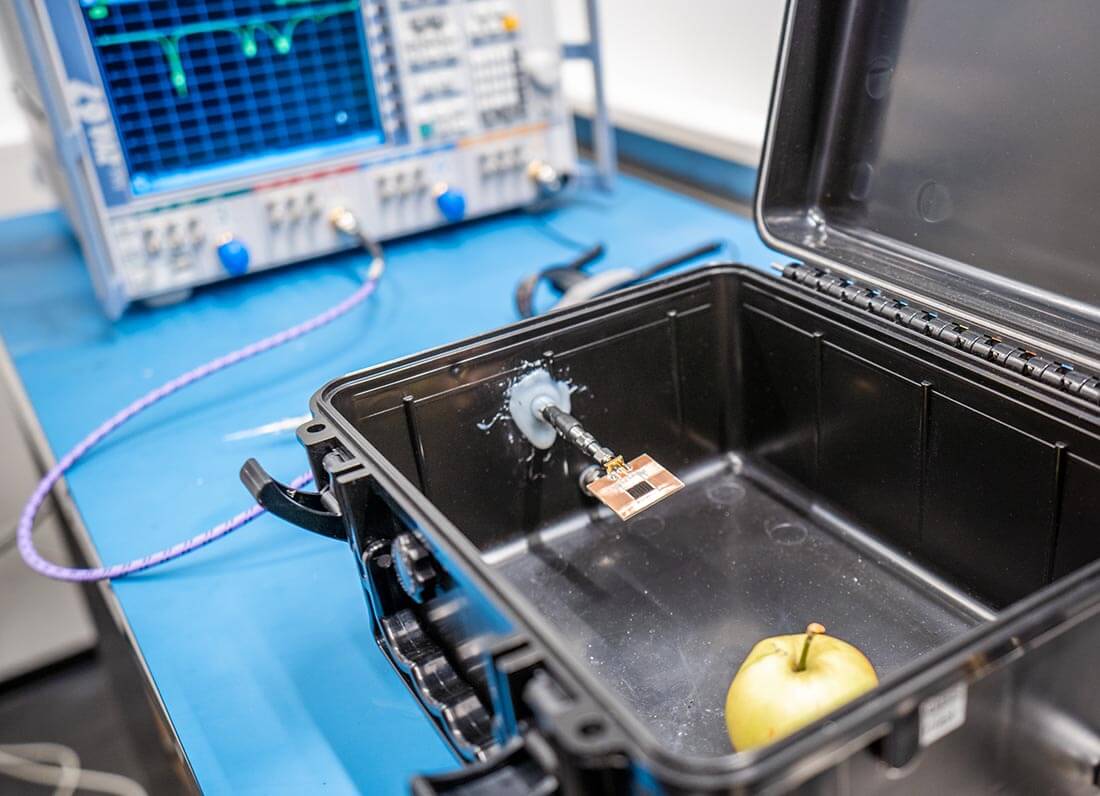
At the Norwegian University of Science and Technology (NTNU) in Gjøvik, researchers are combining sensors with antenna technology to be able to recognize different smells. (Photo credit: Mads Wang-Svendsen)
GJØVIK, Norway — Imagine a device that could sniff out mechanical damage in apples before bruising appears, detect diseases through a patient’s breath, monitor food freshness in real-time across entire supply chains, and identify hazardous gases in industrial settings — all using technology similar to what’s already in your smartphone. Scientists at the Norwegian University of Science and Technology (NTNU) have developed just such a device: a revolutionary electronic nose that achieves with a single sensor what typically requires hundreds.
This breakthrough, dubbed the “Ant-nose,” could transform how we monitor everything from food safety to environmental hazards, while being significantly simpler and less expensive than existing systems. What makes this development particularly remarkable is that it leverages familiar antenna technology — the same basic principle that helps our phones and computers communicate — to create an artificial sense of smell that in some ways surpasses both human and canine olfactory abilities.
Researchers believe the Ant-nose could match or exceed both human and canine olfactory abilities, using technology that’s already present in our homes. Their findings are published in the journal Sensors and Actuators: B. Chemical.
“We are literally surrounded by technology that communicates using antenna technology,” says Michael Cheffena, professor of telecommunications at NTNU, in a statement. The ubiquity of antennas in our everyday devices, from mobile phones to computers and TVs, creates an existing infrastructure that could be leveraged for this new sensing technology.
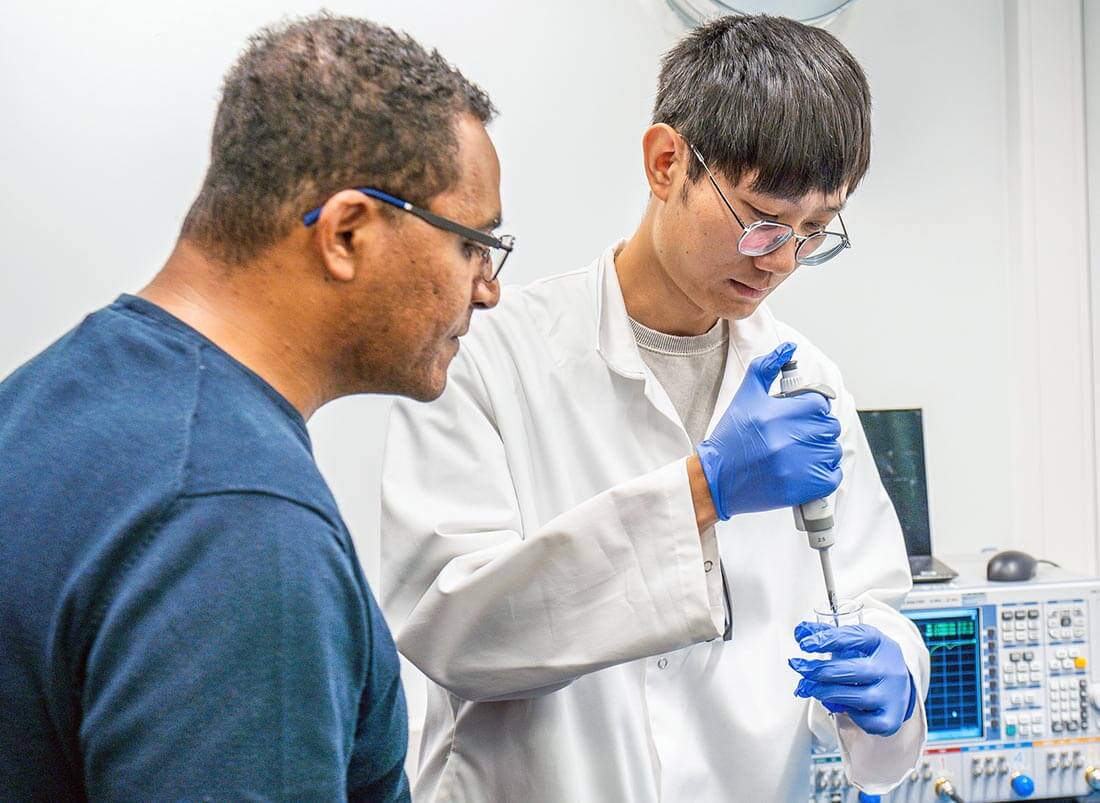
Traditional electronic noses, or e-noses, were inspired by how mammals smell. They usually need arrays of different sensors, sometimes hundreds of them, each coated with distinct materials to detect various gases. “Other electronic noses can have several hundred sensors, often each coated with different materials,” Cheffena explains. “This makes them both very power-intensive to operate and expensive to manufacture. They also entail high material consumption. In contrast, the antenna sensor consists of only one antenna with one type of coating.”
The Ant-nose works by transmitting radio signals at various frequencies and analyzing how they’re reflected back. These reflections create unique patterns based on the gases present, similar to chemical fingerprints. The device can detect volatile organic compounds (VOCs), gases that readily evaporate at low temperatures. These compounds are present throughout our environment — from the pleasant scent of freshly cut grass (which plants emit for protection and communication) to gasoline fumes.
One of the device’s notable capabilities is its ability to distinguish between isomers – chemical compounds that Yu Dang, the study’s lead author, describes as being “a bit like twins: very similar, yet not identical.” The Ant-nose demonstrates remarkable accuracy in differentiating these molecularly similar compounds, achieving a 96.7% accuracy rate in distinguishing between six different VOCs, including pairs of isomers.
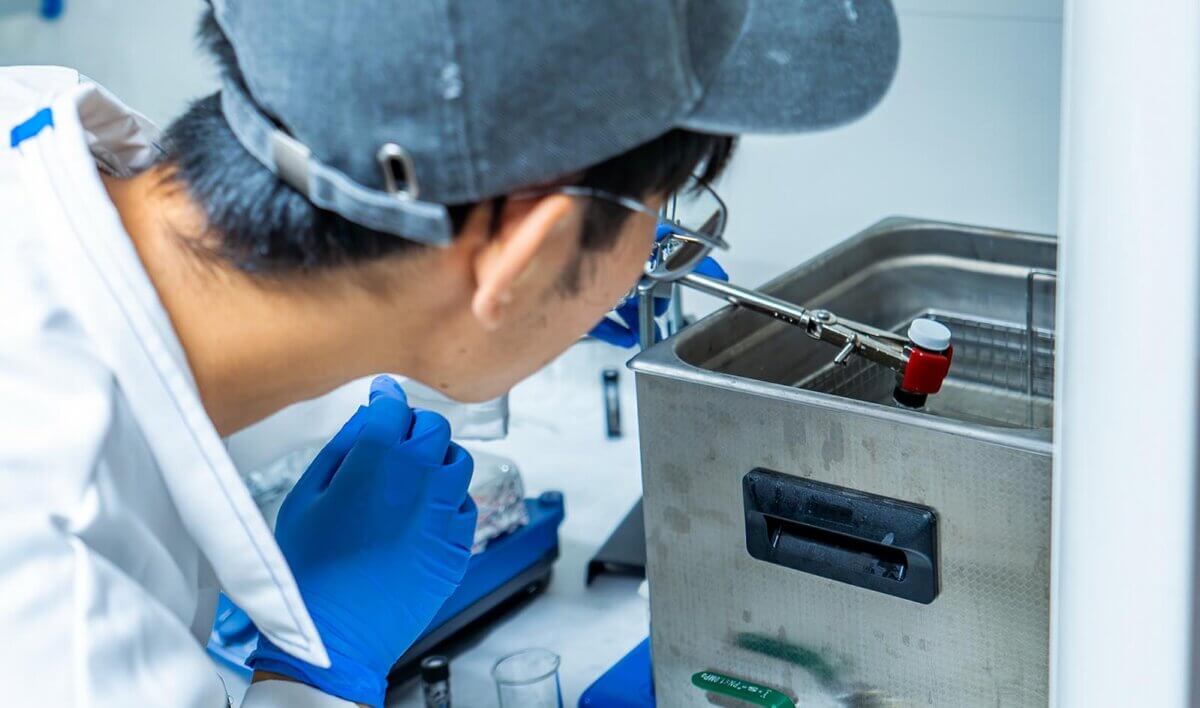
The research suggests several potential applications across industries. The Ant-nose could potentially assist in food quality monitoring, industrial safety, and environmental protection. Its ability to maintain stable communication while sensing makes it particularly interesting for integration into existing sensor networks.
In laboratory tests, researchers demonstrated the Ant-nose’s practical utility. They used it to assess apple damage by monitoring chemical emissions after applying pressure similar to what fruit might experience during shipping. The device successfully distinguished between damaged and undamaged apples, suggesting potential applications in food transport monitoring.
The team expanded their testing to evaluate food freshness, examining strawberries, grapes, and pork samples. The device proved capable of detecting the chemical changes that occur as food ages, successfully differentiating between fresh items and those stored for five days.
The researchers envision future medical applications for this technology. “Volatile organic compounds enable trained dogs to detect health-threatening changes in blood sugar and diseases like cancer, so the principle is largely the same,” says Dang. Unlike detection dogs, which require months of specialized training, the Ant-nose could potentially offer a more accessible solution for disease detection, though this application requires further research and validation.
Paper Summary
Methodology Explained
The researchers designed a single antenna sensor coated with a mixture of graphene oxide and Nafion (a type of polymer). The device was tested in a sealed 10-liter chamber where various volatile organic compounds (VOCs) were introduced in precise amounts. The Ant-nose’s responses were measured across multiple microwave frequencies, creating distinct “fingerprints” for different gases. Machine learning algorithms then analyzed these patterns to identify and quantify the gases present.
Results Breakdown
The device achieved 96.7% accuracy in distinguishing between six different VOCs, including pairs of very similar molecules (isomers). It could also determine the concentration of gases in mixtures with over 98% accuracy. In practical tests, it successfully differentiated between fresh and aging food products and detected mechanical damage in apples.
Limitations
The system’s performance was affected by high humidity levels, showing reduced accuracy above 55% relative humidity. The research also focused primarily on a limited set of VOCs and food products, so broader testing would be needed to confirm its effectiveness across more applications.
Key Takeaways
This research demonstrates that complex gas sensing can be achieved with dramatically simpler hardware than previously thought possible. The combination of a single sensor with sophisticated data analysis offers a new paradigm for electronic nose development, potentially making this technology more accessible for widespread use.
Funding and Disclosures
The work was supported by the Norwegian University of Science and Technology (NTNU). The authors declared no competing financial interests or personal relationships that could influence the research.
Publication Information
Published Nov. 15, 2024 in Sensors and Actuators: B. Chemical, Volume 419, 2024. Authors: Yu Dang, Yenugu Veera Manohara Reddy, and Michael Cheffena. DOI: 10.1016/j.snb.2024.136409.


