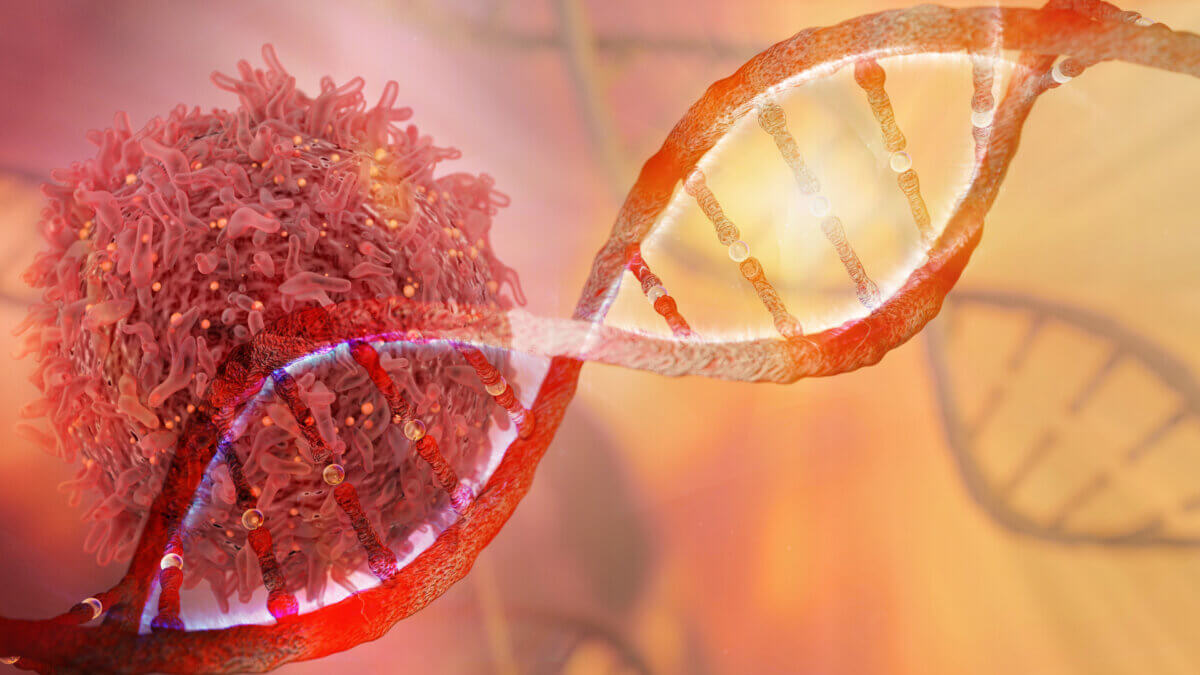
(Credit: CI Photos/Shutterstock)
BOULDER, Colo. — Imagine, for a moment, that your DNA is like an ancient library. Among the well-organized shelves of books that make up your genetic code, there are some unusual texts – old, weathered volumes that seem out of place. These books aren’t part of your original collection; they’re remnants of invaders from long ago, viruses that left their mark on your ancestors’ DNA. For years, scientists thought these viral leftovers were just gathering dust, harmless relics of evolutionary history. But what if these ancient tomes held secrets that could help us understand one of humanity’s most persistent enemies – cancer?
This isn’t the plot of a science fiction novel. It’s the fascinating reality uncovered by researchers at the University of Colorado Boulder. In a recent study published in the journal Science Advances, they’ve shown that these viral remnants, far from being inert, can play a critical role in cancer’s ability to survive and thrive.
The team, led by Dr. Edward Chuong, an assistant professor at CU’s BioFrontiers Institute, has peered into the human genome and found that these ancient viral hitchhikers, known as endogenous retroviruses (ERVs), can be reawakened in cancer cells. When active, they act like hidden switches, turning on genes that help tumors grow and resist treatment. Even more intriguingly, the researchers discovered that silencing certain ERVs can actually make cancer treatments more effective.
“Our study shows that diseases today can be significantly influenced by these ancient viral infections that until recently very few researchers were paying attention to,” Dr. Chuong says in a statement, highlighting the unexpected impact of our genetic past on present-day health challenges.
The human genome is estimated to contain about 8% ERV material, a legacy of viral infections that occurred in our evolutionary past. These viruses managed to insert their genetic code into the DNA of our ancestors’ reproductive cells, ensuring their passage to future generations. Over time, most of these viral genes lost their ability to produce functional viruses, but some retained the capacity to influence the activity of nearby human genes.
Previous research by Dr. Chuong’s team has shown that some ERVs play beneficial roles, such as contributing to the development of the placenta and enhancing our immune response to modern viruses like COVID-19. However, this new study reveals a darker side to these ancient genetic elements.
The researchers focused on a specific lineage of ERV called LTR10, which infected some primate species about 30 million years ago. By analyzing genomic data from 21 human cancer types, they discovered that LTR10 elements showed surprisingly high levels of activity in several types of cancer, particularly lung and colon cancer. In fact, when examining tumors from dozens of colorectal cancer patients, they found that LTR10 was active in about a third of them.
To understand the impact of these viral elements, the team used the CRISPR gene editing tool to remove or silence LTR10 sequences in cancer cells. The results were striking: critical genes known to promote cancer development and growth also went silent.
“We saw that when you silence this retrovirus in cancer cells, it turns off nearby gene expression,” explains Atma Ivancevic, first author of the study.
The implications of this discovery extend beyond the laboratory. When the researchers conducted experiments in mice, they found that removing an LTR10 “switch” from tumor cells not only turned off key cancer-promoting genes but also made treatments to shrink tumors more effective. This suggests that targeting these viral elements could potentially enhance the efficacy of existing cancer therapies.
One of the most intriguing findings of the study relates to how LTR10 elements interact with cellular pathways. The researchers discovered that this particular ERV family switches on genes in the MAP-kinase pathway, a cellular communication system that is often dysregulated in cancer. Existing drugs known as MAP-kinase inhibitors may work, in part, by disabling the ERV switch, adding a new dimension to our understanding of how these therapies function.
The study also raises questions about the broader impact of ERVs on human health. Dr. Chuong speculates that as people age, the genomic defenses that normally keep these ancient viral elements in check may break down, potentially contributing to various health problems beyond cancer.
This research represents a paradigm shift in our understanding of cancer biology and the complex interplay between our evolutionary history and modern diseases. By revealing how ancient viral DNA can be co-opted to drive cancer growth, the study opens up new possibilities for targeted therapies that could silence these harmful genetic switches.
“The origins of how diseases manifest themselves in the cell have always been a mystery,” says Chuong. “Endogenous retroviruses are not the whole story, but they could be a big part of it.”
As we continue to unravel the mysteries of the human genome, it’s becoming increasingly clear that our genetic past plays a crucial role in shaping our health present and future. The ghosts of viral infections past, long thought to be mere genetic relics, may hold the key to understanding and potentially conquering one of humanity’s most persistent foes: cancer.
Paper Summary
Methodology
The researchers employed a multi-faceted approach to investigate the role of ERVs in cancer. They began by analyzing publicly available genomic data from 21 human cancer types, focusing on the activity of LTR10 elements. To validate their findings, they examined tumor samples from colorectal cancer patients. The team then used CRISPR gene editing technology to remove or silence LTR10 sequences in cancer cells, allowing them to observe the effects on gene expression.
They also conducted experiments in mice, removing LTR10 “switches” from tumor cells and assessing the impact on tumor growth and treatment response. Throughout the study, they used advanced genomic analysis techniques to track gene expression changes and identify the cellular pathways affected by LTR10 activation.
Key Results
The study revealed that LTR10 elements are highly active in several types of cancer, particularly lung and colon cancer. In colorectal cancer patients, about one-third of tumors showed LTR10 activity. When LTR10 elements were silenced or removed, nearby cancer-promoting genes were also turned off.
In mouse experiments, removing LTR10 switches made tumors more responsive to treatment. The researchers found that LTR10 elements activate genes in the MAP-kinase pathway, a key cellular communication system often dysregulated in cancer. They also discovered that a single family of ERVs (LTR10) regulates as many as 70 cancer-associated genes in this pathway.
Study Limitations
While the study provides compelling evidence for the role of ERVs in cancer, there are some limitations to consider. The research focused primarily on one family of ERVs (LTR10) and its effects in specific cancer types, particularly colorectal cancer. The applicability of these findings to other ERV families and cancer types requires further investigation.
Additionally, while the mouse experiments showed promising results, translating these findings to human patients will require extensive clinical research. The study also raises questions about potential side effects of targeting ERVs, as some of these elements may play beneficial roles in normal cellular functions.
Discussion & Takeaways
This research reveals a previously unrecognized mechanism by which cancer cells can hijack ancient viral elements to promote their growth and survival. It highlights the complex relationship between our evolutionary history and modern diseases, showing how genetic remnants from millions of years ago can significantly influence health outcomes today.
The study suggests new potential targets for cancer therapy, particularly in combination with existing treatments that target the MAP-kinase pathway. It also underscores the importance of considering the full complexity of the human genome, including non-coding and repetitive elements, in understanding cancer biology.
Future research may focus on developing ways to specifically target harmful ERV elements or the genes they regulate as a new approach to cancer treatment.
Funding & Disclosures
The study was supported by grants from the National Cancer Center, the National Institutes of Health, the Alfred P. Sloan Foundation, the David and Lucile Packard Foundation, the Boettcher Foundation, and the American Cancer Society. The authors declared no competing interests.


