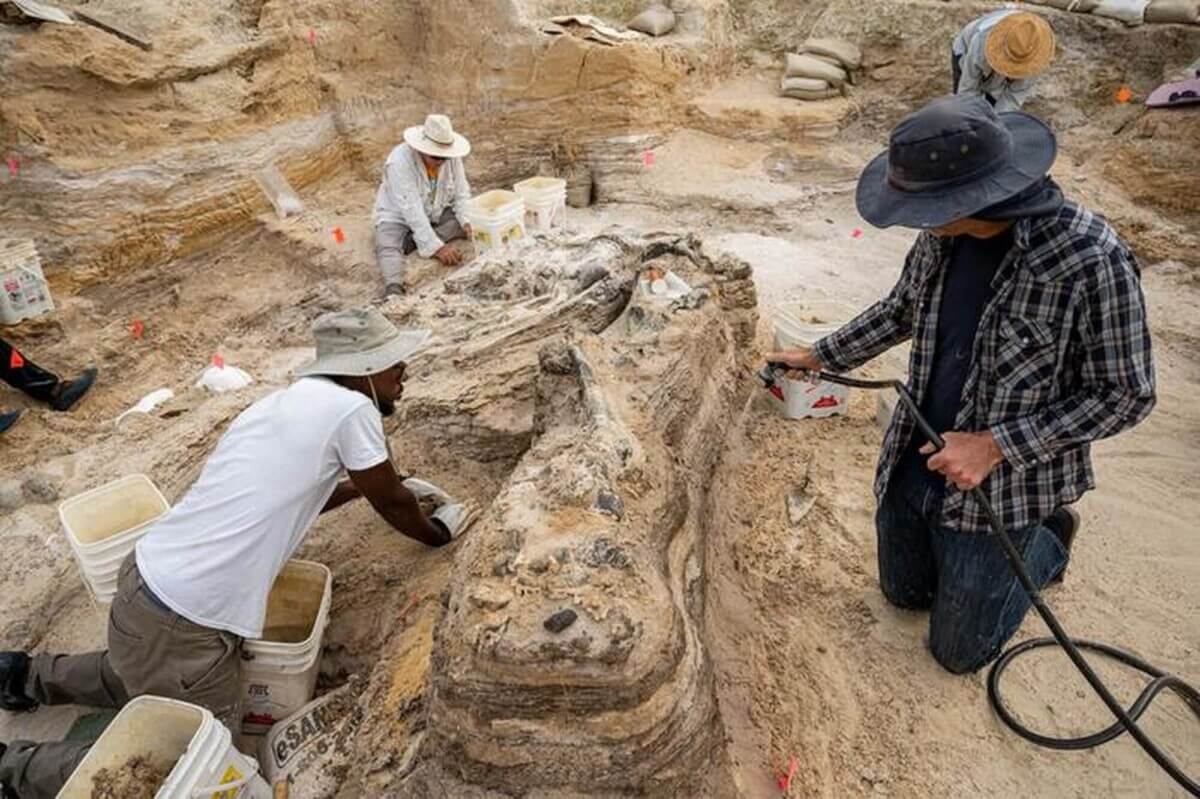
Researchers and volunteers with the Florida Museum of Natural History have discovered the ancient remains of several gomphotheres at a fossil site in North Florida. (Credit: Florida Museum photo by Kristen Grace)
TALLAHASSEE — Talk about a paleontologist’s jackpot. Remnants of a prehistoric creature called the gomphothere, an extinct relative of modern-day elephants, were uncovered recently at the Montbrook Fossil Dig in North Florida. The fossils, estimated to be about five and a half million years old, provide invaluable insight into the diverse wildlife that once roamed prehistoric Florida.
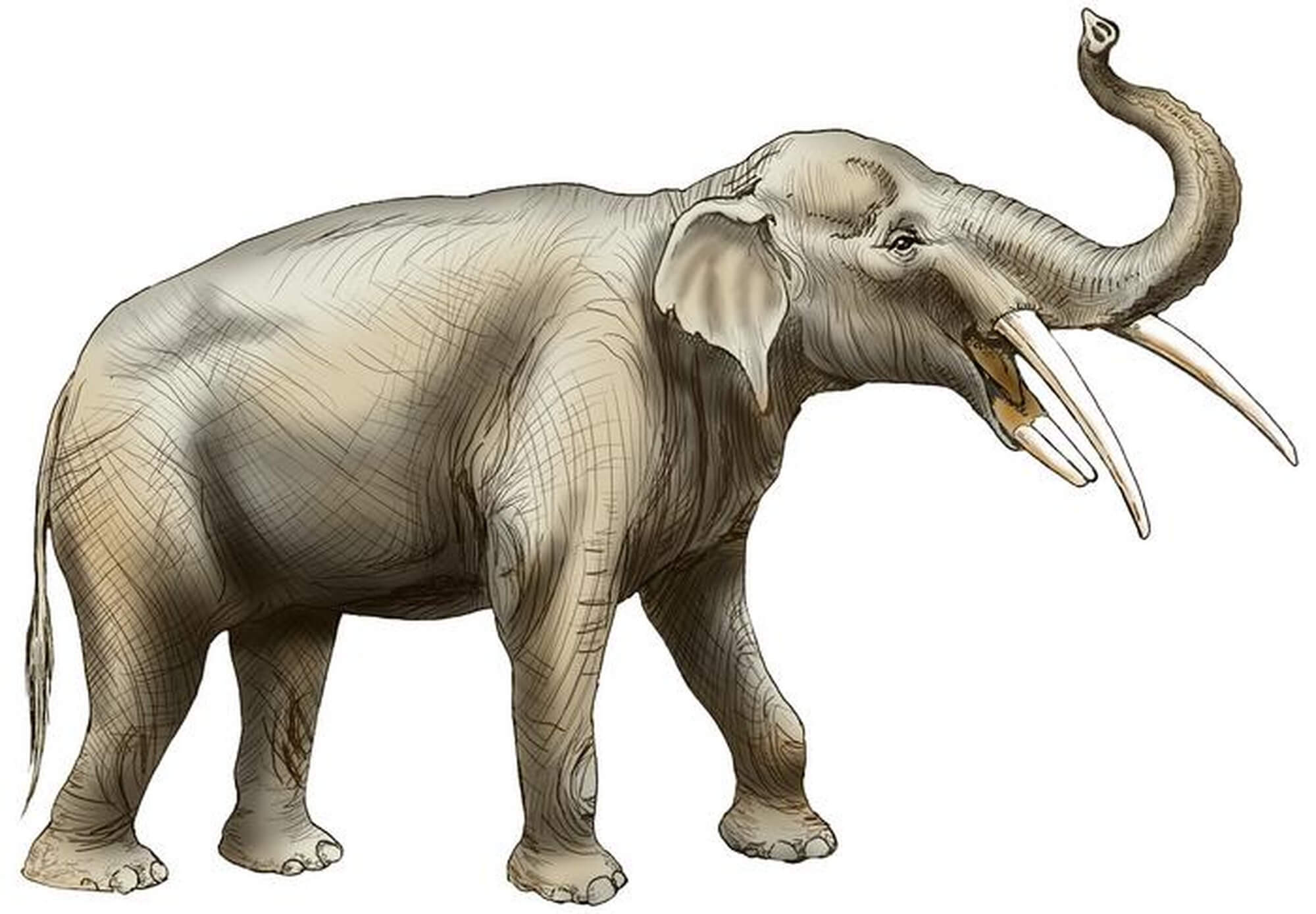
Gomphotheres roamed the Earth for over 20 million years. They evolved and adapted to different environments, spreading across continents and thriving in new landscapes. What makes them particularly intriguing is the variety of their features. Unlike their more well-known relatives like woolly mammoths, gomphotheres had unique tusk configurations and body sizes, making them a fascinating group to study.
The journey to this discovery began when a retired chemistry teacher and museum volunteer stumbled upon the initial gomphothere remains last spring. Little did he know that he had stumbled upon something truly extraordinary. “I started coming upon one after another of toe and ankle bones,” says Dean Warner, in a media release. “As I continued to dig, what turned out to be the ulna and radius started to be uncovered. We all knew that something special had been found.”
Within days, the research team uncovered not just one, but several complete skeletons, including an adult and several juveniles. The size of these creatures is awe-inspiring, with the adult gomphothere estimated to be eight feet tall at the shoulders and sporting tusks that measure over nine feet in length.
So what happened to these elephant ancestors?
Rachel Narducci, collection manager of vertebrate paleontology at the Florida Museum, suggests the gomphotheres didn’t all die together but likely met their end in different incidents, possibly getting stuck in challenging terrains. This pattern is somewhat analogous to behavior seen in modern elephants, known for their protective herd behaviors.
The site, rich in history, has been a hotspot for significant paleontological finds. Since the homeowner Eddie Hodge first reported fossils on his property in 2015, the area has revealed an intricate tapestry of ancient life, including extinct species of camels, rhinoceroses, and even the oldest deer in North America.
The gomphotheres stand out among these discoveries for several reasons. These creatures are part of a group known as proboscideans, which includes all species of elephants, living and extinct. They roamed the Earth millions of years ago, with a fossil record extending over 20 million years. Unlike the more familiar woolly mammoths, gomphotheres were incredibly diverse, with variations in body size and tusk shape.
“They had a variety of body sizes, and the shape of their tusks differed widely between species,” says Narducci. Some even had unique lower tusks that evolved into unexpected shapes, serving various purposes, including scraping bark from trees.
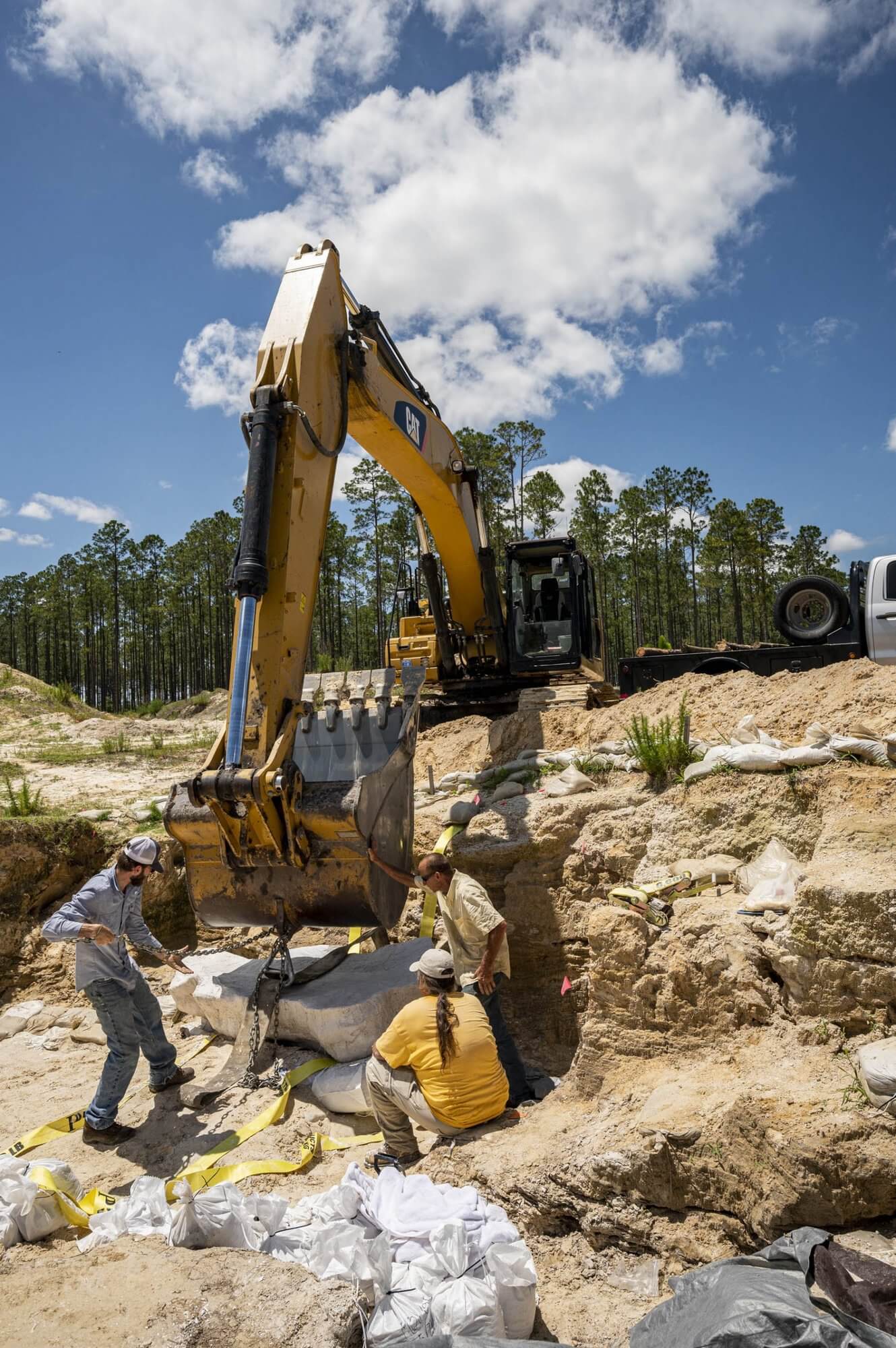
(Florida Museum photo by Kristen Grace)
The fossils at Montbrook are particularly distinctive due to a spiral band of enamel on their tusks, characteristic of the Rhynchotherium species, which were once widespread across North and Central America. Jonathan Bloch, curator of vertebrate paleontology at the Florida Museum of Natural History, calling it “a once-in-a-lifetime find.” He emphasizes the scientific impact of the discovery, noting it already significantly enhances understanding of these ancient creatures’ anatomy and biology.
“It’s the most complete gomphothere skeleton from this time period in Florida and among the best in North America,” he says.
Gomphotheres thrived in the open savannahs but faced challenges as climate changes led to their habitats’ transformation. Their decline was further hastened by the emergence of other proboscideans like mammoths and elephants and the subsequent arrival of humans.
This discovery at Montbrook not only revives the story of the Rhynchotherium gomphotheres but also marks a pivotal moment for the community and the field of paleontology. Reflecting on the broader implications of the find, Bloch acknowledged the volunteers’ contributions and shared the museum’s plans: “Our goal is to assemble this gigantic skeleton and put it on display, taking its place alongside the iconic mammoth and mastodon already at the Florida Museum of Natural History.”
This exhibit will indeed provide a tangible connection to the rich prehistoric past of North America and the remarkable creatures that once inhabited it.


