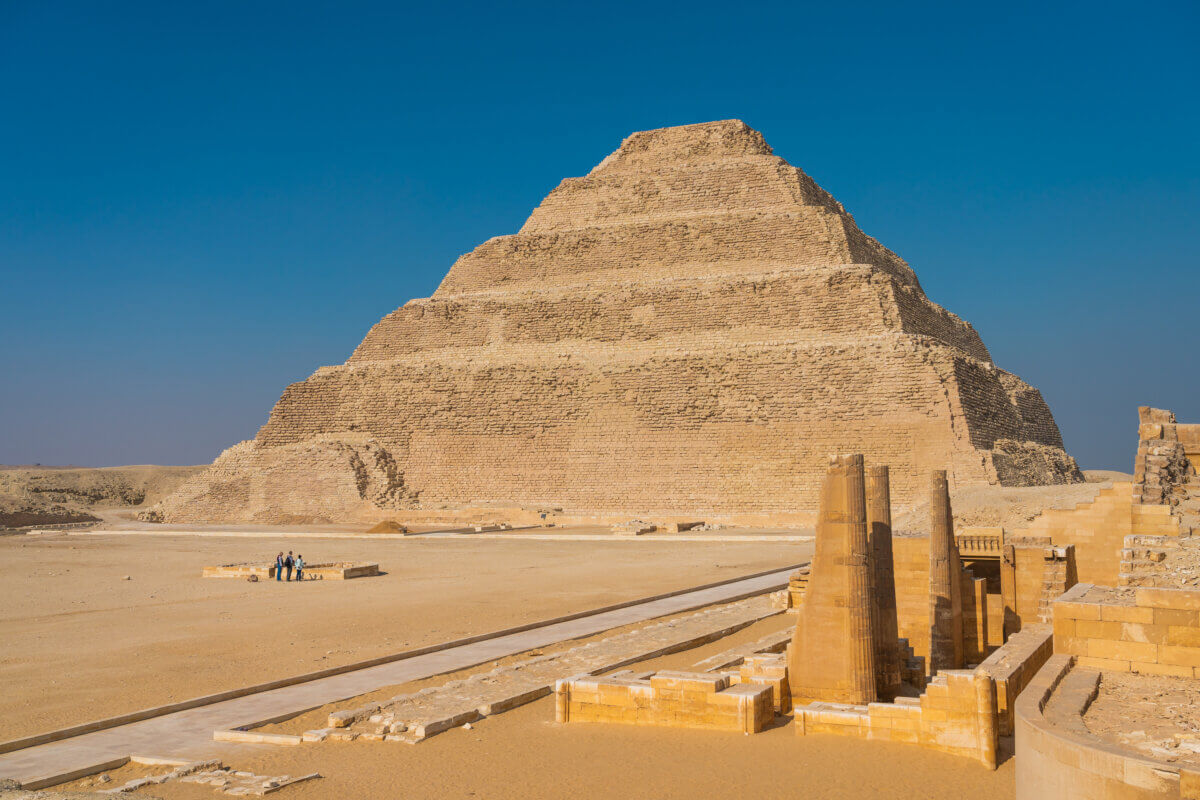
Djoser or Step Pyramid, the first pyramid built in Egypt. (Photo by Punnawit Suwattananun on Shutterstock)
PARIS — The first pyramid built by ancient Egyptians may have been accomplished using an ingenious hydraulic system. An eye-opening study of the iconic Step Pyramid of Djoser at Saqqara challenges long-held beliefs about pyramid construction techniques and sheds new light on this ancient civilization’s engineering prowess.
The research, published in the journal PLOS ONE, proposes that a complex network of dams, water treatment facilities, and a hydraulic lift mechanism were employed to move massive stone blocks during the pyramid’s construction around 2680 BC. This finding could revolutionize our understanding of how these monumental structures were built.
At the heart of this theory is the idea that the ancient Egyptians harnessed the power of water from nearby wadis – dry riverbeds that occasionally flood during rainy seasons. The researchers identified a previously undocumented watershed west of the Saqqara site, which they believe was crucial to the hydraulic system.
The study suggests that a massive structure called the Gisr el-Mudir, long considered an unfinished building or fortress, actually served as a check dam. This dam would have trapped sediment and regulated water flow from the wadis, creating a controlled water supply for the construction site.
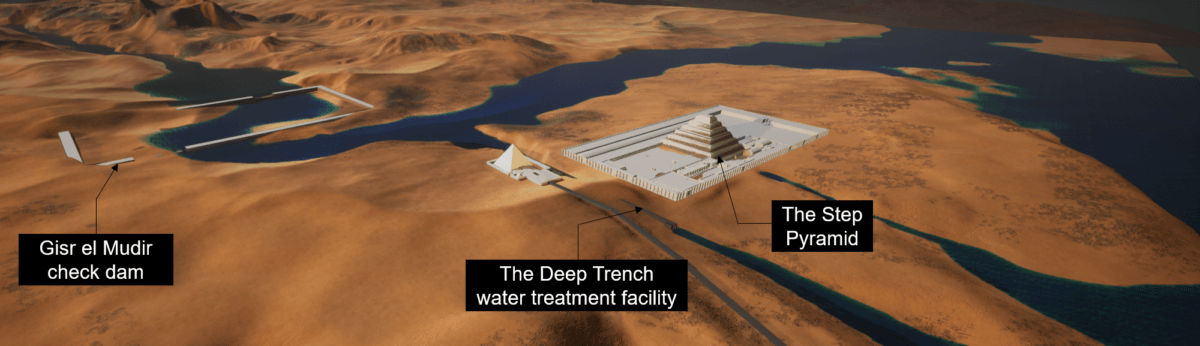
Downstream from this dam, the researchers identified what they believe to be an elaborate water treatment system. This includes a series of settling basins and filtration channels carved into the bedrock, which would have cleaned and purified the water before it was used in construction.
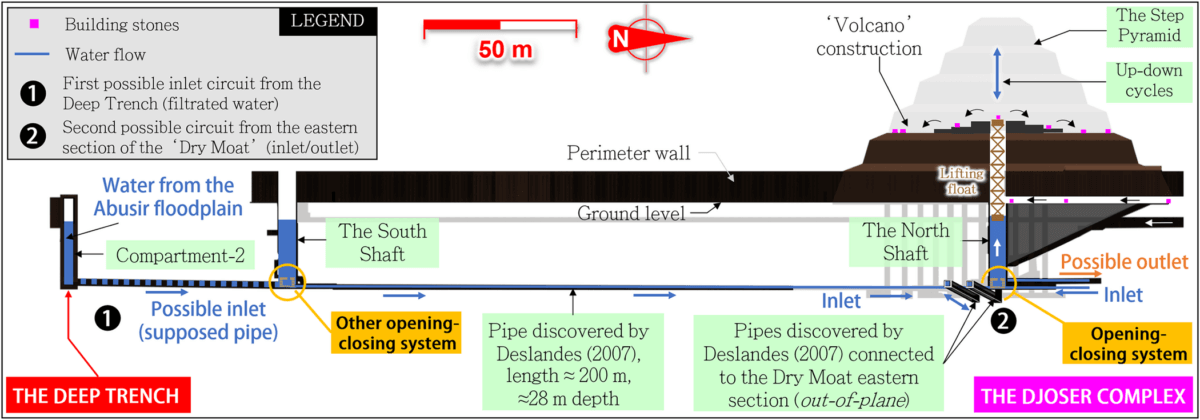
But the most intriguing aspect of this hypothesis is the proposed hydraulic lift mechanism. The researchers suggest that the ancient builders created a system of shafts and chambers within the pyramid itself, which could be filled with water. A large wooden float placed in this shaft could then be used to lift heavy stone blocks as the water level rose.
This method would have allowed the ancient Egyptians to raise massive stones with relatively little manpower, potentially explaining how they were able to build such enormous structures in a relatively short time.
If confirmed, this discovery could rewrite the history books on ancient Egyptian engineering and construction techniques. It suggests a level of hydraulic knowledge and expertise far beyond what was previously attributed to this early civilization.
The implications of this research extend beyond just pyramid construction. It paints a picture of an ancient Egypt that was incredibly advanced in its water management techniques, using these skills not just for agriculture and daily life, but also for monumental building projects.
This study opens up new avenues for research into other ancient Egyptian structures and may prompt archaeologists to re-examine sites with an eye for potential hydraulic systems. It also highlights the importance of interdisciplinary research, combining archaeology with geology, hydrology, and engineering to unlock the secrets of the past.
While more research is needed to confirm these findings, this study provides a fascinating new perspective on one of the world’s most enduring mysteries – how the pyramids were built. It reminds us that the ancient Egyptians were not just master builders, but also brilliant engineers and problem-solvers, capable of harnessing the power of nature in ways we’re only now beginning to understand.
Paper Summary
Methodology
The researchers used a combination of high-resolution satellite imagery, digital elevation models, and geospatial data analysis to map the ancient watershed and identify potential hydraulic structures. They also conducted detailed analyses of archaeological reports and architectural plans of the Djoser complex. The team created 3D models and used computer simulations to test the feasibility of their proposed hydraulic lift mechanism.
Results
The study identified a previously undocumented 15 km² watershed west of the Saqqara site, potentially connected to a larger 400 km² basin. It reinterpreted the Gisr el-Mudir structure as a check dam and identified a series of rock-cut compartments south of the Djoser complex as a water treatment system. The internal architecture of the Step Pyramid was found to be consistent with a hydraulic lift mechanism. Computer models suggested that the proposed system could have provided sufficient water and lifting capacity for pyramid construction.
Limitations
The study is largely based on analysis of existing archaeological data and remote sensing, without new on-site excavations. The exact dates and purposes of some structures remain uncertain. The proposed hydraulic system has not been physically proven, and alternative explanations for some features may exist. The study also relies on estimates of ancient rainfall and water availability, which have inherent uncertainties.
Discussion and Takeaways
The researchers argue that their findings suggest a much higher level of hydraulic engineering in ancient Egypt than previously recognized. They propose that this hydraulic system may have been used in conjunction with other known construction techniques like ramps. The study suggests that similar systems may have been used for other pyramids and calls for re-examination of other ancient Egyptian sites for potential hydraulic features. The researchers emphasize the need for interdisciplinary approaches in archaeology, combining traditional methods with modern technology and engineering principles.
Funding and Disclosures
The study was conducted by researchers from various institutions, including Paleotechnic (Paris), INRAE (Grenoble), and the University of Orléans. Some authors are affiliated with private companies (Sicame Group, AtoutsCarto, Verilux International), which provided support in the form of salaries. The specific roles of these authors are detailed in the paper. No conflicts of interest were reported.


