
(Credit: fizkes/Shutterstock)
Is blood thicker than water? Should family always come first?
These clichés about the importance of family abound, despite the recognition that familial relations are oftentimes hard, if not downright dysfunctional.
But over the past few years, a discussion has emerged about a somewhat taboo move: cutting ties altogether with family members deemed “toxic.”
Called going “no contact,” this form of estrangement usually involves adult children cutting ties with their parents. It might happen after years of abuse or when a parent disapproves of a child who has come out as LGBTQ+. Or it might be spurred by political or religious differences. Even Vice President Kamala Harris has been mostly estranged from her father since her parents’ divorce.
The “no contact” movement has its proponents and detractors.
Those in favor say people should disentangle from unhealthy relationships without shame and that family should be held to the same standards as friends and romantic partners.
Those against say the bar for what constitutes familial trauma has become too low and that some kids who cut off all contact are being selfish.
At the heart of the debate over the ethics of estrangement is a cultural attachment to the idea of family. The field of family estrangement is still in its early stages, but discussions of the collapsed parent-child relationship – its sources, its ethics, its consequences – can be found in literature across history. As I’ve encountered more articles, forums, and social media posts devoted to family estrangement, I can’t help but see connections to Shakespeare’s “King Lear,” which I teach to my students as a tragedy about dysfunctional families.
The tragedy features characters who are cast out by their families, and while the work is over 400 years old, it offers uncanny insight into the logic of modern family estrangement.
Early modern family
In Shakespeare’s time – the English early modern era, which spanned from the beginning of the 16th century to the start of the 18th century – Protestantism reinforced the idea that people had special obligations to their kin.
As the English Puritan preacher John Foxe wrote in “The Book of Martyrs,” “Among all the affections of nature, there is none that is so deeply graved in a father’s mind, as the love and tender affection towards his children.”
In Foxe’s teaching, children were blessings from God who required nurturing, spiritual guidance, and material support from their parents. Children, in turn, were obliged to honor and obey their parents who cared for them.
While this sounds simple enough, the early modern family was no less prone to dysfunction than the modern family.
Just like today, parent-child relationships were dynamic and evolved across the life span of the parents. As historian Ilana Krausman Ben-Amos argues, the family bond was not sustained by adhering to God’s commands, but through giving and reciprocation that was asymmetrical.
Parents could invest a lot into their children and get very little in return, and vice versa. Due to shorter life expectancy, many parents did not live to see their children come of age, and if they did, children rarely earned enough to pay their parents back for the cost of raising them. Thus, children might reciprocate in less material forms, such as through offering affection.
When a parent died, the children might receive some form of inheritance, but this was largely determined by class status, gender and the order of birth.
Shakespeare’s characters go ‘no contact’
“King Lear” features two storylines. Each relates to the disintegration of the family.
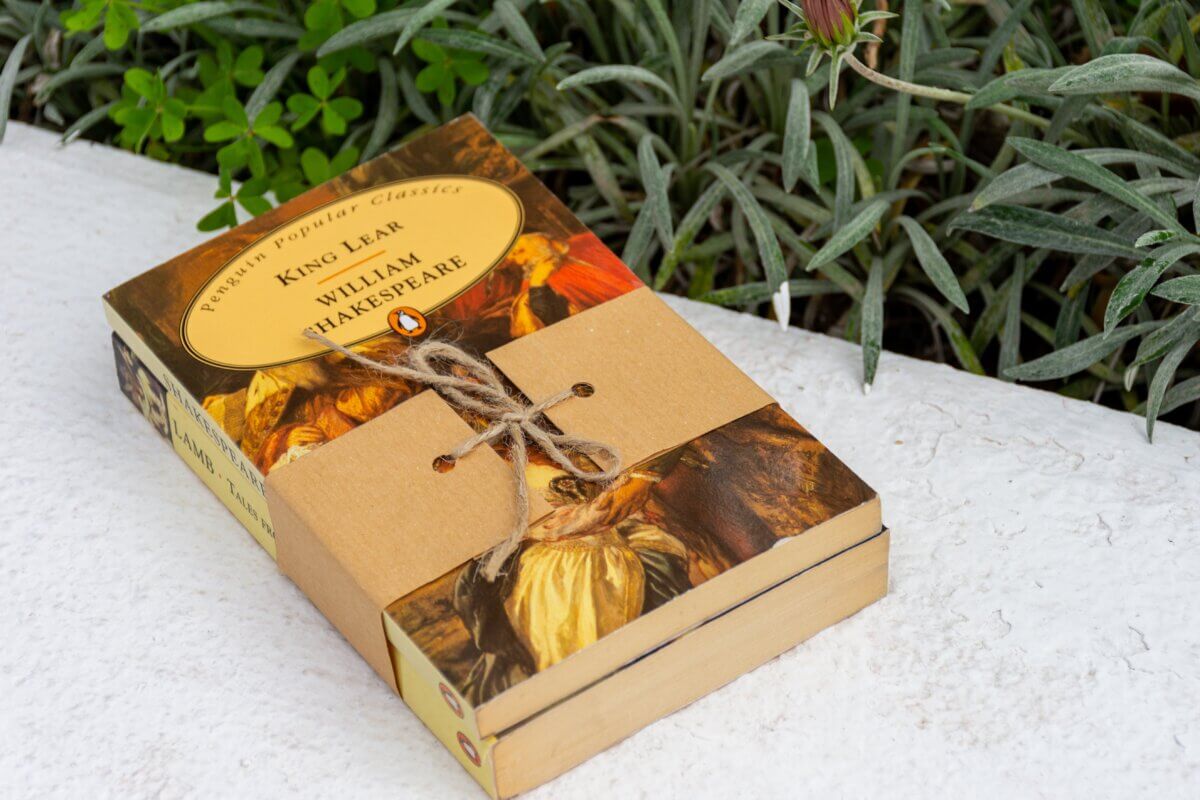
The first plot involves Gloucester and his two sons, Edgar and Edmund. Edmund is a bastard, which means when Gloucester dies, his legitimate brother, Edgar, will inherit everything. To get his revenge, Edmund forges a letter in which Edgar reveals plans to murder Gloucester to expedite his inheritance. Once Gloucester sees the letter, he writes Edgar off as a villain. Feeling betrayed, Edgar assumes a new identity as a beggar and goes no-contact with his family.
In the second plot, King Lear attempts to divide his kingdom among his daughters. Because it is impossible to equally divvy up cities, towns, and villages, he invents a contest: Each daughter will give a speech articulating their love for their father. He’ll award the best parts of the kingdom to the daughter who does the finest job stroking his ego.
Lear expects Cordelia, his favorite, to outshine her sisters. But she refuses to play along and instead calls him out for his vanity. Feeling disrespected, Lear disinherits Cordelia. With no money, she’s forced to marry the first man who will take her and moves to France.
In these family dramas, the parents are unfair, even vindictive, toward their children. But the conflict is still compelling and relatable to readers today because so many families are characterized by inequality.
The favorite child, the preferred parent, and the inheritance dispute are as timeless to families as birthday parties and funerals.
Right and wrong get muddied
Deception inspires Gloucester’s disavowal and disinheritance of Edgar. And, yes, Edmund’s scheme to destroy Edgar and Gloucester’s relationship is diabolical. But at the same time, Gloucester’s decision to throw away his decades-long relationship with his son over a letter – phony or not – seems rash.
Was Edgar right to flee from his father? Or could something have been done to save the relationship?
Cordelia is correct that Lear is vain for expecting his daughters to compete for their inheritance. At the same time, complimenting her father seems like a small price to pay for an entire kingdom.
Is Cordelia acting like a spoiled brat by refusing to honor and obey her father? Or is she doing him a favor by calling out his unbecoming behavior?
Shakespeare doesn’t offer us any clear answers to these questions; he just asks readers to wade in the complexity of them and experience the unique grief that comes from watching a family fall apart over something that maybe could have been avoided.
No envy for the estranged
No one gets a happy ending in “King Lear” – not the children who reject their parents, and most certainly not the parents who need their children to protect them and care for them in old age.
Edmund’s grief over his bastard status begets the grief he brings to Gloucester and Edgar. For failing to see the truth of Edgar’s innocence, Gloucester is physically blinded by one of Edmund’s unwitting co-conspirators, a punishment he accepts. When Edgar reunites with Gloucester, his eyes fill with tears as he witnesses his father’s physical suffering. Before Gloucester dies, Edgar asks his father for a blessing.
Even though Lear cut off contact with Cordelia, she still returns to England once she learns her sisters have thrown Lear out onto the streets with nothing but the clothes on his back. The sisters come off as villains, but one could also see their abandoning Lear as karmic retribution. When Lear reunites with Cordelia, he begs for her forgiveness, suggesting he recognizes his failures, and she begs for his, recognizing her enduring love for him despite his faults.
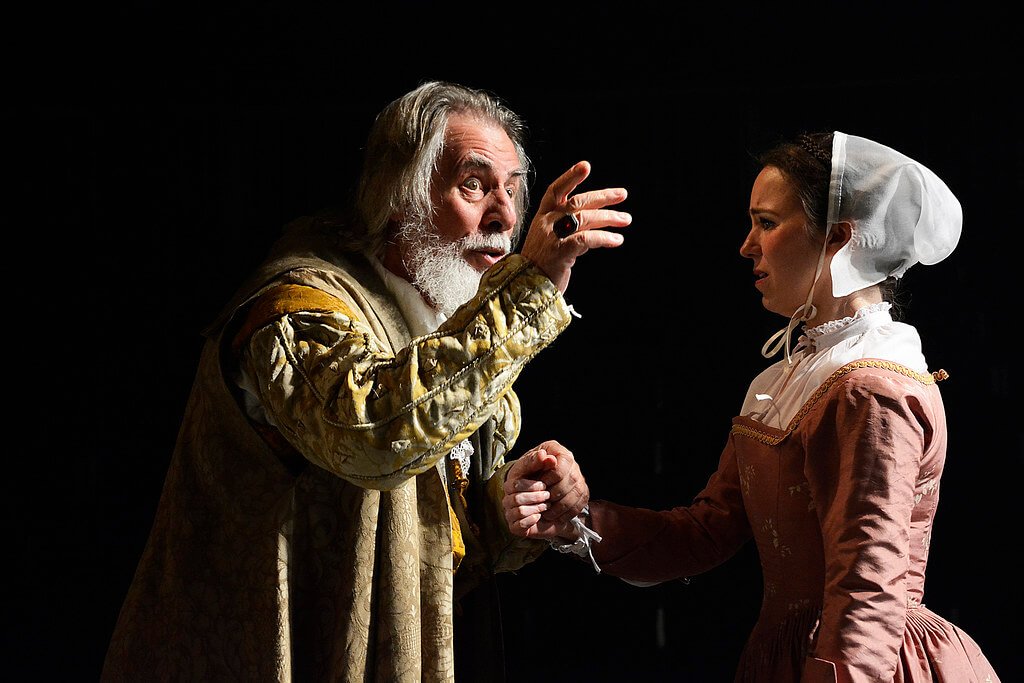
Then and now, family estrangement often leads to loneliness, along with social stigma.
Parents can be ashamed to say their children no longer speak to them. People who are estranged from their parents speak of the impulse to share milestones with family but fear eroding the boundaries they’ve worked so hard to maintain.
Just like in “King Lear,” not having a family also means being economically vulnerable: It remains difficult to get a loan or lease as a young adult without a co-signer.
The advantages of belonging to a family are so obvious that losing that affiliation, intentionally or not, is tragic. “King Lear” ends with almost all the characters dying, but because this is a play – a fiction, a fantasy – they get to ask for and receive forgiveness before the curtain closes.
Real life doesn’t usually work like that, nor should it be expected to. If “King Lear” and Kamala Harris’ estrangement from her father make anything clear, it is that no amount of money, power, or threat of bad publicity can fully protect a family from dysfunction and disintegration.
Jeanette Tran is an associate professor of English at Drake University.
This article is republished from The Conversation under a Creative Commons license. Read the original article.
![]()


Estrangement between the generations is a very Marxist thing to do. The State and Party become your family upon whom you depend and give your allegiance. Beware young Americas: as you callously discard the “olds” , what comes around goes around.
“disentangle from unhealthy relationships without shame”
unhealthy relationships without shame – misplaced modifier – not reading this writer or
this website anymore
While I believe there are many parents who treat their offspring like chattel, not all are like that. I was feeling low on myself based on a problem that I thought I may have been ultimately responsible for. After soul-searching quite heavily since 12/27/19, I have now realized that the issue is not with me nor my partner in life. Maybe a person who became a narcissist doesn’t realize it as of yet and lays the blame on others when the mirror and truthfulness in talking to those they have left behind would offer better answers than a therapist (Tell me of a therapist/psychiatrist who doesn’t place the blame on “parents” or any one older than the individual in therapy – doesn’t happen, it’s their ONLY option). It is a tired game they play and I saw it with a brother that ended in suicide. Couple of good takes from an article in Salon a few months back regarding narcissism and separation: “The challenge lies in the fact that saying you’ll avoid narcissists is easier than actually detecting them. That’s because narcissists are typically oblivious or not forthcoming regarding their disposition.Fortunately for anyone who is keen to avoid introducing a narcissist into their life, a recent study in the scientific journal Psychophysiology found that there’s a secret “tell.” Narcissists, psychologists say, hate being criticized; and it turns out that narcissists are prone to subtly disclosing their unusually acute discomfort that accompanies criticism.“ That “tell” of hating to be criticized is what I missed in someone close to me since I only offered positive words and could see no wrong. I guess even in my 60’s, growth doesn’t stop.
I may have lost a daughter on that date, but my love for that child is never-ending. I feel that when her 2 children are of age and start asking or wanting to see their cousins, aunts and uncles, she will have a hard time coming up with a valid answer. I hope they do not hold anger and will do what I can to make sure they don’t.
Her siblings and their children, the cousins and in-laws have no idea how or why she cut off everyone. The love for the child is there, but the anger for the adult they became and the lack of caring they have shown is deep.
cut off talking to my mother 8 years before she died, did not know it at the time but she was a narcissist.
You should always do your best to keep peace with all people, including your family. But dangerous, demeaning or toxic relationships of all kinds (including any family members or in-laws) must be cut. You absolutely should not feel bad about this and always have the grace to allow them forgiveness and to be let back into your life with heartfelt apology and genuine changes in their behavior, Barring that, fully ghost them or keep contact to a bare minimum.
Only a problem for Boomers, because they are selfish, entitled, toxic and abusive. And it’s not even all of them, although the majority do behave that way. The ones that are good people? They’re loved, they get to enjoy playing with their grandchildren, baking them cookies and all sorts of wholesome stuff.
So keep repeating right wing propaganda and being a general a-hole towards people, always getting your way and insulting and attacking people. See where that gets you. I know Boomers don’t believe in an afterlife either, or else they’d have tried to be better people at some point in their lives, they better hope they’re right, because that reckoning will be even worse for them.
If you cut everyone who is toxic out of your life, you remain with peace.
Had to make to about politics with the Kamala reference in the last line. You are sick to the core.
In my case it’s finances. My parents chose to produce me and handle their finances how they wished. Now that they are 80 and broke, $100k in debt, and no options, it’s supposed to be my problem. I’m male and my parents did nothing to help me financially. My female sister and husband were bailed out and propped up repeatedly. Now my sister’s family is stunned that I focus on my problems to keep from handing this problem to my wife. It’s BS and I turned my heartstrings in a long time ago and just endure being crapped on by basically everyone in my family.
Removing yourself from a toxic family situation is best for YOUR family and your well being. I get it. You can be cordial about updating family members of your family’s milestones and sending birthday and anniversary wishes to them, but you are not required to do any of it should you choose to avoid the conflicts. That is all I do. When they stopped reciprocating, I stopped doing it. Don’t miss it at all and I am happy.
Solution: If any one of them calls, hang up immediately. Never visit or respond to them.
This writer completely misunderstands King Lear. Almost embarrassing. The whole point of the play is that Shakespeare does show us that Lear wrongly rejected his one true loving daughter who loved him as a daughter should, no more and no less. And the tragedy is that Lear comes to recognize this and grieve the horrible outcome of his actions. So, yes, Shakespeare definitely did take sides on that.
My parents were extremely abusive to me and tried to control my life well into my late 30s. They would tell me that I would never be successful. They told me I was too weak to move away. When I told my mom I wanted to buy a house in 2020 she said to me “you will never be able to buy a house. You’re not smart enough.”
They didn’t like my girl friend in my late 20s so they caused a riff and called her telling her I don’t want to see her anymore which ruined the only love i had in my entire life. I wanted to marry that girl.
She also would make me feel guilty for any purchase I made for myself like buying a guitar or new video game. She wouldnt let me pick out my own clothes. Not even in my 20s. She would say disparaging awful racist comments like “thats what a black man would wear” or they would say I looked gay” This still happened in my 20s through 30s. More over anytime I showed them something I was proud of they would crap all over it tell me I was untalented and that I wasted my time. I still to this day and Im in my 40s now cant buy anything for myself without feeling guilty and bad about it.
But through all this finally when I severed contact life got a little better. They never helped with anything. They only cut me down and made me feel terrible so they could control me. My mom even tried to talk me into killing myself at one point. She said “just go cut your wrists then”.
By the way I did buy a house. I did become successful in my industry. I am now an executive. I finally have clothes I like and have a good following of artists who like my work.
Yet the guilt and pain they caused is still with me every day. They were hippies when they were young and have become the exact thing they rebelled against. The tragedy here is that my parents were awful. The only saving grace was I severed contact and now live a much more positive and peaceful life. Although alone as I lost the love of my life due to them and due to her abuse I have never been able to meet another women since.
Oh here is a good one to end on Since I don’t have any kids they consider my entire life a failure. Put that in your pipe and smoke it. At least i got away and survived and have meaning in my own life.
Is it too late to reconnect with the lost love? If she is alive and single, she might be wishing for another chance with you, too. Maybe I am unrealistically hopeful, but after reading your post, I really want your story to have a happy ending.
Once I got to the King Lear book report I stopped reading. Family estrangement is nothing new, and I don’t need an “angle” on this topic rehashing high school literature.
A selfish and self centered generation who hate the idea of taking care of their parents once they become disabled with age and the money tap shuts off! All it is…
Money tap? Selfishness?
My mother-in-law was a money sink that we sunk thousands of dollars into for her to just tear her daughter down at every turn.
Many of these people who are estranged from their parents are because their parents are abusive, selfish, and basically adult children themselves. Notice I said “many” because there is going to be edge cases in all of these.
However there is a generation of adults that feel like because they brought you into the world and clothed you and raised you that they still own you and you owe them something in return, and expect it and pitch a fit when they don’t get it, specifically don’t get it the way they want/expect it.
Wether that is demanding biological grandchildren vs adopted grandchildren, wanting to be taken on trips that she doesn’t have to pay for, needing money for room and board, needing a car, needing money for spending, needing new washer and dryer, needing this and needing that.
Than go on social media and tell all your friend and family that your daughter is a bitch because you won’t let her come live with you again, because last time she did she bitched the entire time that her husband is to loud in the morning on his meetings and that we need to buy a different house that meets her needs and that we were stupid to buy the house, and that she was stupid to marry her best friend, and that she should just divorce me and come live with her and take care of her.
In this scenario who is selfish, and when you have paid professionals while in counseling even guide you through how to create boundaries before finally realizing that you can’t and that cutting off is the only path? I ask again what is else should they do. No one has an obligation to be abused and continue to return to their abuser…NO ONE!
Anyone wanting to argue that point or call someone selfish for that is either an abuser themselves or has not thought through their sentence before commenting.
You sound like a Boomer, Steve, and certainly a pro at creating transactional relationships. Maybe you’re not. But you certainly sound like it.
You reap what you sow, Steve.
Well, looks like Steve will need to figure out how to change his own diaper.