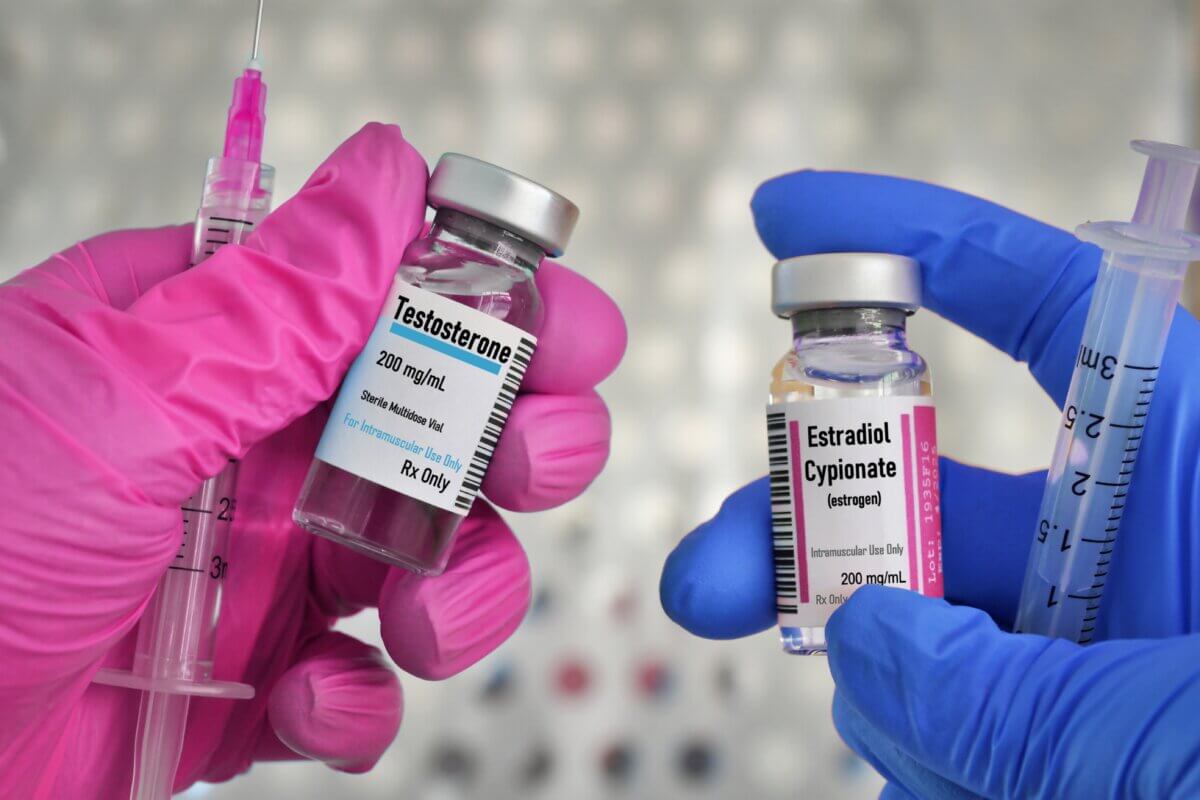
(Photo by MargJohnsonVA on Shutterstock)
BOSTON — Less than 0.1% of American minors with private insurance received gender-affirming medical care between 2018 and 2022, according to a groundbreaking new study that challenges current political narratives about transgender healthcare access.
In recent years, nearly half of U.S. states have enacted laws to restrict access to gender-affirming care for transgender adolescents, with advocates of these restrictions arguing that such treatments are too widely used. However, this new analysis of over 5 million adolescents shows that these medical interventions are actually quite uncommon, even among youth with private insurance who likely have better access to such care.
“The politicization of gender-affirming care for transgender youth has been driven by a narrative that millions of children are using hormones and that this type of care is too freely given. Our findings reveal that is not the case,” says lead author Landon Hughes, Yerby Fellow in Harvard Chan School’s Department of Epidemiology, in a statement. The research, published in JAMA Pediatrics, provides the first detailed look at the actual rates of hormone therapy and puberty blocker usage among transgender youth across all 50 states.
Building on their 2024 research that documented the rarity of gender-affirming surgeries among adolescents, the research team analyzed two main types of gender-affirming medical care: puberty blockers (technically called gonadotropin-releasing hormone agonists) which temporarily pause puberty-related changes, and gender-affirming hormones (testosterone or estrogen) which help develop secondary sex characteristics aligned with one’s gender identity. Looking at insurance claims data from 2018 to 2022, researchers found that only about 21 per 100,000 adolescents who were assigned female at birth and 15 per 100,000 assigned male at birth received puberty blockers.
To put these numbers in perspective, this means that for every 100,000 adolescents with private insurance, only about 15-21 received puberty blockers. The rates for hormone therapy were slightly higher but still notably low – approximately 50 per 100,000 adolescents assigned female at birth and 25 per 100,000 assigned male at birth received gender-affirming hormones.

The research team, led by scientists from Harvard T.H. Chan School of Public Health, analyzed data from the Merative MarketScan Research Database, which contains private insurance claims information. This massive dataset provided them with nearly 12 million person-years of data to examine, allowing for a robust analysis of treatment patterns across different ages and demographics.
One particularly noteworthy finding was the complete absence of hormone prescriptions for children under 12 years old, contradicting some popular misconceptions about early hormone therapy. The study found that hormone usage typically began after age 14 and peaked at age 17, reaching its highest rate of about 140 per 100,000 adolescents assigned female at birth and 82 per 100,000 assigned male at birth.
The researchers also observed that adolescents assigned female at birth generally received these treatments at slightly higher rates and younger ages compared to those assigned male at birth. This pattern aligns with established medical knowledge about typical puberty onset – individuals assigned female at birth typically begin puberty earlier, therefore potentially requiring intervention at younger ages if experiencing gender dysphoria.
These findings come at a crucial time in the ongoing public debate about gender-affirming care for youth. Research has shown that these treatments are associated with improved psychological functioning, as noted in the paper’s introduction, though access has become increasingly restricted in many states.
The study’s findings are particularly striking given that over 3% of high school youth identify as transgender, according to senior author Jae Corman, head of analytics and research at FOLX Health.
“Our study found that, overall, very few TGD youth access gender-affirming care, which was surprisingly low,” says Corman. “Among those that do, the timing of care aligns with the standards outlined by the World Professional Association for Transgender Health, the Endocrine Society, and the American Academy of Pediatrics.” This suggests that concerns about widespread or casual use of these treatments may be misplaced.
Perhaps most significantly, the study indicates that the current medical system appears to be taking a measured, careful approach to providing gender-affirming care. The observed patterns – including the absence of early hormone therapy and the gradual increase in treatment rates with age – align with established medical guidelines and standards of care.
In an era where healthcare access for transgender youth has become increasingly politicized, this research offers a data-driven perspective on the actual scope of gender-affirming medical care in the United States. Far from being commonplace, these treatments remain rare even among privately insured youth – with lower rates expected among those with less comprehensive private insurance, Medicaid recipients, and the uninsured, according to the study’s authors.
Paper Summary
Methodology
The researchers conducted a cross-sectional study using five years of private insurance claims data (2018-2022) from the Merative MarketScan Research Database. They identified adolescents aged 8-17 who had received either puberty blockers or gender-affirming hormones by examining diagnostic codes, drug prescriptions, and procedural codes in their medical records. The team calculated treatment rates per 100,000 adolescents, breaking down the data by age and sex assigned at birth. They used the earliest recorded sex in insurance enrollment as a proxy for sex assigned at birth.
Results
The study encompassed 5,155,282 adolescents, providing 11,879,766 person-years of data. For puberty blockers, the rate was 20.81 per 100,000 for those assigned female at birth and 15.22 per 100,000 for those assigned male at birth. Hormone therapy rates were 49.9 and 25.34 per 100,000 respectively. Usage patterns showed higher rates for those assigned female at birth, particularly after age 14, though remaining consistently low overall. No hormone prescriptions were found for children under 12.
Limitations
The research faced several constraints. First, it relied on claims data, which might misclassify some transgender adolescents or their treatment status. The study couldn’t definitively determine if medications were prescribed specifically for gender affirmation or other medical reasons. It also excluded certain gender-affirming medications like antiandrogens and progesterone. Additionally, the findings primarily reflect the experience of adolescents with private insurance through large group plans, potentially overestimating overall treatment rates compared to those with less comprehensive insurance or no insurance.
Discussion and Key Takeaways
The study reveals that gender-affirming medical care for adolescents remains rare, even among those with private insurance who likely have better access to healthcare. The higher rates of treatment at younger ages among those assigned female at birth aligns with typical earlier puberty onset in this group. These patterns suggest that current medical practice follows established standards of care, with treatment decisions carefully considered based on individual development and needs.
Funding and Disclosures
The study’s authors reported no conflicts of interest in their research. The work was conducted under the approval of the Harvard Pilgrim Health Care Institutional Review Board and followed established epidemiological research guidelines. The research team included members from Harvard T.H. Chan School of Public Health, Harvard Pilgrim Health Care Institute, and FOLX Health, with Isa Berzansky serving as research analyst at Harvard Pilgrim Health Care Institute, and Brittany Charlton, associate professor in the Department of Epidemiology at Harvard Chan School and founding director of the LGBTQ Health Center of Excellence, as co-authors.
Publication Information
This research letter was published online in JAMA Pediatrics on January 6, 2025. The study was authored by Landon D. Hughes, PhD, Brittany M. Charlton, ScD, Isa Berzansky, MSc, and Jae D. Corman, PhD, from various departments at Harvard University and affiliated institutions. DOI: 10.1001/jamapediatrics.2024.6081


