
(Photo by Studio Romantic on Shutterstock)
Report Suggests Obesity Will Impact 60% Of American Women In Coming Decades
In A Nutshell
- A new American Heart Association forecast projects that obesity will affect 6 in 10 American women by 2050, driving surges in stroke, hypertension and heart failure.
- Women ages 20 to 44 are projected to see the steepest increases in cardiovascular disease and stroke of any age group, flipping the assumption that these are conditions of old age.
- Black, American Indian, Alaska Native and Hispanic women are expected to bear a disproportionate share of the worsening trends.
- Researchers say reducing key risk factors by just 10 percent could cut cardiovascular events and deaths by 17 to 23 percent, but early and sustained intervention is required.
Most people picture cardiovascular disease as something that catches up with older women, a post-menopausal concern, a risk to manage somewhere in the distant future. A major new forecast from the American Heart Association says that picture is dangerously incomplete. By 2050, the steepest projected increases in stroke, hypertension and total cardiovascular disease are expected among women ages 20 to 44. And driving nearly every alarming number is the same factor: an obesity rate on course to affect six in ten American women within a generation.
Cardiovascular disease and stroke are already the leading causes of death and disability for American women. Between 2017 and 2020, more than 62 million had some form of cardiovascular disease or hypertension, with an overall prevalence of nearly 45 percent. What the new AHA statement adds is trajectory: not just how bad things are now, but how much worse they are going to get.
The economics alone are staggering. Direct and indirect spending on cardiovascular disease hit $417.9 billion in 2020 and 2021. Given that women account for just under half of all cases and typically outlive men, their share of that bill likely exceeds $200 billion a year. That figure is expected to rise as prevalence increases over the next three decades.
How Researchers Projected Women’s Cardiovascular Disease Risk Through 2050
To build their projections, researchers pulled from national health surveys collected between 2015 and 2020, along with census population estimates, running statistical models out to 2050 across different age groups, races and ethnicities. The framework tracked eight core health measures including blood pressure, blood sugar, cholesterol, weight, diet, physical activity, sleep and tobacco use.
Hypertension, already affecting nearly half of all adult women, is projected to climb from 48.6 to 59.1 percent. Diabetes is expected to rise from 14.9 to 25.3 percent. Stroke rates will climb by more than 60 percent. One number does improve. High cholesterol is projected to fall sharply, likely because of wider statin use and better treatment approaches. The researchers caution, though, that declining cholesterol alongside rising obesity and diabetes is not actually good news for women’s cardiovascular health overall.
And then there is obesity. At 43.9 percent today, it is already the dominant risk factor in the picture. By 2050, researchers project it will reach 61.2 percent. Obesity is a major driver of the projected increases in hypertension, diabetes and atrial fibrillation, a condition in which the heart beats irregularly and which, in women, carries a higher stroke risk than it does in men.
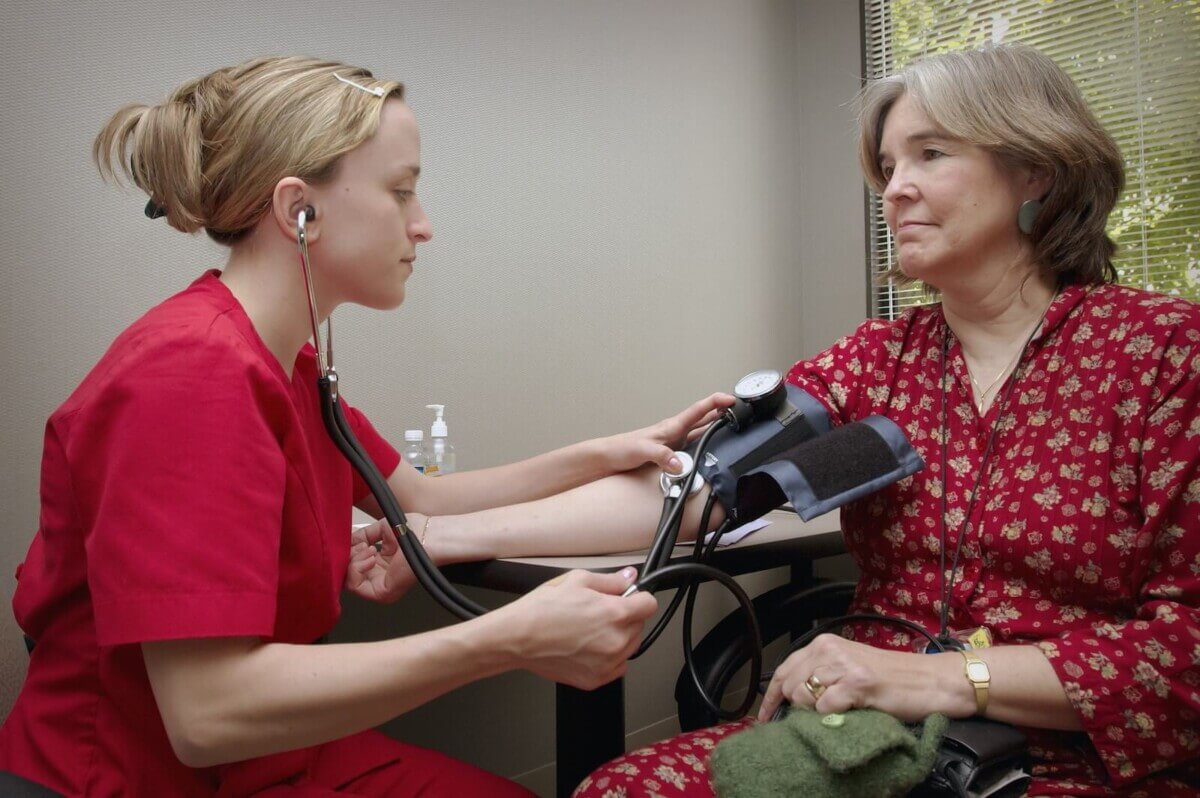
Young Women and Girls Face the Steepest Projected Increases in Cardiovascular Disease
Here is where the report, published in Circulation, gets genuinely surprising. Older women will still carry the highest overall burden of disease, but the fastest growth is projected among younger adults. Women between 20 and 44 are expected to see the steepest increases in stroke, hypertension and total cardiovascular disease of any age group.
Part of the explanation is that obesity is now accumulating far earlier in life. Among girls between 2 and 19, obesity is projected to jump from roughly one in five today to nearly one in three by 2050. The report also raises a less obvious warning: the age at which American girls get their first period has been falling for decades and now sits at 11.9 years. Early menstruation is independently linked to higher cardiovascular risk later in life, connected partly through its association with obesity, hypertension and impaired blood sugar regulation as women age.
There is also a missed opportunity buried in the data. Women of reproductive age are more likely than men to show up for primary care visits, which means there is already a built-in window for early detection and intervention. This window for prevention is often missed. Pregnancy-related conditions like preeclampsia, a dangerous spike in blood pressure during pregnancy, are associated with long-term cardiovascular and stroke risk. Too often they are treated as temporary complications rather than the warning signs they actually are.
Black, Hispanic and Native Women Bear a Disproportionate Burden
The coming decades will not hit all women equally. Black women already carry the highest rates of hypertension, diabetes, obesity and stroke, and are projected to see some of the steepest increases in heart failure. American Indian, Alaska Native and multiracial women combined have the highest current rates of coronary heart disease. Hispanic women are expected to see the greatest growth in multiple risk factors over time.
Poverty, limited access to care, rural residence and chronic stress all pile onto medical risk in ways that fall disproportionately on women of color. Inadequate sleep, projected to worsen across all women through 2050, is its own cardiovascular risk factor, and Black women already face the highest projected rates of both poor sleep and poor diet.
The report does not mince words: decades of awareness about these disparities have not moved the needle nearly enough.

How to Lower Cardiovascular Disease Risk in Women Before the Crisis Deepens
None of this is inevitable. Simulation studies cited in the paper suggest that reducing key risk factors by just 10 percent could cut cardiovascular events, including deaths, by 17 to 23 percent. The levers exist. The question is whether anyone will pull them.
Schools, pediatricians and gynecologists are all flagged as underused venues for early intervention. Better coordination between obstetricians, internists and specialists during the reproductive years could catch conditions that currently go unaddressed until they become emergencies. New obesity medications, particularly the GLP-1 receptor agonists that have reshaped treatment in recent years, could bend the obesity curve in ways the models do not fully account for. Whether they will depends on questions still being studied: how safe and effective they are specifically in women, whether the benefits hold over the long term, and whether cost and access barriers keep them out of reach for the women who need them most.
Current trends suggest cardiovascular risk is accumulating earlier in women’s lives than in prior decades. The forecast is not a fait accompli, but without a serious course correction, it could prove true.
Disclaimer: This article is based on a scientific statement and statistical projections. It is intended for informational purposes only and does not constitute medical advice. Consult a qualified healthcare provider with any questions about your cardiovascular health.
Paper Notes
Limitations
Growth and decline rates for risk factors were not calculated separately by sex, so differences in projections between men and women reflect prevalence and demographics only, not trend differences by sex. Sex-specific risk factors such as pregnancy complications and hormonal changes were not incorporated into the models. Conditions including valvular heart disease, most arrhythmias and specific cardiomyopathies were not included. The projections did not account for the impact of the COVID-19 pandemic on cardiovascular health, the potential effect of newer medications like GLP-1 agonists, or individual-level social factors such as income, education and employment. Race and ethnicity are treated as social categories rather than biological ones. Transgender and nonbinary individuals were excluded due to data limitations. The authors recommend updating the projections regularly as the treatment landscape evolves.
Funding and Disclosures
Analyses were conducted by the Research Triangle Institute International under a contract from the American Heart Association. The study was exempt from Institutional Review Board review because of the deidentified nature of the data. Several writing group members disclosed research funding, including grants from the National Institutes of Health, the Robert Wood Johnson Foundation, the Mayo Clinic Women’s Health Research Center and the Miami Heart Research Institute. One member disclosed a consultant relationship with Heartflow, Inc. Full disclosures are available in the published statement.
Publication Details
Authors: Karen E. Joynt Maddox, MD, MPH, FAHA (Chair); Harmony R. Reynolds, MD, FAHA (Vice Chair); Demilade Adedinsewo, MD, MPH; Cheryl Bushnell, MD, MHS, FAHA; Holli A. DeVon, PhD, FAHA; Holly C. Gooding, MD, MS; Virginia J. Howard, PhD, FAHA; Rina Mauricio, MD; Eliza C. Miller, MD, MS; Garima Sharma, MD, FAHA; R.J. Waken, PhD; on behalf of the American Heart Association Women’s Health Science Committee of the Council on Clinical Cardiology and Stroke Council. | Journal: Circulation | Title: Forecasting the Burden of Cardiovascular Disease and Stroke in Women in the United States Through 2050: A Scientific Statement From the American Heart Association | DOI: 10.1161/CIR.0000000000001406 | Published: Circulation. 2026;153:e00–e00.


