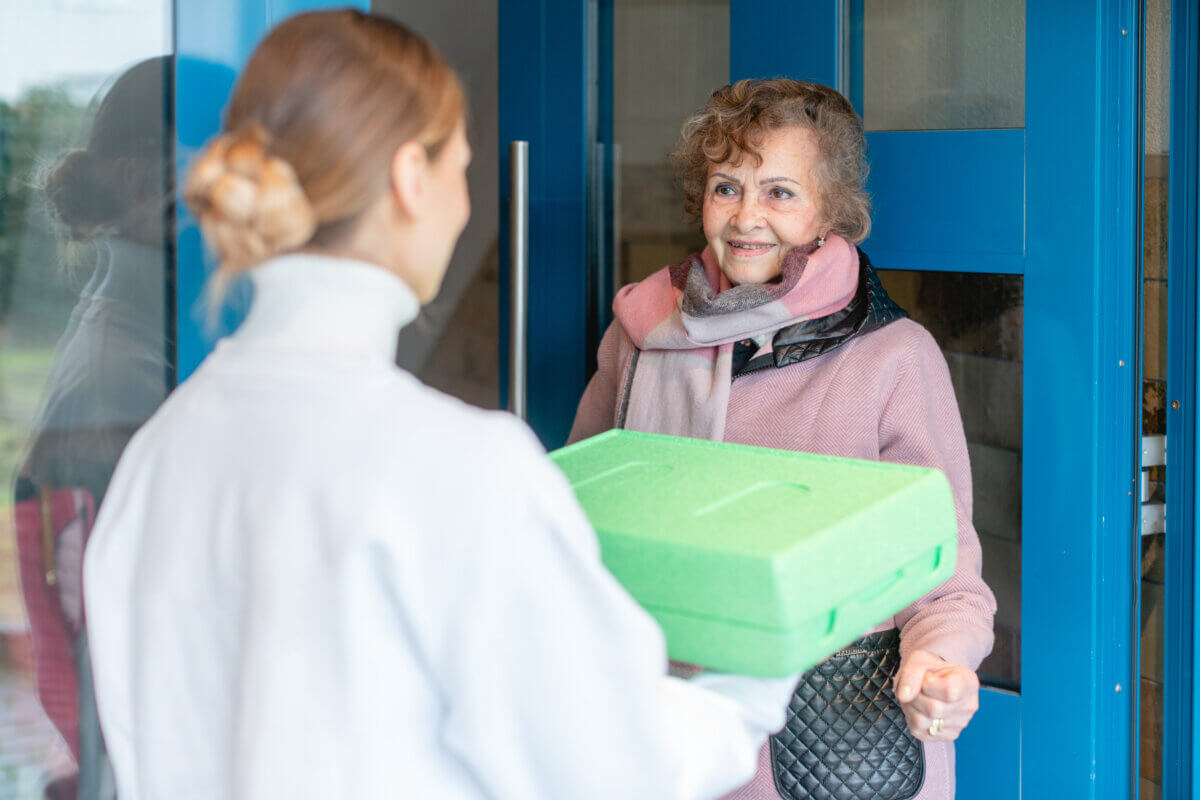
(Credit: Kzenon/Shutterstock)
NEW YORK — A new study reveals that Americans’ patience runs thin after just 29 minutes of waiting for food delivery – the same time they believe it should take to prepare a meal at home. But while many fret over these daily inconveniences, millions of seniors face much longer waits for essential meal services.
The nationwide survey of 2,000 adults conducted by Talker Research for Meals on Wheels America paints a picture of an increasingly impatient society. Despite 71% of Americans describing themselves as patient, their actions tell a different story.
When dining out, 21% of customers expect to be seated within 10 minutes of arrival. Once at their table, diners begin feeling antsy after just 13 minutes if they haven’t ordered, and their patience wears thin after another 17 minutes waiting for their food to arrive.

This need for speed extends beyond restaurants. The study found that 55% of Americans will switch checkout lines if more than three people are ahead of them, while 47% are willing to pay premium prices for faster delivery when shopping online. Even in traffic, 30% give drivers at stop signs less than 10 seconds before honking their horn.
However, these minor frustrations pale in comparison to the challenges faced by America’s senior population. The survey revealed that 63% of Americans have a loved one over 65, with 48% worrying about them daily. Health concerns top the list at 63%, followed by concerns about happiness (43%) and loneliness (31%). More pressing issues include worries about seniors eating alone (12%) or uncertainty about their next meal (10%).
“Millions of seniors receive our programs’ life-saving services every day, but too many older Americans are still waiting for nutritious meals and moments of connection,” says Ellie Hollander, President and Chief Executive Officer at Meals on Wheels America, in a statement. “Government funding, private donations, and volunteerism have declined while demand for services and costs have increased, forcing providers to stretch their resources further. One in three Meals on Wheels programs has a wait list with an average wait time of three months.”
The survey exposed a significant awareness gap: 10% of Americans didn’t believe Meals on Wheels programs have waitlists, while 49% weren’t sure. However, 64% of respondents recognize that seniors are more vulnerable to loneliness and isolation.
These findings highlight a stark contrast between the momentary inconveniences that spark everyday impatience and the extended waiting periods many seniors face for essential services.
“Older Americans can’t wait any longer. Our local programs already operate in nearly every community across the country, and they’re eager to do even more, but they desperately need more resources to do so,” Hollander adds.
Survey methodology
Talker Research surveyed 2,000 general population Americans; the survey was commissioned by Meals on Wheels America and administered and conducted online by Talker Research between Oct. 2 and Oct. 4, 2024.


