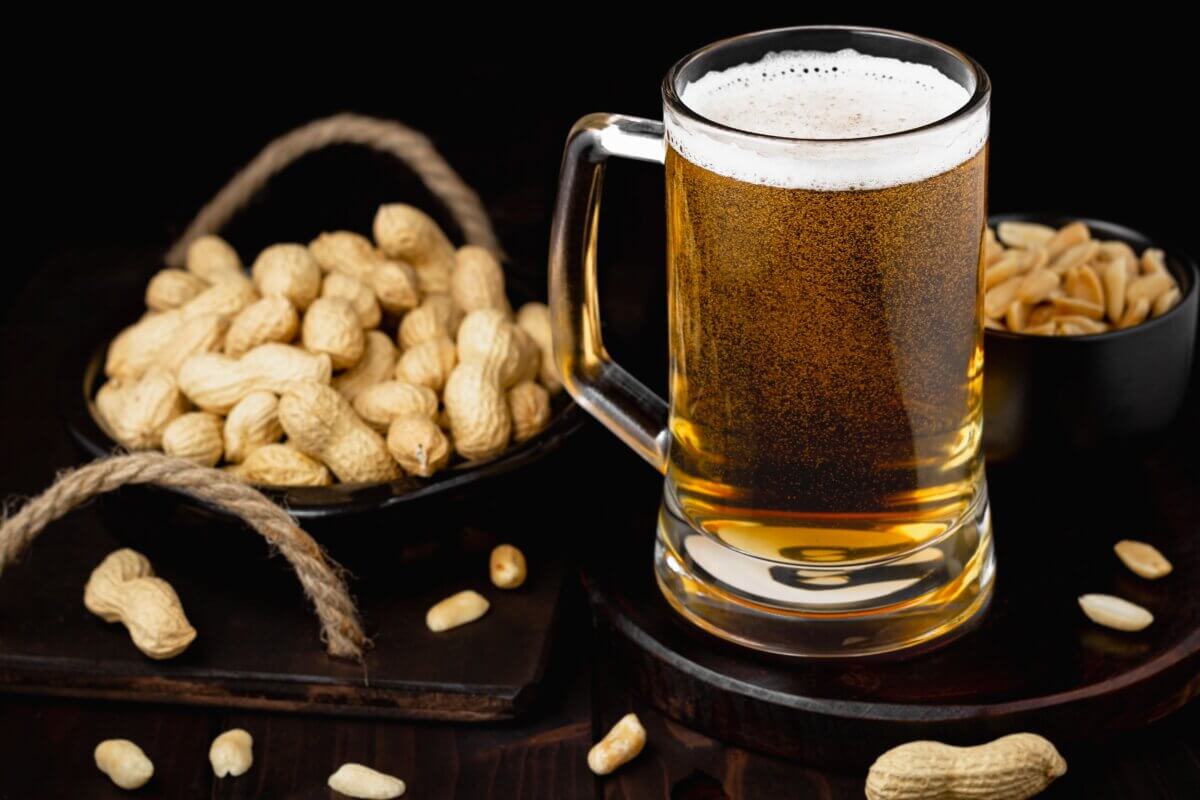
(Credit: Barone Romano/Shutterstock)
In A Nutshell
- Alcohol may trigger a hormonal shift that steers people toward savory, salty foods and away from sweets, based on evidence from prior controlled studies involving a hormone called FGF21.
- Many ultra-processed savory snacks taste protein-rich but deliver mostly fat and carbs, tricking the body into eating more while never feeling fully satisfied, a phenomenon researchers call “protein decoys.”
- A study of more than 9,000 Australian adults found that people who drank alcohol consumed significantly more savory food on drinking days, with calorie intake running roughly 40 percent above recommended levels among those eating processed diets, before alcohol was even counted.
- For people who drink regularly, the research suggests that cutting back on ultra-processed savory snacks may be even more important for managing weight than previously understood.
A drink or two may do more than add calories. New research suggests alcohol could shift people toward savory foods, and in a snack-heavy food environment, that may make overeating easier. For anyone whose kitchen is stocked with ultra-processed snacks, that shift could quietly work against weight management goals.
Scientists have long known that alcohol packs a hefty caloric punch on its own, yet research on whether drinking leads people to eat more has produced a mess of contradictory results. Some studies show drinkers consume more food, others show no difference, and some even suggest they eat less. A new study published in Obesity Reviews may finally explain why the science has been so confused. The answer, researchers argue, lies not just in how much someone drinks, but in what kind of food they’re eating alongside it.
Researchers at the University of Sydney built and tested a model proposing that alcohol raises levels of a hormone called FGF21, based on evidence from prior controlled human and animal studies. That hormone is linked to stronger cravings for savory, umami-flavored foods and reduced desire for sweets. In a food environment flooded with ultra-processed products, that shift may set up a chain reaction that makes higher calorie intake more likely, especially when the available savory foods are low in protein and high in fat.
The ‘Protein Decoy’ Trap That May Drive Overeating While Drinking
At the center of this research is a concept the authors call “protein decoys.” The human body is wired to seek out protein and will keep eating until it gets enough. In a natural food environment, a savory flavor reliably signals something is high in protein. Follow that craving, eat enough protein-rich food, feel full, stop eating.
But ultra-processed savory foods, from potato chips to instant noodles to packaged sausages, are engineered to taste intensely savory without actually delivering much protein. The body follows the flavor signal, expecting protein, but gets mostly fat and refined carbohydrates instead. Unsatisfied, it keeps eating. Certain cuts of fatty, unprocessed meat can have a similar effect, given their low protein-to-fat ratios.
When alcohol enters this picture, it may amplify cravings for savory foods through an FGF21 surge, based on evidence from prior controlled studies. On a whole-foods diet, that craving leads to grilled fish or a handful of nuts, actual protein, and hunger registers satisfaction quickly. On a processed-food diet, that same craving sends a person reaching for another handful of chips, chasing a protein signal that never arrives.

What Nearly 10,000 Australian Adults Revealed About Alcohol and Diet
To test whether this model held up in real-world data, the researchers analyzed dietary records from the Australian National Nutrition and Physical Activity Survey, a large government-conducted study. After excluding children, the data covered 9,337 adults aged 19 and older, of whom 3,082 reported consuming alcohol on the day of their survey. Participants were drawn from private dwellings across rural, regional, and urban areas, representing approximately 97% of the Australian population.
The data supported the model’s predictions closely. Alcohol consumers reported significantly more savory food and significantly less sweet food than nonconsumers. Among participants who completed dietary surveys on two separate days, savory food intake was measurably higher specifically on days when alcohol was reported. That within-person pattern makes it less likely the result simply reflects a stable preference for salty food among drinkers, though other day-specific factors like meal timing or social context cannot be ruled out entirely.
Protein intake was also higher for alcohol consumers on average, but what mattered most was what accompanied that protein. Among people who drank on the survey day and ate low-protein, high-fat savory diets, total calorie intake was substantially higher, roughly 40 percent above the recommended daily benchmark used in the study, and that was before a single alcohol calorie was counted.
Why the Science Has Been So Confusing, and What the Research Means at the Dinner Table
Those conflicting results that have plagued alcohol and obesity research make more sense through this lens. Someone drinking wine with a home-cooked dinner of lean fish and vegetables sits in a very different situation than someone drinking beer alongside a bag of chips. Both are consuming alcohol, but if the model is correct, the dietary context shapes whether the effects result in modest calorie intake or substantial overshoot. Studies mixing these two groups, or examining populations with different dietary patterns, would naturally produce contradictory findings.
The researchers note that the FGF21 mechanism was not directly measured in the survey data. Its role is grounded in prior controlled trials and animal studies, with the population data used specifically to test whether the model’s predictions matched real-world eating patterns.
Ultra-processed foods now dominate diets in many high-income countries, and alcohol consumption is widespread. If the two interact in the way this model proposes, with alcohol amplifying the calorie problem posed by processed food, the combination may be harder on weight and health than either factor alone would suggest.
Disclaimer: This article is based on a perspective paper published in a peer-reviewed journal. The study’s findings are observational and cannot establish that alcohol directly causes changes in food intake or weight gain. The FGF21 hormone mechanism described was not measured in the population survey and is drawn from prior controlled research. Readers should consult a qualified health professional before making changes to their diet or alcohol consumption.
Paper Notes
Limitations
The study’s authors acknowledge several important constraints. FGF21 was not directly measured in the population survey data, meaning the hormone’s role in the observed dietary patterns had to be inferred from prior controlled trials rather than confirmed in this dataset. Dietary data came from 24-hour recall interviews, which rely on participants accurately remembering everything consumed in a single day, a method known to carry some degree of error. Because the survey is cross-sectional, capturing a snapshot rather than tracking people over time, it cannot establish that alcohol consumption caused the differences in food intake observed. The authors also note that while the analysis adjusted for age, sex, and a measure of socioeconomic position, other lifestyle factors were not fully accounted for. Additionally, the precise timing of alcohol and food consumption within the 24-hour period was not known. Population data came exclusively from Australia, which may limit how broadly the findings apply to countries with different food environments and dietary cultures.
Funding and Disclosures
This study was funded by the National Health and Medical Research Council, Australia, Nutrition and Complexity Program Grant (grant number GNT1149976). The authors declare no conflicts of interest.
Publication Details
Authors: Amanda Grech, Stephen J. Simpson, and David Raubenheimer, Charles Perkins Centre and School of Life and Environmental Science, University of Sydney, NSW, Australia | Journal: Obesity Reviews | Paper Title: “Protein Decoys, Alcohol, and Energy Intake: Testing a Mechanistic-Ecological Model” | Year: 2026 | DOI: 10.1111/obr.70138 | Access: Open access under Creative Commons Attribution License


