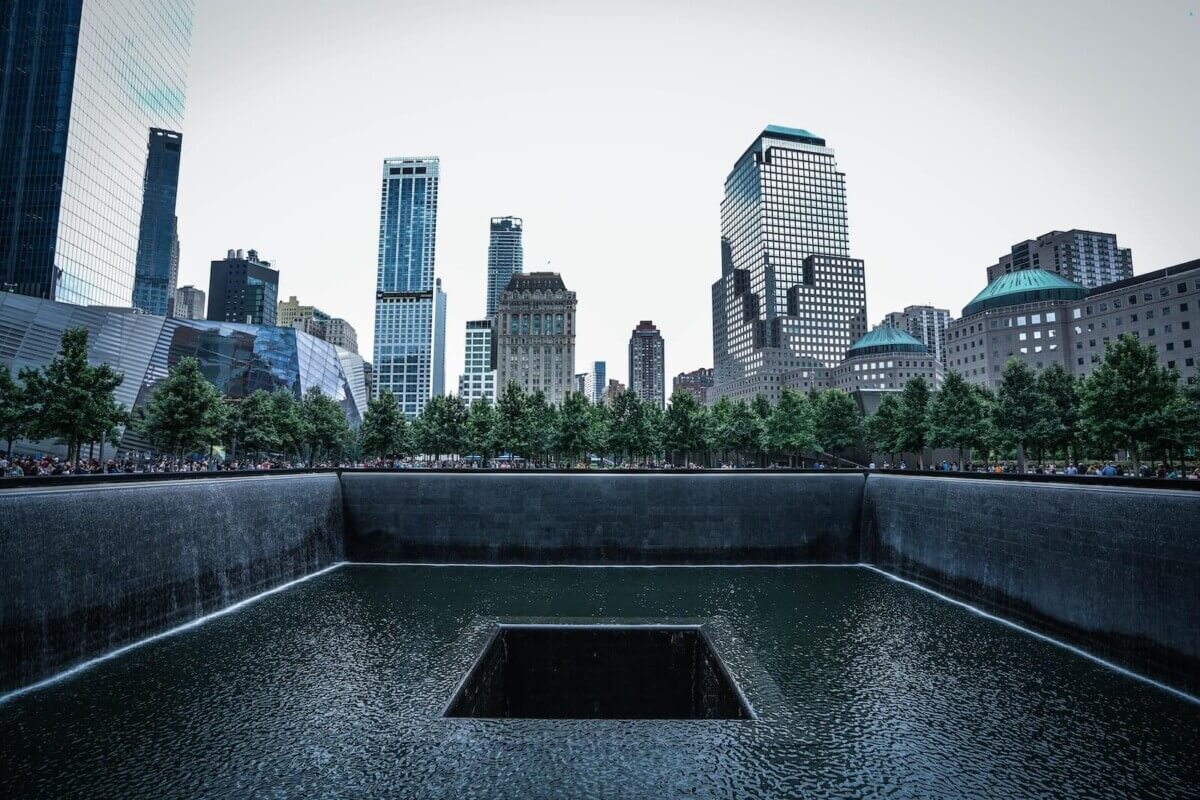
9/11 memorial in New York City (Photo by Axel Houmadi from Unsplash)
In a Nutshell
- 9/11 responders diagnosed with cancer who are enrolled in the health program have significantly lower cancer death rates than the general population, despite facing higher cancer risk from their exposure.
- Screening rates for cancers like lung cancer are far above national averages, with about 54% of eligible members screened compared to an 18% national rate.
- The 9/11-exposed population is aging and increasingly dealing with multiple chronic illnesses at once, including mental health conditions that have lingered for decades.
Twenty-five years after the World Trade Center towers fell, the men and women who rushed toward the wreckage are facing a hard reckoning with their health. Yet amid that toll comes an unexpected bright spot: responders with cancer who are enrolled in the federal program that tracks 9/11 survivors are dying from the disease at rates 26% to 64% lower than the general population of New York State, according to program research covering prostate, lung, kidney, and colorectal cancer. That progress stands out because their exposure to toxic dust and hazardous materials at Ground Zero put them at greater risk of long-term health problems to begin with.
Findings come from a new perspective piece published in JAMA marking 25 years since the September 11 attacks, written by leaders of the World Trade Center Health Program, the federal effort that has provided free medical monitoring and treatment to responders and survivors since 2011. The authors credit high screening rates and low smoking prevalence among enrolled members.
More than 154,000 responders and survivors had enrolled in the program as of June 2026, and thousands more join every year, even a quarter century after the attacks. Many are only now developing illnesses tied to what happened to them decades ago, a pattern the program’s leaders say offers hard lessons for how the country should handle the next mass-casualty disaster, whether that’s a wildfire, an industrial accident, or something else entirely.
How the 9/11 Responders’ Health Program Began
Care for people exposed to the September 11 attacks was scattered and inconsistent for the first ten years after the towers fell, according to the article, which added to the stress already carried by responders and survivors. That changed in July 2011 with the launch of the World Trade Center Health Program, created under a law known as the Zadroga Act and run by the National Institute for Occupational Safety and Health, part of the Centers for Disease Control and Prevention.
Coverage extends to two groups: responders who took part in rescue, recovery, and cleanup work, and survivors who were caught in the dust cloud or who lived, worked, or attended school in the disaster area. Once enrolled, members receive a full health checkup, followed by yearly follow-up exams designed to catch 9/11-related illnesses early. Funding for the program is authorized through 2090, showing how long officials expect these health effects to last.
Why Cancer Death Rates Are Lower Among 9/11 Responders in the Health Program
Cancer has become the most common diagnosis among program members, followed by lung problems, acid reflux, and mental health disorders, based on data cited in the article. Screening is where the program’s numbers stand out most. In 2024, roughly 54% of program members eligible for lung cancer screening under federal guidelines were screened, compared with a national rate of just 18% in 2022 and a national goal of only 7.5%.
That screening gap appears to translate into real differences in survival. Smoking rates among program members sat at around 4% in 2025, far below the national adult rate of 9.1%, likely reflecting the quit-smoking help the program offers. The authors say lower smoking rates and heavy screening may both be helping drive down cancer deaths in this group, though they caution that some of the improvement could also be a statistical illusion: catching cancer earlier can make survival look better on paper even when the disease’s true course hasn’t changed.
Lung disease management tells a similar story. Members largely get the right mix of daily control medication and rescue inhalers, emergency visits for breathing attacks are uncommon, and hospital readmissions stay in line with what would be expected for a group dealing with this many health problems at once.

Mental Health and Aging Take a Toll on 9/11 Responders
Not every long-term effect of 9/11 has a clear success story attached. Strong evidence links the attacks to lasting mental health struggles, including PTSD, depression, anxiety, and substance use problems, and these conditions remain common among members decades later despite years of covered treatment. At the same time, the article notes that people’s paths have varied widely. Some members have dealt with symptoms that never fully went away, while others have described a kind of growth and improved well-being after everything they went through.
Telehealth has become a bigger part of mental health care in the program. Remote visits jumped 363% during the COVID-19 pandemic, climbing from 41 visits per 1,000 members each quarter in early 2020 to 190 by late 2021, briefly outpacing in-person visits before leveling off. But the article points out that members living outside the New York City area use telemedicine less, partly because doctors generally need to be licensed in the state where the patient is located, which can break continuity of care for people who moved away from New York but want to keep seeing their original doctors.
People the program serves are also getting older, and their health needs are becoming more complex. The median age among enrolled members was 39 on the day of the attacks; by 2025 it had climbed to 63. As members age, many are juggling several chronic conditions at once, some tied to 9/11 exposure and some not, which the article says leads to more disability, more complicated treatment plans, and heavier use of the health care system overall.
Even so, roughly one-third of program members show no known 9/11-related health effects, a detail the authors cite as evidence of resilience in this population. The list of covered conditions has grown over time as research has caught up with reality, now including all cancers, newly diagnosed COPD (a serious, long-term lung disease), and injuries suffered during the attacks themselves. Conditions get added only when strong, peer-reviewed studies of 9/11-exposed groups show a clear link. Some aging-related illnesses, including heart disease, stroke, and dementia, aren’t yet covered, though the article notes the program continues reviewing new evidence on those conditions.
What 9/11 Responders Reveal About the Next Disaster
Program leaders frame the World Trade Center Health Program as a model with lessons that reach far beyond September 11. Large-scale environmental disasters, they argue, can produce health effects that take decades to fully surface, meaning any future response needs long-term monitoring rather than a short burst of aid. They also point to the value of linking tracking, research, and treatment together into one system, so that new findings from patient data can directly shape what care looks like next. And they make the case that removing cost as a barrier to care, something this program has done since 2011, may help improve health outcomes for exposed populations.
None of this erases what happened on September 11, 2001, or the decades of illness that followed for so many responders and survivors. But the data point to an encouraging pattern: steady, free, coordinated medical care may meaningfully improve the odds for people exposed to disaster, a real measure of survival for many, even if the shadow of that day never fully lifts.
Paper Notes
Limitations
This piece is a perspective article from program leaders summarizing findings and data from the World Trade Center Health Program rather than a single new research study, so it draws on multiple prior studies and program statistics cited throughout. The authors note that the lower cancer mortality rates observed in program members could partly reflect a statistical effect called lead time bias, where earlier detection through screening can make survival appear improved even without a true change in disease progression. Additionally, some program metrics, such as those on asthma management, were based only on medical claims that were submitted, approved, and paid for by the program, meaning care received outside that system would not be captured.
Funding and Disclosures
Authors reported no conflicts of interest. A disclaimer states that the article’s findings and conclusions belong to the authors and do not necessarily reflect the official position of the National Institute for Occupational Safety and Health or the Centers for Disease Control and Prevention. Program funding comes through provisions of the James Zadroga 9/11 Health and Compensation Act of 2010, with funding authorized through 2090.
Publication Details
Paper Title: “Twenty-Five Years After 9/11—Lessons From the World Trade Center Health Program”
Authors: Alejandro Azofeifa, PhD, DDS, MPH, MSc; Geoffrey M. Calvert, MD, MPH; Kristi R. Anderson, MD, MPH; and additional co-authors.
Journal: JAMA, September 10, 2026
DOI: 10.1001/jama.2026.15259
Corresponding author: Alejandro Azofeifa, National Institute for Occupational Safety and Health, Washington, DC.


