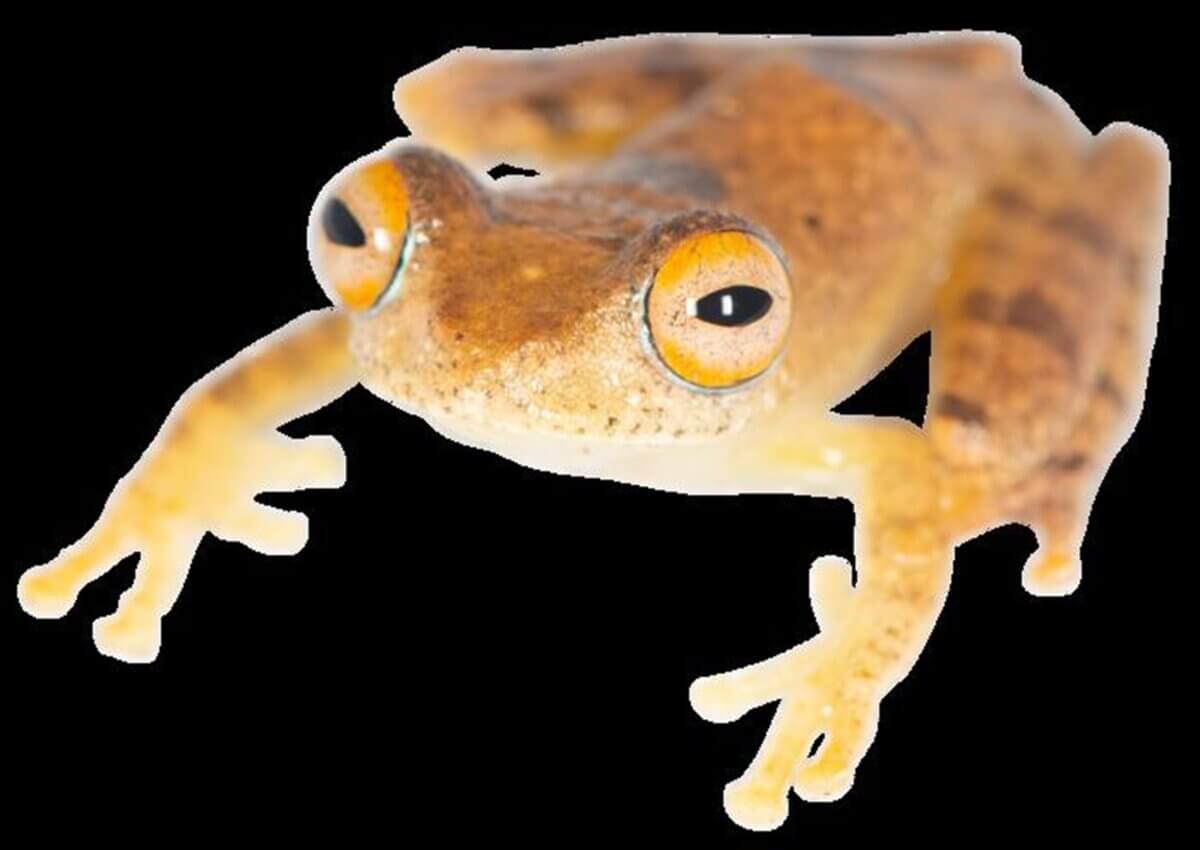
The tree frog genus Boophis, found across the rainforests of Madagascar, emit special bird-like whistling sounds in their communication with other frogs. (Credit: Mark D. Scherz)
COPENHAGEN, Denmark — Animal biology is going where no one has gone before. Seven new frog species have been discovered in the rainforests of Madagascar. These frogs captured researchers’ attention due to their usual croaks, which are more like the high-pitched sound effects on “Star Trek,” leading to their sci-fi-inspired names.
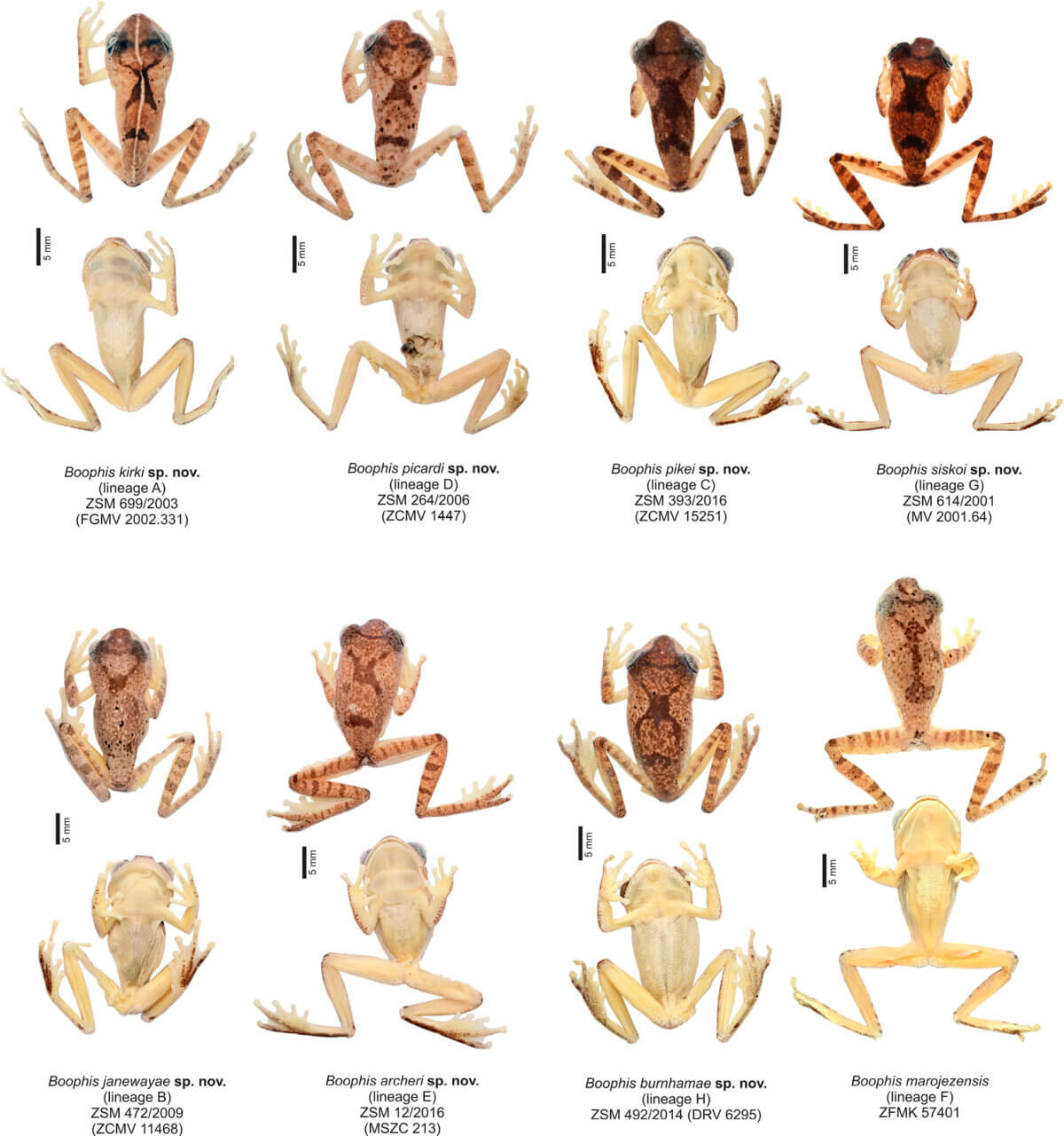
The frogs come from the tree frog genus Boophis and have been named in honor of seven iconic Star Trek captains: Kirk, Picard, Sisko, Janeway, Archer, Pike, and Burnham. Researchers describe the seven new species and their unique vocalizations in a study published in Vertebrate Zoology.
The unique bird-like whistle isn’t just to impress Star Trek fans. These “advertisement calls” inform nearby females about the male’s mating potential. These seven frog species live along fast-flowing streams in the mountain areas of Madagascar.
“Not only do these frogs sound like sound-effects from Star Trek, but it seems also fitting that to find them, you often have to do quite a bit of trekking! A few species are found in places accessible to tourists, but to find several of these species, we had to undertake major expeditions to remote forest fragments and mountain peaks. There’s a real sense of scientific discovery and exploration here, which we think is in the spirit of Star Trek,” says senior study author Mark D. Scherz, an assistant professor from the Natural History Museum of Denmark at the University of Copenhagen, in a media release.
The high-pitched noises reminded authors of Star Trek’s “boatswain whistle” and a “tricorder.” For people unfamiliar with the sci-fi show, the sounds resemble those of a bird or an insect. According to the researchers, the high-pitched sounds may have evolved so other frogs can hear them in the loud mountainous region.
“If the frogs just croaked like our familiar European frogs, they might not be audible over the sound of rushing water from the rivers they live near. Their high-pitched trills and whistles stand out against all that noise,” explains Dr. Jörn Köhler, the senior curator of Vertebrate Zoology at the Hessisches Landesmuseum Darmstadt in Germany.
Thanks to the high-pitched sounds, researchers could tell these frogs were not of the same species. Additionally, each of the seven species had its own distinct whistle to differentiate from each other. Genetic analysis of the frogs confirmed these results.
Madagascar is home to 9% of all frog species worldwide. Its rainforest is a popular area for researchers because of its vast biodiversity. Along with the seven newly discovered frog species, researchers have identified another 100 new species on the island roughly the size of France.
“We’ve only scratched the surface of what Madagascar’s rainforests have to offer. Every time we go into the forest, we find new species, and just in terms of frogs, there are still several hundred species we haven’t yet described,” says Andolalao Rakotoarison, a professor at the Université d’Itasy in Madagascar.
Researchers hope to increase conservation efforts as they become more knowledgeable about rainforests and their inhabitants. Many species live in different altitudes and microhabitats, making them vulnerable to climate change and environmental destruction.
Paper Summary
Methodology
The researchers aimed to study a complex group of treefrogs in Madagascar known as the Boophis marojezensis complex. To identify differences between species, they conducted field expeditions over several years, collecting frogs and recording their calls. They examined DNA, physical characteristics, and vocalizations to understand the frogs’ diversity. Tissue samples were collected for genetic testing, and vocal recordings were analyzed to compare sounds. This combination of genetic, physical, and acoustic analysis helped the scientists distinguish between similar-looking species.
Key Results
The study revealed that what was thought to be a single species of treefrog is actually eight distinct species. While these frogs look alike, their genetic make-up and sounds are quite different. The researchers found that these species don’t share certain DNA markers and live in slightly different habitats across Madagascar. They even named these new species after famous characters from the “Star Trek” series, reflecting the unique “whistling” calls of the frogs.
Study Limitations
There were some challenges in the study, including incomplete data for some frog species. Some of the frogs could not be analyzed fully because they only had samples from tadpoles or lacked genetic information. Also, the study depended on finding frogs in specific areas, so some regions might have undiscovered species.
Discussion & Takeaways
The findings show that Madagascar’s biodiversity is even more complex than previously known, with multiple “hidden” species. This diversity highlights the need for conservation efforts to protect these unique species, especially since some are only found in specific areas. The study also illustrates how combining genetics, morphology, and sounds can reveal new insights into animal species.
Funding & Disclosures
The fieldwork was supported by grants of the Volkswagen Foundation and Deutsche Forschungsgemeinschaft. Fieldwork in Makira was funded by the Zoo Zürich AG and logistically supported by the Wildlife Conservation Society Madagascar and fieldwork in Sorata by the Mohamed Bin Zayed Species Conservation Fund.
Fieldwork to Ampotsidy and other areas of the Bealanana district was funded by grants from the Royal Geographical Society, the Zoological Society of London, Cadogan Tate, The Scientific Exploration Society, crowdfunding via Indiegogo, the Freunde der Zoologischen Staatssammlung München and the Deutsche Forschungsgemeinschaft.
Sequencing of the B. marojezensis holotype was supported by a grant from the German Research Foundation (DFG).


