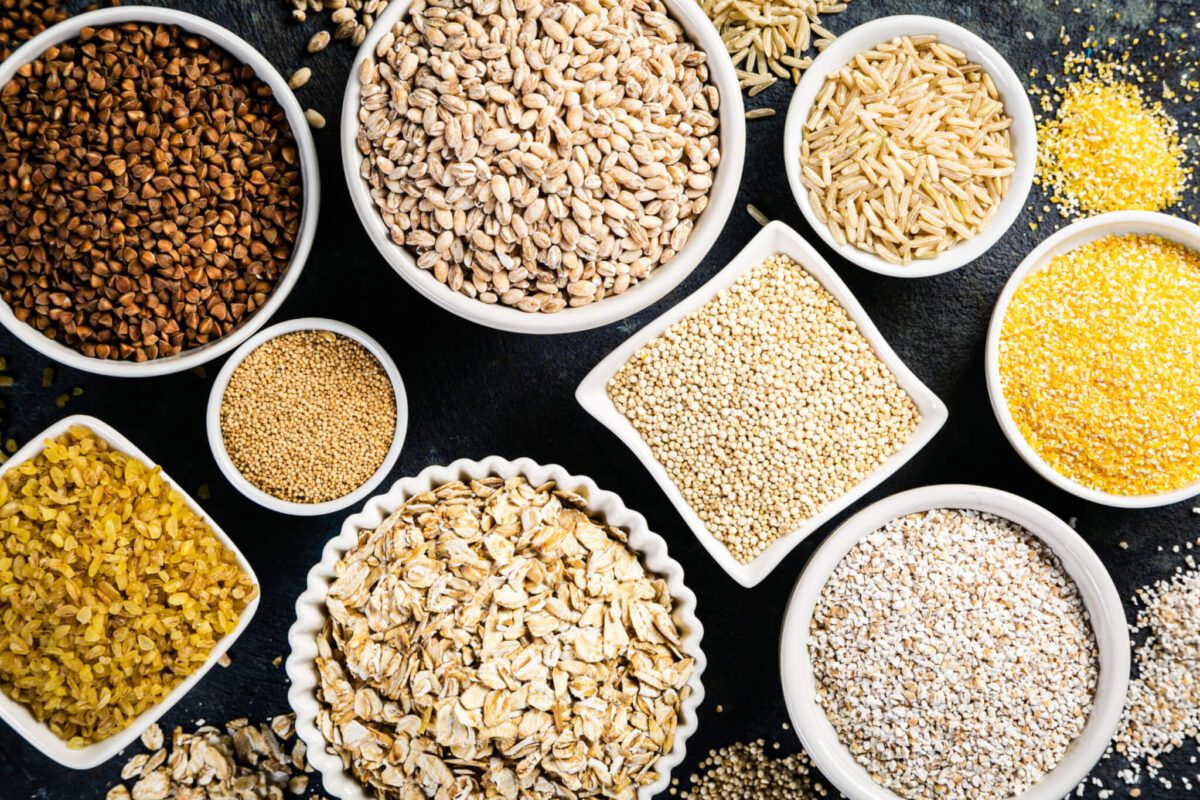
(Credit: © anaumenko - stock.adobe.com)
In a Nutshell
- Eating about four to six servings of whole grains daily was linked to improvements in cholesterol, blood pressure, weight, waist size, and inflammation markers.
- Most benefits leveled off at moderate intake levels, meaning eating far more whole grains than that didn’t necessarily produce bigger results for most measures.
- Grain type also appeared to matter, with oats, brown rice, and rye each showing somewhat different strengths, though the researchers rated the reliability of those grain-to-grain differences as low.
When it comes to whole grains, more isn’t always better. A new analysis of 87 clinical trials found that the biggest heart and metabolic gains generally showed up at about four to six servings a day, and piling on much more didn’t add a lot for most health markers.
Researchers combined data from those trials, the kind of study where people are randomly assigned different diets so scientists can compare results fairly, to see exactly how whole grains affect cholesterol, blood pressure, weight, and inflammation. Published in the European Heart Journal, the analysis found that modest, realistic amounts of whole grains were tied to measurable improvements across a wide range of health markers, while loading up on much more didn’t necessarily translate into bigger payoffs.
That’s a useful answer, because dietary advice on whole grains has long been all over the map. Some guidelines simply say “eat more,” while others toss out numbers that feel unrealistic for the average household. This new research offers something rare in nutrition science: a specific range tied to real, measurable changes in the body.
How Researchers Reviewed Decades of Whole Grain Research
Scientists pulled together 101 published studies representing 87 separate randomized trials. Combined, these trials included roughly 6,500 participants, ranging from generally healthy adults to people already at risk for conditions like diabetes or heart disease. The trials lasted anywhere from two weeks to two years, giving researchers a window into both short-term and longer-term effects.
To count as “whole grain” in this research, a food had to contain all the original parts of the grain kernel, meaning nothing was stripped away during processing the way it is with white flour or white rice. Researchers measured intake by dry weight, and every increase of about 48 grams a day (roughly 90 grams, or about three servings, of food as it’s actually eaten) was tied to specific changes in health measurements.
Rather than simply asking whether whole grains help at all, the team looked at how much of a difference the amount eaten makes. For every added increment of whole grains, researchers tracked changes in body weight, waist size, total cholesterol, an inflammation marker, bad cholesterol, triglycerides, blood sugar, and blood pressure (the top number in a reading).
What Eating More Whole Grains Actually Changed
Each 48-gram daily increase in whole grains was linked to small drops in body weight, waist size, total cholesterol, and inflammation, and researchers expressed high confidence in those particular findings. Bad cholesterol, triglycerides, fasting blood sugar, and blood pressure also improved, though with somewhat less certainty. Most of these changes were small, though, and several fell below the thresholds the researchers used to decide whether a difference would actually matter for a person’s health.
Intake level changed the picture. For most outcomes, including cholesterol, blood pressure, and inflammation, the biggest improvements showed up around 60 to 100 grams a day of dry-weight whole grains, roughly four to six servings depending on the food. Eating beyond that range didn’t appear to keep delivering bigger results for most of these markers.
There was one exception. Good cholesterol, the kind that helps protect the heart, showed its largest estimated increase only at much higher intake levels, around 220 grams a day. That’s a lot of whole grains, and the study authors noted there wasn’t much data at that high end, so this particular finding comes with more uncertainty than the others.
Grain type may matter, too, though the evidence here is shakier. Subgroup comparisons hinted that oats had stronger effects on cholesterol and other blood fats, brown rice on both blood fats and inflammation, and rye on body fat, but the researchers rated the reliability of these grain-to-grain differences as low. Benefits also turned up in trials that didn’t deliberately cut calories, suggesting the results weren’t confined to weight-loss diets.
On the safety side, whole grains weren’t linked to a meaningful increase in mild or moderate side effects like digestive discomfort, though the researchers cautioned that most trials weren’t designed to track those symptoms closely.

The Catch: Shorter Trials, Thin Data at the Extremes
Not every finding in this analysis carries equal weight. Confidence was rated high for outcomes like body weight, waist size, total cholesterol, and inflammation, but only moderate for things like blood pressure and bad cholesterol, and low for a few other markers, including insulin resistance. That doesn’t mean those findings are wrong, but it does mean scientists are less certain about exactly how big the effect really is.
Another wrinkle: the typical trial in this analysis lasted around eight weeks, a fraction of the years or decades over which heart disease actually develops. It’s possible that sticking with a whole-grain-rich diet over years would produce bigger benefits than what shows up in a two-month experiment, similar to what long-term studies tracking people’s eating habits over decades have shown.
Data at the very highest levels of whole grain intake, above 140 grams a day, was also thinner than data at moderate levels. That’s part of why the good-cholesterol finding at 220 grams a day comes with a wider margin of uncertainty. Researchers described the 60-to-100-gram range as a benchmark where benefits appear to level off, not a hard ceiling or a magic number that guarantees results.
Why This Matters for Your Heart Health
None of this means whole grains are a miracle food, or that eating more is pointless. What it points to is that the amount needed to see real improvements in heart and metabolic health is smaller and more manageable than it might seem, somewhere in the range of a few servings a day rather than a total diet overhaul. For anyone trying to eat better without turning their life upside down, that’s a genuinely useful number, and it lines up with what many nutrition guidelines have already suggested, with stronger evidence behind it now.
Disclaimer: This article summarizes findings from a single meta-analysis and is for general informational purposes only; it is not medical or dietary advice. The study measured cardiometabolic risk factors such as cholesterol, blood pressure, and inflammation rather than actual heart attacks or long-term health outcomes, and many of the changes it reported were small or of uncertain clinical importance. Individual needs vary. Anyone considering significant dietary changes should consult a qualified healthcare professional.
Paper Notes
Limitations
The study authors pointed out several caveats worth keeping in mind. The typical trial lasted only about eight weeks, which may not be long enough to capture the full benefits of a long-term whole-grain-rich diet. Data at very high intake levels (above 140 grams a day) was sparse, making those specific findings less certain, particularly the result suggesting good-cholesterol benefits only appear around 220 grams a day. Most of the included trials handled missing data using a method the authors noted is less reliable than the preferred approach used in top-tier research. Blinding was also generally lacking, meaning participants and staff often knew who was assigned to the whole-grain diet, which can introduce bias. Limited reporting on people’s normal, everyday whole-grain intake before the trials started made it harder to account for habitual diet, and trials that excluded people taking certain medications limited how much researchers could break down results by subgroup. Finally, wide variation in the amount of whole grains tested across different studies made it difficult to assess how effects might change over time within a single study.
Funding and Disclosures
Tabriz University of Medical Sciences in Tabriz, Iran, funded the research under grant No. 75326. According to the paper, the funder had no role in designing or conducting the study, collecting or analyzing data, preparing the manuscript, or deciding to submit it for publication. All authors declared no personal or financial conflicts of interest.
Publication Details
Paper Title: “Whole-grain consumption and cardiometabolic risk: a meta-analysis of randomized trials”
Authors: Sina Naghshi, Sevil Kiani, Alireza Ostadrahimi, Ahmad Jayedi, Majid Mobasseri, Sara Arefhosseini, Helda Tutunchi, and Dagfinn Aune
Journal: European Heart Journal
DOI: 10.1093/eurheartj/ehag519
The review protocol was registered with PROSPERO under registration number CRD42024565726.


