
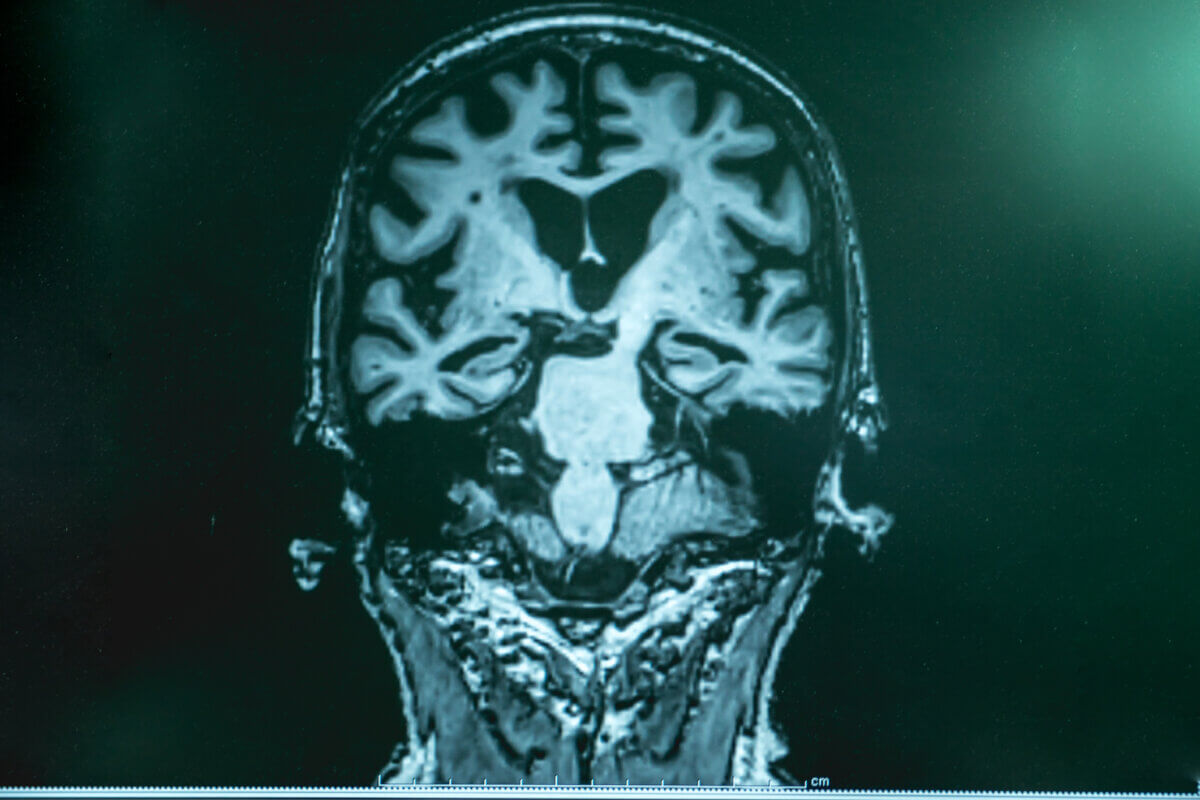
(Photo by Saiful52 on Shutterstock)
In a nutshell
- Scientists identified four distinct disease pathways that lead to Alzheimer’s: mental health (depression-centered), brain dysfunction, mild cognitive impairment, and vascular disease. Each affects different populations and progresses at different speeds.
- The order in which you develop diseases matters more than having individual conditions alone—following multi-step disease sequences dramatically increases Alzheimer’s risk compared to single diagnoses.
- This research could enable doctors to identify high-risk patients years before memory problems appear and tailor prevention strategies based on which pathway someone is following, potentially preventing Alzheimer’s rather than just treating it.
LOS ANGELES — Scientists have discovered that Alzheimer’s disease doesn’t strike randomly; it follows predictable patterns. New research shows there are four distinct sequences of health conditions that commonly lead to dementia, and surprisingly, it’s not just what diseases you have, but the specific order in which you develop them that determines your risk.
The study analyzed the medical records of nearly 25,000 Alzheimer’s patients from the University of California health system to map out these disease “trajectories.” Unlike previous research that focused on individual risk factors like diabetes or depression in isolation, this study traced the actual sequence of diagnoses that precede Alzheimer’s diagnosis, creating what amounts to a roadmap of how the disease develops over time.
Published in published in eBioMedicine, the research could yield a significant shift in how scientists understand Alzheimer’s development. Instead of viewing it as caused by separate, unrelated conditions, the study reveals that certain combinations of diseases occurring in specific sequences dramatically increase dementia risk compared to having any single condition alone.
This shift could also alter how doctors approach Alzheimer’s prevention. Rather than waiting for memory problems to appear, physicians might eventually identify patients on high-risk trajectories years or even decades earlier and intervene before cognitive decline begins.
The Four Distinct Routes to Alzheimer’s
Let’s take a look at the four major clusters of disease progression, each affecting different populations and moving at different speeds toward Alzheimer’s diagnosis:
The Mental Health Pathway centered around depression and affected 1,448 patients. People in this group typically developed conditions like high blood pressure, heart rhythm problems, or anxiety disorders before experiencing depression and ultimately receiving an Alzheimer’s diagnosis. This pathway disproportionately affected women and Hispanic individuals.
The Brain Dysfunction Pathway was the largest group, affecting 3,223 patients. These individuals developed encephalopathy, which is a broad term for brain dysfunction that can result from various causes including infection, toxins, or reduced blood flow. It often follows conditions like high blood pressure, kidney problems, or prostate issues. People on this pathway progressed most rapidly from initial symptoms to Alzheimer’s diagnosis.
The Mild Cognitive Impairment Pathway included 1,502 patients and followed a progression doctors have long recognized: mild memory problems that gradually worsen into dementia. However, the study revealed this path often began with seemingly unrelated conditions like small strokes, menopause-related disorders, or eye problems.
The Vascular Disease Pathway affected 1,446 patients and was rooted in blood vessel problems throughout the body. People in this group had the longest medical histories and highest overall disease burden, often starting with joint problems and progressing through various circulation issues before reaching Alzheimer’s.
Proving Cause and Effect
Using advanced statistical techniques, the researchers went beyond identifying patterns to investigate which disease progressions might actually cause others. About 26% of the disease connections showed consistent directional relationships, meaning some conditions directly lead to others rather than just coincidentally occurring together.
For example, the data revealed that high blood pressure can lead to depression, which then increases Alzheimer’s risk. This suggests a chain reaction where treating the initial condition might prevent the entire cascade.
To validate their findings, the team tested their pathway model using data from the All of Us Research Program, a diverse national database of over 500,000 Americans. Remarkably, nearly 90% of Alzheimer’s patients in this independent group could be accurately assigned to one of the four pathways identified in the California study, proving these patterns extend nationwide rather than being limited to specific healthcare systems.
Different Speeds, Different Risks
The research revealed notable differences in how quickly each pathway progressed. Patients in the brain dysfunction group moved from their first warning signs to Alzheimer’s diagnosis in just 0.33 years on average, compared to 1.14-1.41 years for other groups. This suggests some people need much more aggressive monitoring and earlier intervention than others.
The study also confirmed that following multi-step disease trajectories poses significantly higher Alzheimer’s risk than having individual conditions alone. The authors conclude that “Multi-step progressions reveal potential latent contributors to AD, offering pathways for risk stratification, early detection, and targeted interventions.”
Consider someone who develops high blood pressure in their 60s, then depression in their 70s. Under current medical practice, these might be treated as separate, unrelated conditions. But this research suggests that specific combination represents a pathway toward cognitive decline, and one that might be disrupted with targeted interventions if recognized early.

Personalized Alzheimer’s Disease Prevention on the Horizon
The research opens possibilities for personalized medicine approaches to Alzheimer’s prevention. Instead of one-size-fits-all recommendations, doctors might eventually tailor prevention strategies based on which pathway a patient appears to be following.
Someone on the vascular pathway might benefit most from aggressive blood pressure management and treatments that improve circulation. Those on the mental health pathway might need earlier and more intensive depression screening and treatment. Patients showing signs of the brain dysfunction pathway might require entirely different interventions.
However, important limitations remain. The research was conducted primarily in California’s university health system, which may not represent all populations or healthcare settings. The electronic health records only captured care received within the UC system, potentially missing treatments patients received elsewhere.
The researchers acknowledged that their Alzheimer’s diagnosis was based on diagnostic codes rather than biological markers like brain scans or spinal fluid tests. While previous studies have shown these codes are reasonably accurate (72-100% positive predictive value), some misclassification is inevitable.
Most importantly, this research identifies patterns but doesn’t prove that intervening in these pathways will actually prevent Alzheimer’s. That will require future clinical trials testing whether treating depression more aggressively in high-risk individuals, for example, reduces their dementia risk.
The study fundamentally shifts the question from “What causes Alzheimer’s?” to “How does Alzheimer’s develop over time?” Understanding not just risk factors but their sequence and interaction could be key to finally preventing a disease that currently affects nearly 7 million Americans and costs the healthcare system hundreds of billions of dollars annually.
“Recognizing these sequential patterns rather than focusing on diagnoses in isolation may help clinicians improve Alzheimer’s disease diagnosis,” said lead author Dr. Timothy Chang, assistant professor in Neurology at UCLA Health, in a statement.
Rather than a sudden onset, Alzheimer’s appears to be the end result of predictable disease progressions that unfold over years. If scientists can learn to recognize and interrupt these pathways early, we might finally have a real opportunity to prevent this devastating disease instead of only treating it after damage occurs.
Note: This study is observational; clinical trials will be needed to confirm whether intervening in these pathways can actually prevent Alzheimer’s disease.
Paper Summary
Methodology
The researchers analyzed electronic health records from 24,473 Alzheimer’s patients in the University of California Health Data Warehouse spanning 2012-2024. They used survival analysis to identify diagnoses significantly associated with Alzheimer’s development, then constructed disease trajectories working backward from the Alzheimer’s diagnosis. The team employed dynamic time warping to align patient trajectories of varying lengths and used clustering techniques to group similar pathways. They validated their approach using the All of Us Research Program, a national database of over 500,000 participants, and applied causal inference methods to determine directional relationships between conditions.
Results
Four distinct trajectory clusters were identified: mental health (centered on depression, affecting 1,448 patients), encephalopathy (brain dysfunction, 3,223 patients), mild cognitive impairment (1,502 patients), and vascular disease (1,446 patients). Each cluster showed different demographic patterns, progression speeds, and disease burdens. Multi-step disease trajectories conferred significantly higher Alzheimer’s risk than single diagnoses alone. About 26% of disease connections showed consistent directional relationships suggesting causal pathways. Validation in the All of Us cohort confirmed 89.9% of patients could be assigned to the identified clusters.
Limitations
The study was conducted primarily in California’s university health system, limiting generalizability. Electronic health records only captured care within the UC system, potentially missing outside treatments. Alzheimer’s diagnosis was based on diagnostic codes rather than biological markers, introducing possible misclassification. The dataset automatically censored patients over 90 years old. The research was observational and cannot prove that intervening in identified pathways will prevent Alzheimer’s disease.
Funding and Disclosures
The study was supported by the National Institutes of Health, National Institute on Aging, the National Science Foundation, the Hillblom and Fineberg Foundations, and the California Department of Public Health. The authors declared no conflicts of interest related to the manuscript content.
Publication Information
“Identifying common disease trajectories of Alzheimer’s disease with electronic health records” was published in eBioMedicine, Volume 118, August 2025. The study was authored by Mingzhou Fu, Sriram Sankararaman, Bogdan Pasaniuc, Keith Vossel, and Timothy S. Chang from various departments at UCLA and the University of Pennsylvania.


