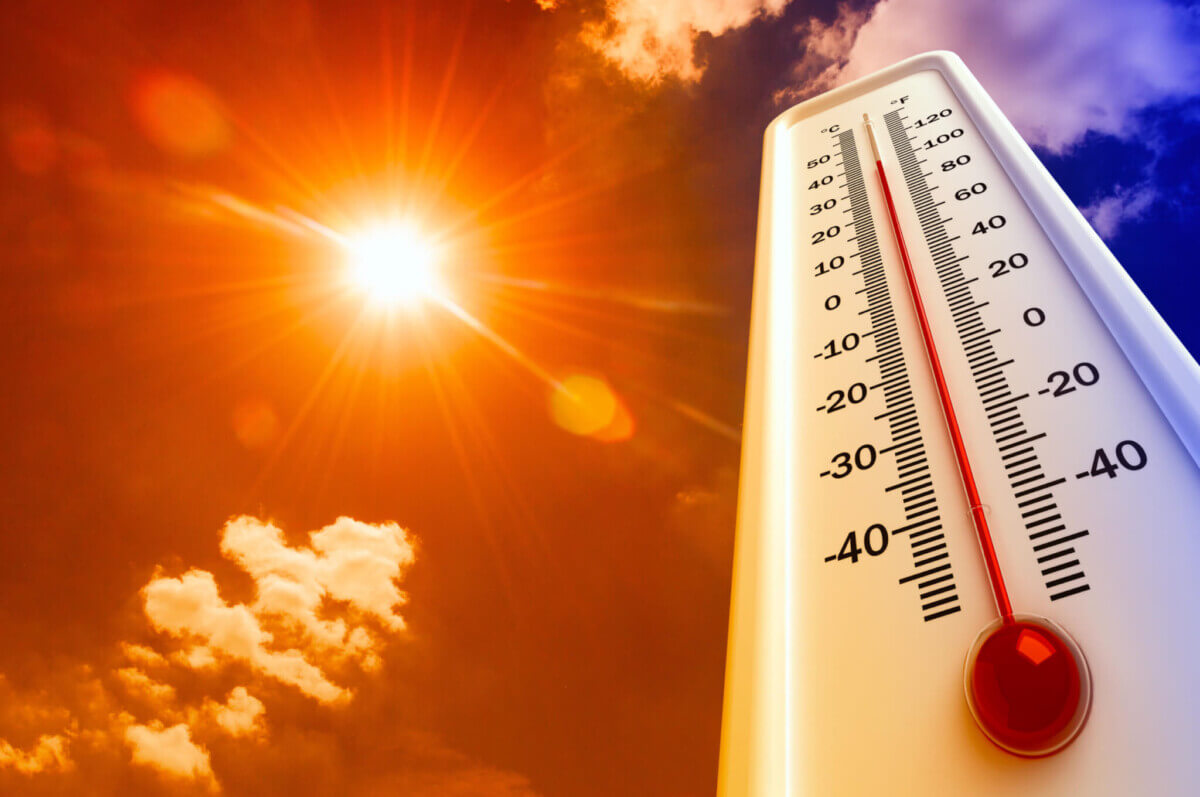
Not only are ocean temperatures breaking records, but air temperatures in many countries as well. (© vladischern - stock.adobe.com)
GUANGZHOU, China — The planet continues to get warmer and it appears there’s no end in sight because of climate change. July 2023 became the latest marker for soaring global temperatures. Now, researchers predict that this year will go down as the hottest on record.
The study was based on an advanced temperature monitoring system called the China global Merged Surface Temperature dataset 2.0 (CMST 2.0). This dataset is like a massive thermometer for the Earth, pooling together data from around the world to give a comprehensive reading on global temperatures.
The first half of 2023 has already ranked as the third hottest since recording began. It falls just behind 2016, which was the warmest year, and 2020, which came in second. In April, the average sea temperatures across the globe reached their highest point ever. By June, the average land temperatures almost matched that record, making May 2023 the hottest month ever recorded in terms of average surface temperatures.
A few factors are at play into what’s driving these high temperatures. One is the El Niño weather phenomenon, which can cause the Earth’s waters to warm up. Another factor is the increasing number of wildfires around the world. Both the sea and land temperatures for July 2023 broke previous records.

“Given the current trajectory and short-term forecast results of El Niño, along with the extremely positive phase of the Atlantic Multidecadal Oscillation that strongly influences global surface temperatures, 2023 is expected to be the hottest year on record,” says study author Li Qingxiang, a professor at Sun Yat-sen University and research fellow at the Xinjiang Institute of Ecology and Geography of the Chinese Academy of Sciences, in a media release. “Moreover, 2024 may witness even higher global surface temperatures.”
The CMST 2.0 dataset, which Li’s team developed, is a monumental achievement in the realm of climate science. It not only measures global temperatures with precision but also provides invaluable insights into regional climate changes. One of its major contributions has been debunking the myth of a “global warming hiatus” in recent years. In 2022, the system was even updated to include temperature data from the Arctic, ensuring an even more thorough global coverage.
The study is published in the journal Advances in Atmospheric Sciences.


