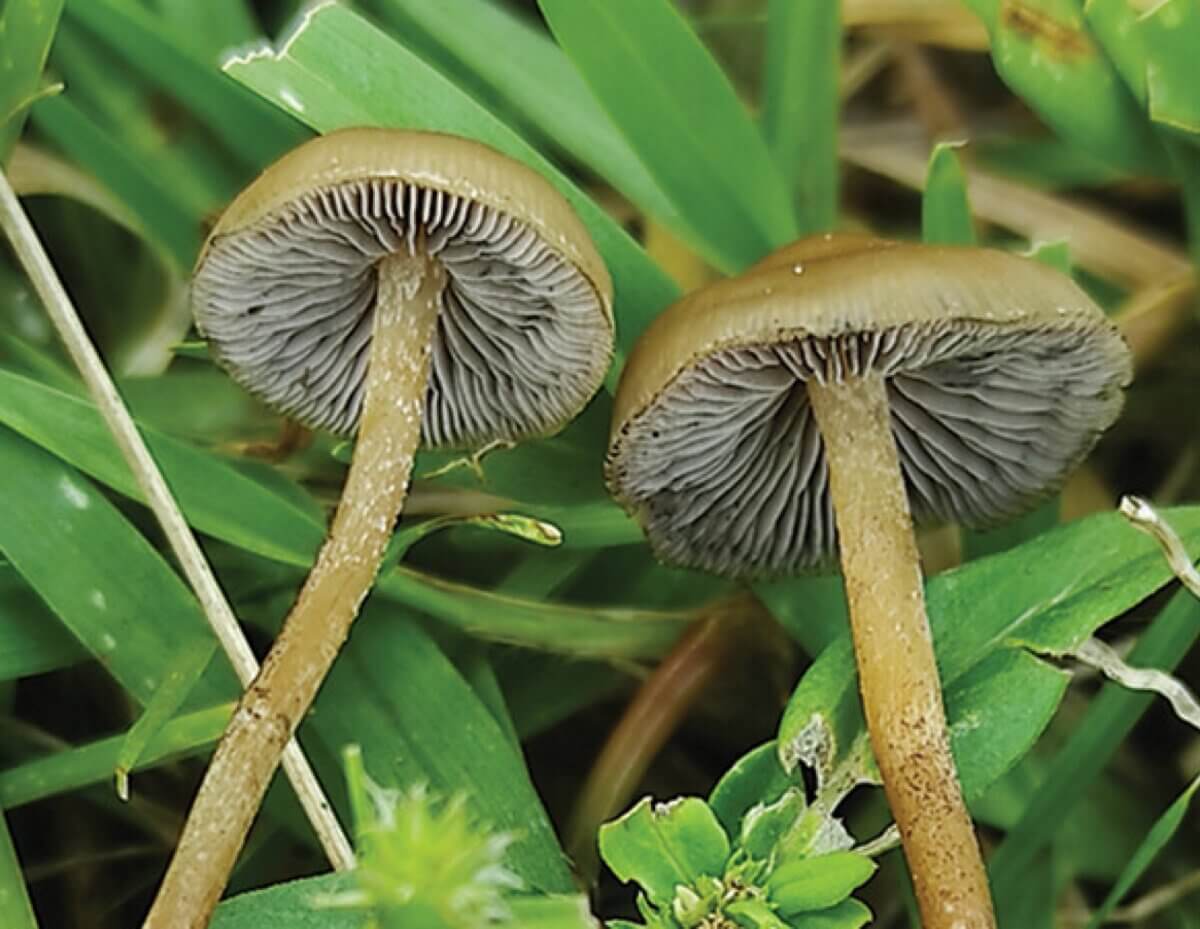
Psilocybe ingeli (Credit: Mycologia)
STELLENBOSCH, South Africa — The increasingly popular world of psychedelics now has two new members in it. Researchers in South Africa have discovered two new species of psychedelic mushrooms which belong to the genus Psilocybe — known for producing the popular, mind-altering compound psilocybin. According to the findings in the journal Mycologia, the discovery is shedding light on the traditional use of these mushrooms by indigenous healers in this part of the world.
The newly identified species, Psilocybe ingeli and Psilocybe maluti, were unearthed in South Africa and Lesotho, respectively. P. ingeli, discovered in the KwaZulu-Natal province, grows on grass enriched with cow dung. Its name comes from the nearby Ingeli mountain range.
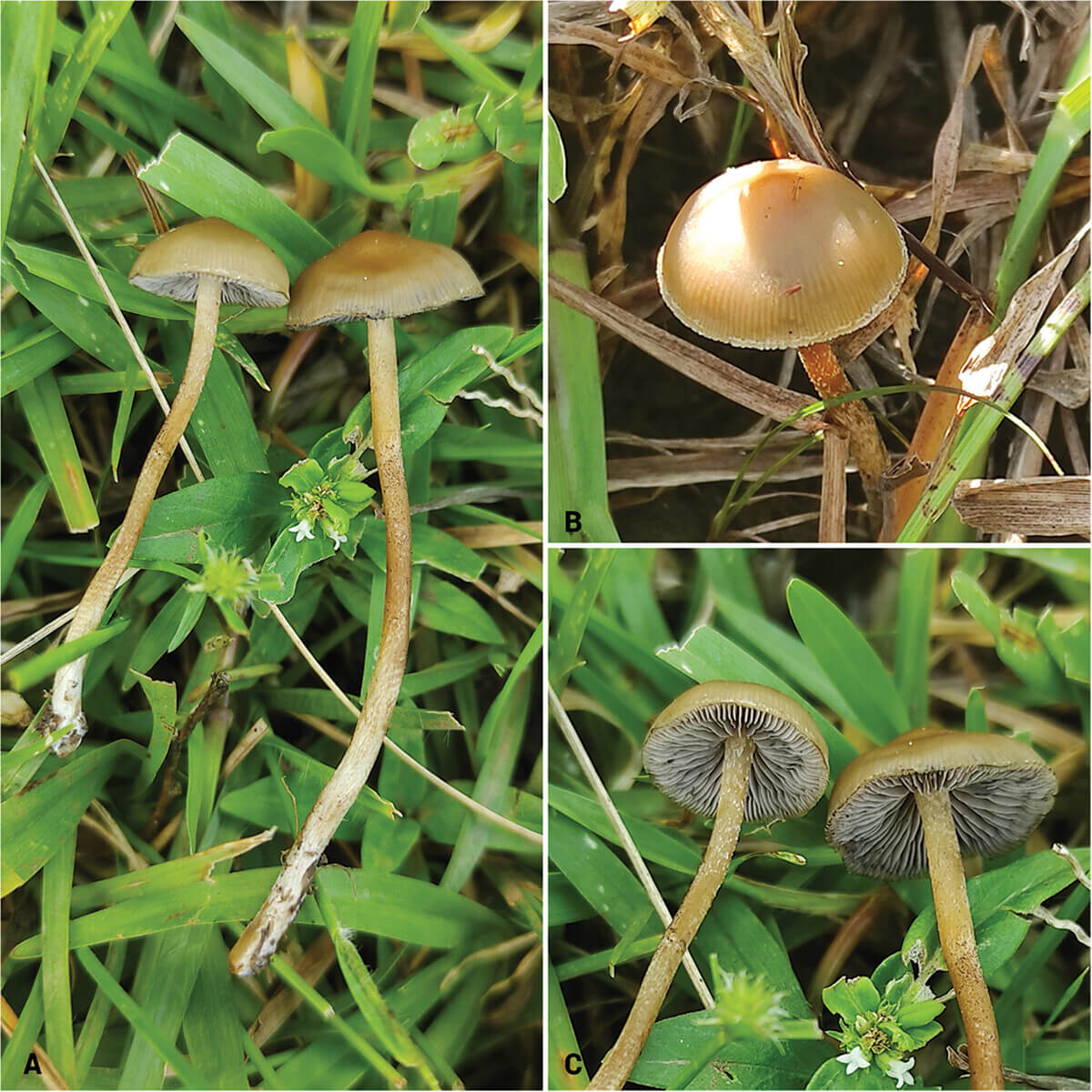
P. maluti, found in both South Africa’s Free State province and the Kingdom of Lesotho, also grows on cow manure. It’s named after the Maluti Mountains that stretch across the region.
What makes P. maluti particularly intriguing is its unique “secotioid” structure. Unlike typical mushrooms with open caps that release spores into the air, P. maluti’s cap remains closed even when mature. This unusual feature affects how the mushroom spreads its spores, likely relying on animals to disperse them.
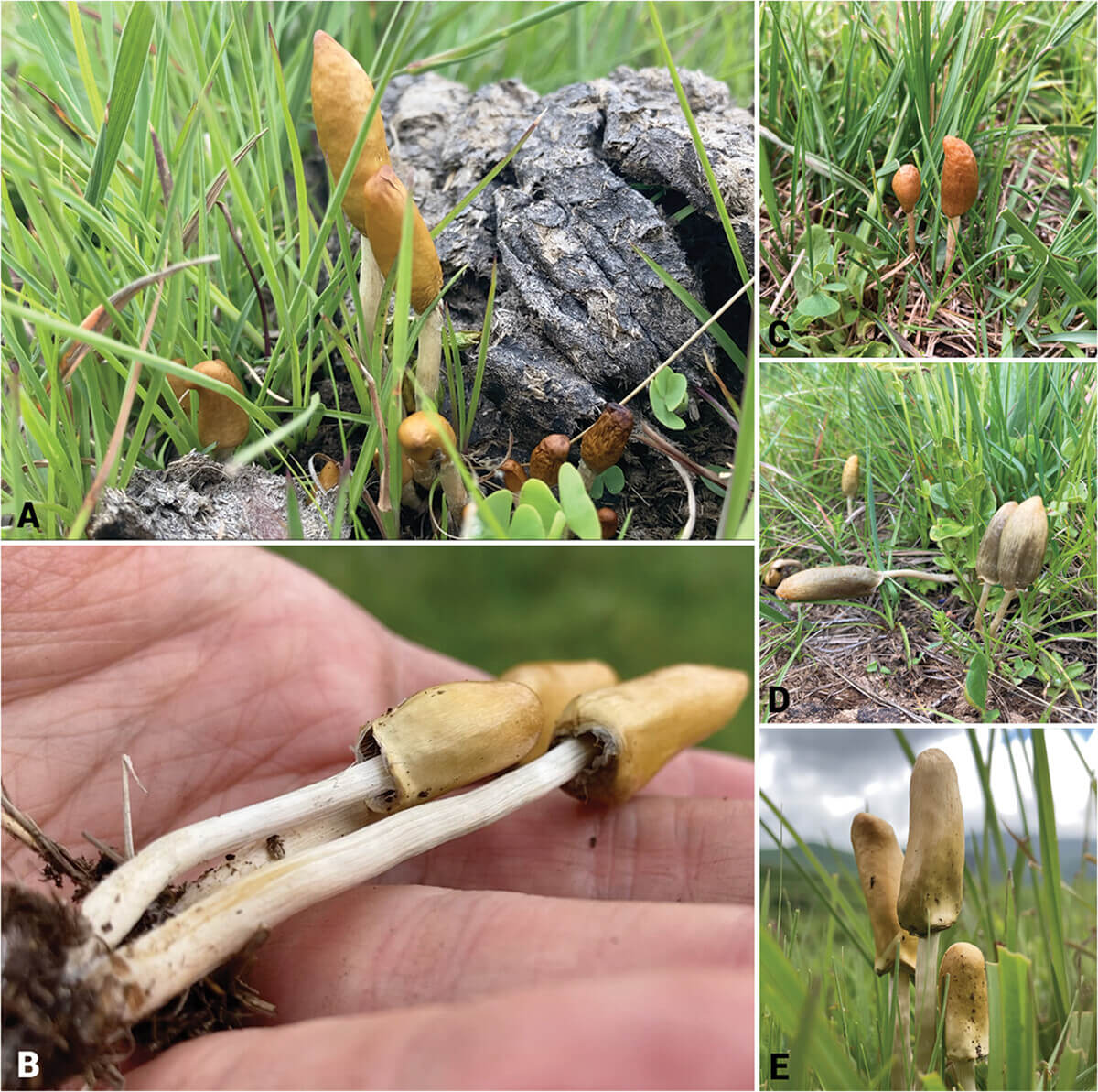
The discovery of P. maluti has also uncovered a fascinating cultural connection. Traditional healers in Lesotho, known as “lingaka,” have been using these mushrooms in spiritual practices. They combine P. maluti with a plant called Boophone disticha to create a brew that induces hallucinations. This mixture, called “seipone sa koae-ea-lekhoaba,” is used in rituals where patients describe their visions to healers, who then interpret them.
This is a significant discovery because it represents one of the first documented cases of hallucinogenic mushroom use in traditional African medicine. While the use of psychedelic mushrooms has been well-documented in places like Mexico, evidence of their traditional use in Africa has been scarce until now.
“These two species were sent to me by citizen scientists. It would be impossible for a single researcher to cover a fraction of an area these mushroom enthusiasts have access to. This is the only way we will be able to further studies in African mycology,” says researcher Breyten van der Merwe of Stellenbosch University in a media release.
“There are only a handful of mycologists in Africa documenting local biodiversity. Considering the vast mycological diversity on the continent, it is a daunting task. Collaborating with citizen mycologists is therefore hugely beneficial. In addition to more material, collaboration also opens avenues for conversation and exploration, which can lead to documenting mycophilia (the love of mushrooms) on the African continent,” adds Prof. Karin Jacobs in SU’s Department of Microbiology.
Van der Merwe and the team employed a combination of structural studies and DNA analysis to identify these new species. They examined the mushrooms’ physical characteristics under microscopes and sequenced specific regions of their DNA to compare them with known Psilocybe species.
Interestingly, the study also touches on the potential role of birds in spreading P. maluti spores. The indigenous name for this mushroom, “koae-ea-lekhoaba,” translates to “powdered tobacco of the crow,” suggesting a connection between the mushrooms and local bird species. This aligns with recent research indicating that birds may play a more significant role in fungal spore dispersal than previously thought.
This story was originally published in July 2024. The updated report contains a full breakdown of the study findings, listed below.
Paper Summary
Methodology
The researchers used a two-pronged approach to identify the new mushroom species. First, they carefully examined the physical features of the mushrooms, looking at things like cap shape, stem characteristics, and spore size under powerful microscopes. This is similar to how a botanist might study the leaves and flowers of a plant to identify it.
Second, they used DNA sequencing – a process that “reads” the genetic code of an organism. They focused on specific regions of DNA that are known to vary between different fungal species. By comparing these DNA sequences to those of known Psilocybe species, they could determine if their specimens were indeed new to science.
Key Results
The study confirmed that P. ingeli and P. maluti are distinct from previously known Psilocybe species. P. ingeli is most closely related to a species called P. keralensis but differs in its DNA, geographic location, and having larger spores. P. maluti is most similar to P. chuxiongensis but can be distinguished by its unique closed-cap structure and where it’s found.
The researchers also documented the traditional use of P. maluti by Lesotho healers, providing rare evidence of psychedelic mushroom use in African traditional medicine.
Study Limitations
The study was based on a limited number of specimens collected from specific areas. More extensive sampling across different regions and seasons could potentially reveal more diversity or distribution patterns. Additionally, while the traditional use of P. maluti was documented, the full extent and variations of these practices across different communities weren’t explored in depth.
Discussion & Takeaways
This research highlights the importance of continued exploration of fungal diversity, especially in understudied regions like Africa. The discovery of new Psilocybe species with unique features (like P. maluti’s closed cap) can provide insights into fungal evolution and ecology.
The documentation of P. maluti’s traditional use opens up new avenues for ethnomycological research in Africa. It suggests that the use of psychoactive fungi in traditional practices may be more widespread than previously thought.
The study also touches on the potential role of birds in fungal spore dispersal, a relatively new area of research that could change our understanding of how fungi spread and interact with their environments.
Finally, while not the focus of this study, the discovery of new Psilocybe species contributes to the broader field of psychedelic research. As interest in the potential therapeutic uses of psilocybin grows, having a deeper understanding of the diversity and distribution of psilocybin-producing fungi becomes increasingly valuable.


