This mouse model shows that the source of X chromosomes may impact brain aging. Could this mean the same for humans? (Credit: ustas7777777/Shutterstock)
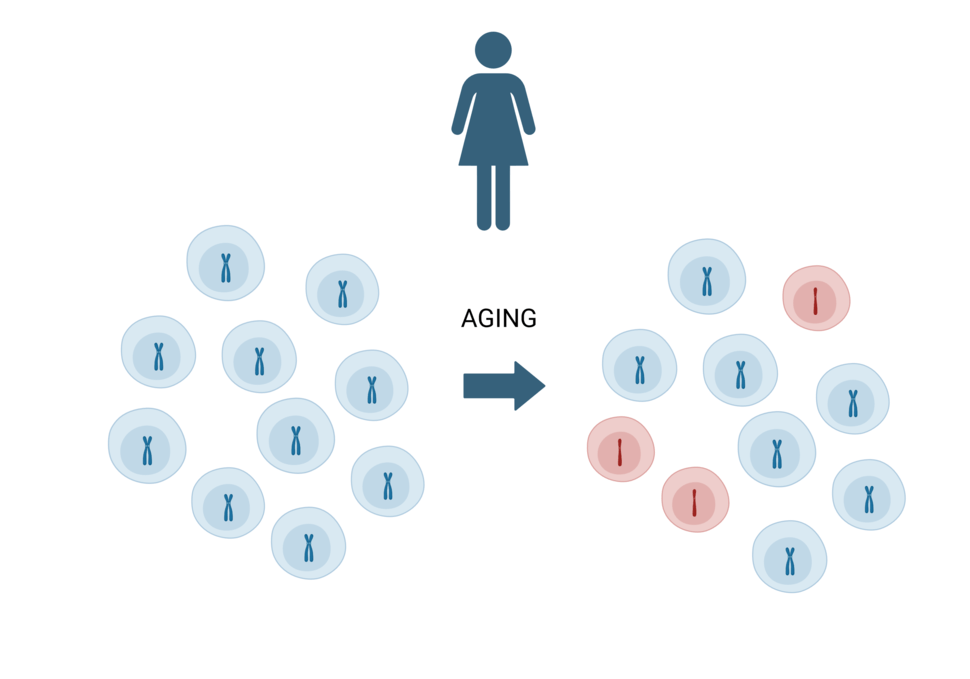
ROCKVILLE, Md. — A new study uncovers genetic factors that may help explain why some women experience a phenomenon called mosaic loss of the X chromosome (mLOX) as they age. With mLOX, some of a woman’s blood cells randomly lose one of their two X chromosomes over time. Concerningly, scientists believe this genetic oddity may lead to the development of several disease, including cancer.
Researchers with the National Institutes of Health found that certain inherited gene variants make some women more susceptible to developing mLOX in the first place. Other genetic variations they identified seem to give a selective growth advantage to the blood cells that retain one X chromosome over the other after mLOX occurs.
Importantly, the study published in the journal Nature confirmed that women with mLOX have an elevated risk of developing blood cancers like leukemia and increased susceptibility to infections like pneumonia. This underscores the potential health implications of this chromosomal abnormality.
Paper Summary
Methodology
To uncover the genetic underpinnings of mLOX, the researchers conducted a massive analysis of nearly 900,000 women’s blood samples from eight different biobanks around the world. About 12% of these women showed signs of mLOX in their blood cells.
Results
By comparing the DNA of women with and without mLOX, the team pinpointed 56 common gene variants associated with developing the condition. Many of these genes are known to influence processes like abnormal cell division and cancer susceptibility. The researchers also found that rare mutations in a gene called FBXO10 could double a woman’s risk of mLOX. This gene likely plays an important role in the cellular processes that lead to randomly losing an X chromosome.
Perhaps most interestingly, the team identified genetic variants that seem to be preferentially retained on the X chromosome that “wins out” after mLOX occurs. By looking at which variants ended up on the preserved X, they could predict which X would be retained with over 80% accuracy for women in the highest risk group.
Key Takeaways
This means certain X chromosomes, due to their genetic makeup, may have a competitive advantage that allows them to multiply more than cells with the other X after mLOX. This could help explain why mLOX increases cancer risk – if the preserved X has mutations that promote unchecked cell growth.
The researchers emphasize that more work is necessary on how mLOX interacts with other genetic factors and age-related changes to fully understand the potential disease implications. However, this pioneering study has cracked the genetic code behind this mysterious chromosomal loss.


