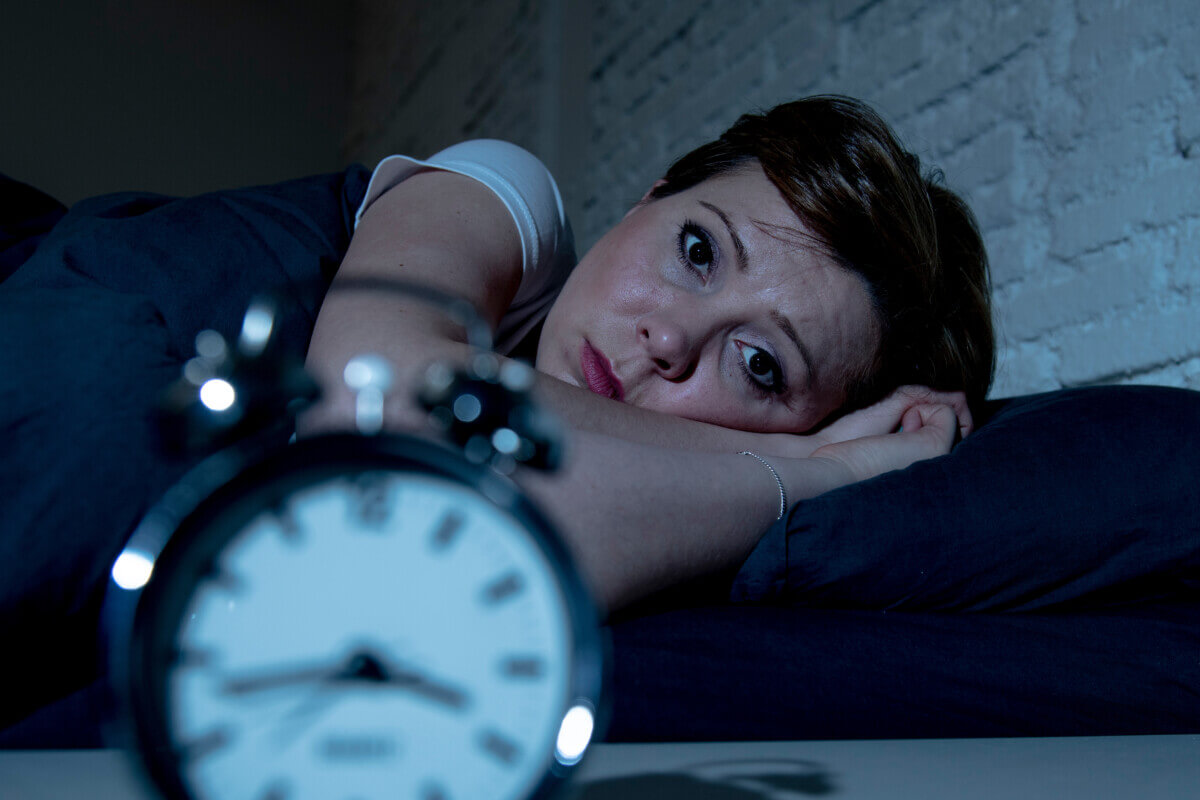
(© SB Arts Media - stock.adobe.com)
In A Nutshell
- Sleep gets lighter and more fragmented as the night goes on. REM sleep takes up a growing share of each 90-to-120-minute cycle later in the night, and arousals cluster right around REM transitions.
- Body temperature and cortisol are both shifting in the early hours. Core body temperature hits its lowest point around 4 to 6 a.m., and cortisol begins its daily rise well before typical wake time.
- A landmark 1990s NIMH experiment found a strikingly similar pattern. Under weeks of extended nightly darkness, volunteers settled into two roughly four-hour sleep bouts separated by an hour or more of quiet wakefulness.
- The evidence for that “natural” segmented pattern is genuinely contested. Later studies under realistic lighting didn’t reliably reproduce it, and historians and sleep scientists still argue over how universal it was.
That recurring middle-of-the-night wake-up may feel like a sign that something is off. Yet researchers say it can also be a surprisingly ordinary result of what happens in the body before dawn. It has sparked a larger debate over whether our ancestors once treated nighttime wakefulness as normal.
Is There Actually Something Special About Waking Up At 3 A.M.?
Not one specific clock minute, no. Sleep isn’t a flat, uniform state across the night, and the second half is structurally more fragile than the first. According to a sleep physiology overview hosted by the National Institutes of Health’s NCBI Bookshelf, deep slow-wave sleep dominates earlier in the night while REM sleep’s share of each cycle grows later on, and brief arousals cluster around transitions into and out of REM.
In young, healthy sleepers those arousals are usually minor enough to go unremembered. As that buffer weakens with age or stress, the same ordinary transition is more likely to fully wake someone, which is why a 3 a.m. eye-opening moment can feel oddly specific even though the mechanism is about sleep-cycle structure, not a fixed hour.
What Do Body Temperature And Cortisol Have To Do With It?
Two circadian signals are also moving overnight. Core body temperature reaches its daily low point, or nadir, in the early morning. It’s generally cited as occurring around 4 to 6 a.m. in a circadian rhythms overview compiled by the CDC.
Around the same window, cortisol, the hormone most tied to alertness, begins climbing toward the sharp rise researchers call the cortisol awakening response, detailed in expert consensus guidelines published in Psychoneuroendocrinology in 2016. Neither rhythm is precisely timed to 3 a.m.; the exact hour depends on chronotype and sleep schedule. But for people on conventional hours, those overlapping shifts often land in the pre-dawn window, nudging sleep lighter right when it’s already more fragile.
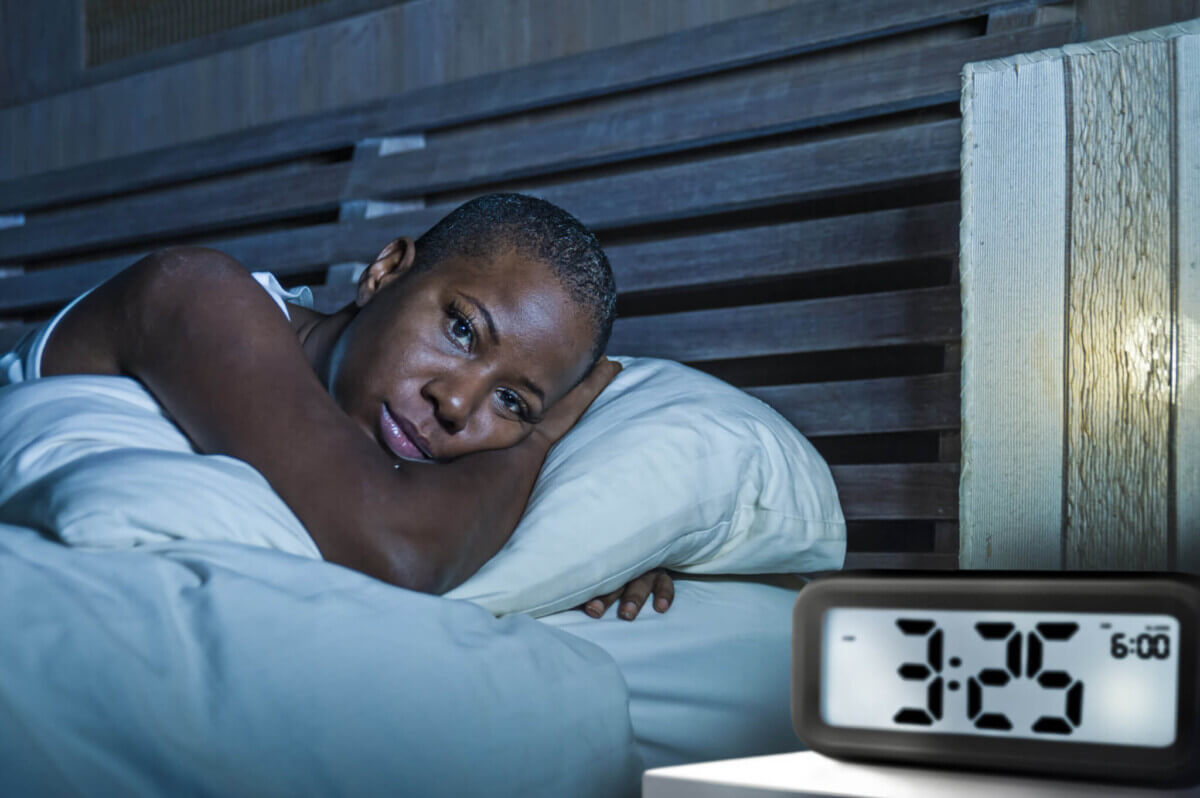
Could This Be An Old, Deeply Normal Human Pattern?
There’s a genuinely interesting, if contested, historical thread here. Virginia Tech historian Roger Ekirch documented more than 500 pre-industrial references to a “first sleep” and “second sleep” bridged by an hour or more of wakefulness, a pattern that largely disappeared after artificial lighting spread. In the early 1990s, NIMH researcher Thomas Wehr tested whether this had a biological basis: 16 participants, mostly men in their 20s and 30s, were confined to 14 hours of darkness nightly for a month, mimicking a natural winter night. By the fourth week, as reported by Scientific American, participants had settled into two roughly four-hour sleep bouts separated by one to three hours of quiet wakefulness.
That finding hasn’t gone unchallenged. A 2023 reassessment in the peer-reviewed journal Medical History argued that the historical and scientific evidence for segmented sleep as the dominant pre-industrial pattern is more selective than commonly presented. The paper notes a 2013 study that put campers under natural light and firelight for two weeks without reproducing Wehr’s biphasic pattern.
A 2010 European survey published in The Journal of Psychosomatic Research found 31.2% of adults already report waking at least three nights a week. The report suggests that broken sleep is simply common, not evidence of a lost ancestral rhythm.
The honest summary: middle-of-the-night waking has a plausible, unproven biological precedent, but isn’t settled science.
What Should You Actually Do About It?
Sleep specialists consistently give unglamorous, practical advice: don’t check the clock or a phone screen, since light exposure suppresses melatonin and makes it harder to drift back off. Keep the room dark and skip bright lights for a bathroom trip. If the pattern comes with daytime fatigue, loud snoring, gasping, or racing thoughts, it’s worth mentioning to a doctor, since those can point to sleep apnea, anxiety, or another treatable condition rather than ordinary sleep architecture doing what it normally does.


