
How do men and women differ when it comes to success and motivation? (© denisismagilov - stock.adobe.com)
WURZBÜRG, Germany — What makes some people more intelligent than others? While we know that genetics and environment play important roles, scientists are increasingly looking at brain connectivity — how different parts of the brain communicate with each other — to understand why some minds seem naturally sharper. Scientists conclude that it’s not just specific brain regions that matter for intelligence, but rather how the entire brain coordinates and shares information across vast neural networks.
Just as the internet isn’t located in any single server but emerges from countless connected computers, intelligence appears to arise from coordinated activity across brain-wide networks rather than residing in any particular area. This new study, led by Jonas Thiele and Dr. Kirsten Hilger from the Department of Psychology at the Julius Maximilian University of Würzburg (JMU), provides compelling evidence for this “distributed intelligence” view by showing how patterns of brain connectivity can predict different types of intellectual abilities.
The research team analyzed data from a large-scale data-sharing project based in the U.S. called the Human Connectome Project. Using functional magnetic resonance imaging (fMRI) – an imaging method that measures changes in brain activity – they examined 806 healthy adults between ages 22-37, both at rest and while performing various mental tasks. Using advanced machine learning techniques — computer algorithms that can learn to spot patterns in complex data — they were able to predict participants’ intelligence scores by looking at how different brain regions communicated with each other.
3 types of intelligence
What sets this study apart from previous research is its focus on understanding rather than just prediction. “Many studies predicting intelligence from brain connections have been published in the last years and they also achieve quite good predictive performance,” Dr. Hilger says in a statement. However, the researchers questioned the deeper meaning of these predictions, since they would never be as accurate as direct intelligence tests. Instead, they aimed to “move away from the pure prediction of intelligence scores and instead better understand the fundamental processes in the brain.”
The researchers examined three distinct forms of intelligence: fluid intelligence (the ability to solve novel problems independent of existing knowledge or learned skills); crystallized intelligence (knowledge and skills acquired through education and experience); and general intelligence, which is a combination of both fluid and crystallized intelligence.
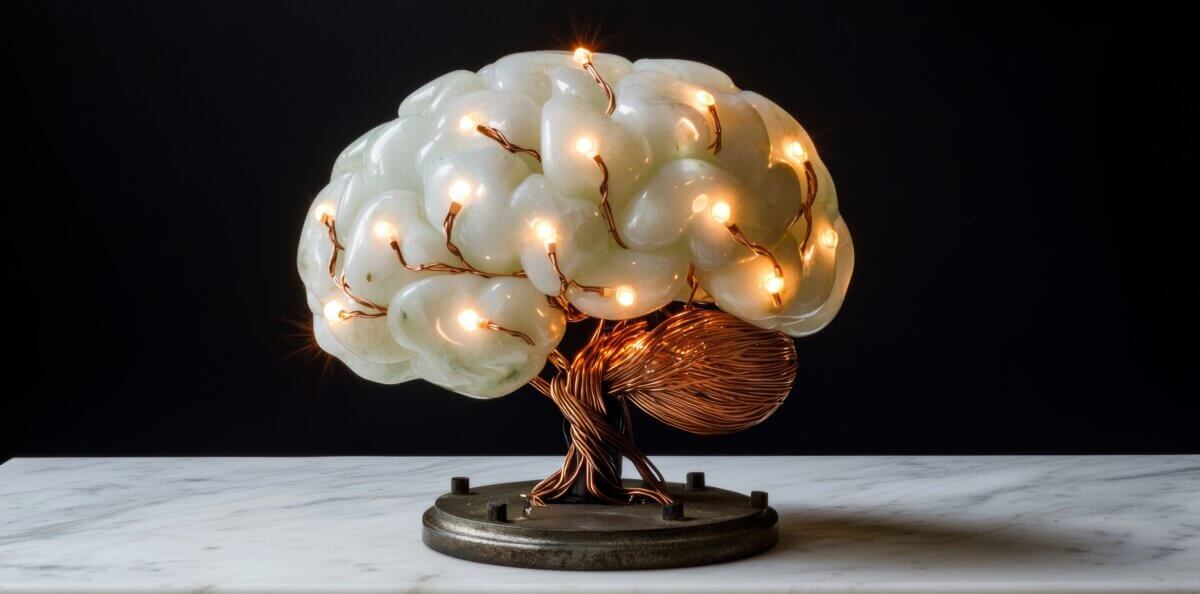
To help understand these concepts, you might think of fluid intelligence as your brain’s raw processing power for tackling new challenges — like figuring out a puzzle you’ve never seen before. Crystallized intelligence, in contrast, represents your accumulated knowledge and learned skills — everything from vocabulary to historical facts to job-specific expertise.
Researchers found they could predict intelligence scores just by looking at patterns of brain connectivity without any actual intelligence testing. On a scale where 0 means no predictive ability (like random guessing) and 1 means perfect prediction (like copying from an answer key), brain patterns predicted general intelligence with a correlation of 0.31 – roughly a third of the way to perfect prediction. The predictions were slightly less accurate for crystallized intelligence (0.27) and fluid intelligence (0.20).
While these numbers might seem modest, they’re quite meaningful in brain research, where the sheer complexity of the human mind makes perfect predictions nearly impossible. It’s similar to weather forecasting: even a 30% chance of rain represents significant predictive power given all the complex factors involved. The fact that scientists could predict any portion of intelligence scores just by looking at how different parts of the brain communicate with each other provides strong evidence that intelligence emerges from these brain-wide connection patterns.”
Brain connectivity matters most?
The research, published in PNAS Nexus, also reveals specific patterns in how different mental states related to intelligence prediction. The data showed that brain connectivity patterns measured during language tasks were particularly good at predicting general and fluid intelligence, while patterns measured across multiple different tasks were best for predicting crystallized intelligence. This suggests that different types of mental activity might reveal different aspects of intellectual capability.
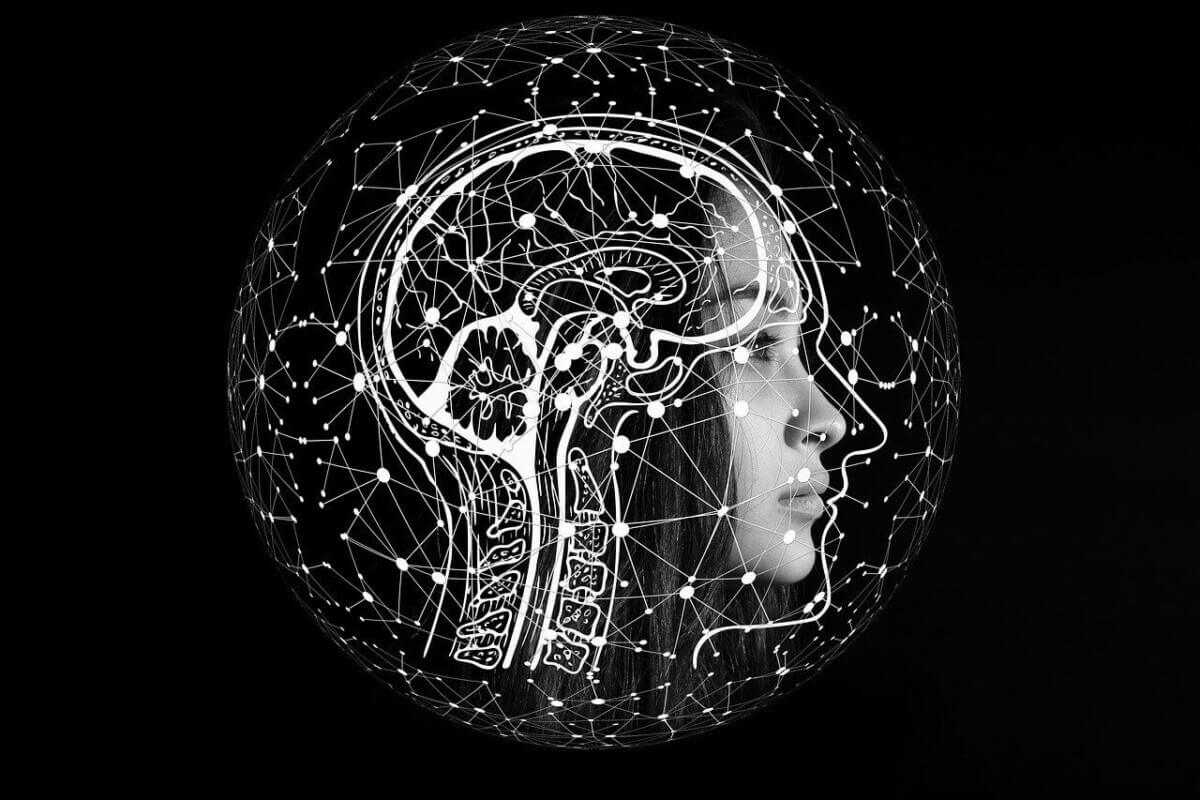
One of the study’s most significant findings challenges traditional views about the localization of intelligence in the brain. While some brain networks, particularly those involved in attention, cognitive control, and self-reflection, showed stronger predictive power, the researchers found they could still predict intelligence reasonably well even when excluding entire brain networks from their analysis. As Hilger notes, “The interchangeability of the selected connections suggests that intelligence is a global property of the whole brain. We were able to predict intelligence not just from a specific set of brain connections, but from different combinations of connections distributed throughout the brain.”
This finding presents an interesting challenge to established theories of intelligence that often focus on specific brain areas, such as the prefrontal cortex. “The connections of brain regions proposed in the most popular neurocognitive models of intelligence produced better results than randomly selected connections,” Dr. Hilger explains. “However, the results were even better when complementary connections were added.” This suggests our understanding of intelligence’s neural basis may be incomplete and that considering brain-wide connectivity patterns could provide a more complete picture.
How coordinated is your noggin?
Through their analysis, the research team identified approximately 1,000 key neural connections that were most relevant for predicting intelligence. These connections formed a widely distributed network spanning the entire brain, with different patterns emerging for different types of intelligence. Thus, it’s clear that intelligence relies on coordinated activity across many brain regions rather than being concentrated in a few key areas.
These findings could potentially have important implications for future research and applications. For instance, they suggest that approaches focused on enhancing overall brain network function might be more promising than those targeting individual brain regions, though this remains to be tested. The results might also inform future studies of neurological disorders and cognitive development, though much more research would be needed to establish practical applications.
Dr. Hilger hopes this study will inspire a shift in how researchers approach the study of human cognition, encouraging more studies designed to improve our conceptual understanding rather than just prediction accuracy. This work reminds us that when it comes to understanding something as complex as human intelligence, asking the right questions may be just as important as finding precise answers.
Paper Summary
Methodology
The researchers used functional magnetic resonance imaging (fMRI) to measure brain activity in participants during rest and while performing seven different tasks. They then calculated how different brain regions communicated with each other by measuring the correlation between their activity patterns – essentially creating a map of brain connectivity for each person. The team used artificial intelligence algorithms to learn which patterns of connectivity were most predictive of intelligence scores, which were measured through a battery of cognitive tests. This process was validated through multiple steps to ensure the findings were reliable and generalizable.
Results
The study found that brain connectivity patterns could predict general intelligence with a correlation of 0.31, crystallized intelligence with 0.27, and fluid intelligence with 0.20 (on a scale where 1.0 would be perfect prediction). While these numbers might seem modest, they represent significant predictive power for such complex psychological traits. The researchers identified about 1,000 neural connections that were most important for prediction, which varied depending on the type of intelligence and mental state being examined.
Limitations
The study had several important limitations. The participant sample was restricted to young adults aged 22-37, so the findings might not apply to children or older adults. The brain imaging was also limited to measuring static patterns of connectivity rather than how these patterns change over time. Additionally, the study used a relatively coarse division of the brain into 100 regions, potentially missing finer-scale patterns of connectivity.
Discussion and Takeaways
The research suggests that intelligence emerges from coordinated activity across widespread brain networks rather than being localized to specific regions. Different types of intelligence appear to have distinct neural signatures, even though they’re closely related behaviorally. The finding that brain-wide connectivity patterns predict intelligence, even when excluding major networks, suggests the brain has multiple redundant systems for supporting intelligent behavior – a potential evolutionary advantage that could help maintain cognitive function even if some brain regions are damaged.
Funding and Disclosures
The study was supported by the German Research Foundation, the Heinrich-Böll Foundation, and Indiana University’s Pervasive Technology Institute. The researchers declared no competing interests. Data came from the Human Connectome Project and the Amsterdam Open MRI Collection, both publicly funded research initiatives.


