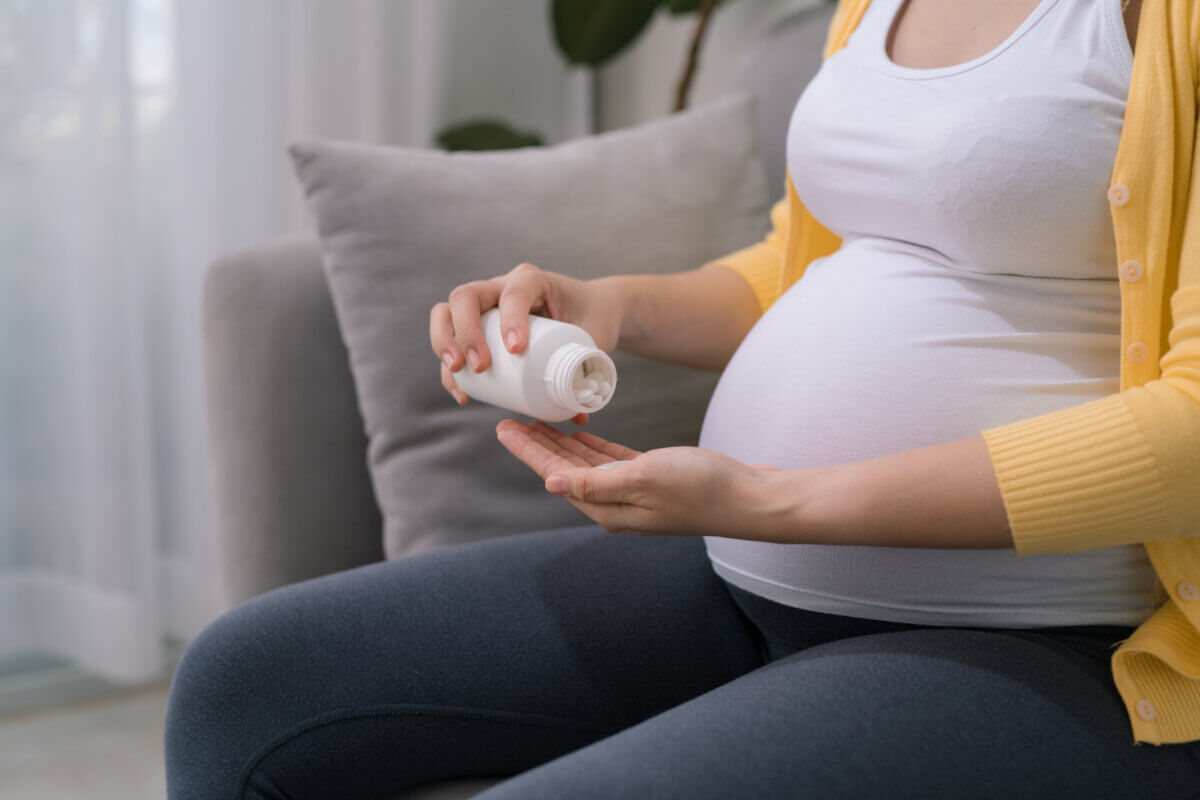
(Credit: Makistock/Shutterstock)
Vitamin C Pills, Not Food, Were Tied to Less Fussy Babies
In A Nutshell
- More vitamin C pills in pregnancy went with less fussy babies at 6 months.
- Vitamin C from food showed no such link.
- Stressed women tended to take fewer pills, but the study cannot prove cause and effect.
- Randomized trials could test whether extra vitamin C calms babies.
A vitamin C pill and an orange deliver the same nutrient, yet only the pill was tied to calmer babies in a new study of pregnant women. Mothers who took more vitamin C supplements had babies rated as less fussy at 6 months old, while vitamin C from food showed no such link. Women who felt more depressed, anxious, or stressed late in pregnancy tended to take fewer pills.
Researchers at Oregon Health and Science University reported the results in the journal Developmental Psychology. Stressed mothers are already known to be more likely to have fussier babies, so the team tested whether lower supplement use could be part of the reason. Pill-taking explained a small slice of that link.
Why pills would matter more than food is unknown. Earlier research cited in the paper found that the body absorbs natural and synthetic vitamin C about equally well, so women who take supplements may differ in other ways, such as health habits or the other nutrients packed into their pills. Even so, the authors see supplements as a possible addition to prenatal care.
Stressed Pregnant Women Took Fewer Vitamin C Supplements
Participants were 302 women who gave birth between 2019 and 2021 and reflected the demographics of the Portland, Oregon area. About 73% were white and non-Hispanic, the average age was just under 32, and more than half were first-time mothers. The authors note that this could limit how well the results apply to more diverse groups.
Between 37 and 39 weeks of pregnancy, each woman filled out questionnaires about depression, anxiety, and stress, and researchers combined the answers into one distress score.
Vitamin C intake was tracked two ways. Trained dietitians interviewed each woman three times about everything she ate the day before, which produced a food total. A separate questionnaire covered vitamin pills, including brand, dose, and how often each was taken, and photos of bottle labels confirmed the details. Daily pill doses ranged from none to more than 1,000 milligrams, while food supplied about 116 milligrams on average, above the 85 recommended in pregnancy.
Six months after birth, caregivers rated their babies on a questionnaire that scores behaviors such as crying when frustrated, from never to always. Higher scores meant more fussiness and negative emotion, which researchers call negative affect. The average baby scored 3 out of 7. About three-quarters of the babies were still breastfeeding at that age, which limited the influence of solid foods. The analysis accounted for factors such as the mother’s age, diet quality, and her own mood at the 6-month mark.
Mothers’ distress and babies’ fussiness did go together here, though modestly. Those same mothers also tended to take fewer vitamin C supplements in late pregnancy, a small difference, and fewer supplements went with fussier babies.

Income Did Not Explain Who Took Vitamin C Pills
Income did not explain who took supplements, even though pills cost money. The authors suggest that knowledge, motivation, or a doctor’s guidance may matter more, and that less-stressed women may be more likely to keep up healthy habits. A pill habit could be a marker for a woman with more energy, support, or health know-how, traits that might also shape how a baby behaves.
Animal Studies Tie Low Vitamin C to Brain Changes
Humans cannot make vitamin C, so a developing baby relies completely on the mother’s supply. The vitamin is also highly concentrated in the brain and helps the body absorb iron. In guinea pigs, shortages during pregnancy disrupted development of the hippocampus, a brain region involved in memory, in offspring.
Inflammation is another possible route. Earlier research has linked excessive inflammation during pregnancy to fussier infants, and vitamin C has anti-inflammatory properties. Neither route was measured in this study, so both remain educated guesses.
Vitamin C in Pregnancy Still Needs Clinical Trials
Compared with changing diets or easing distress, the authors write, supplementation may be “a more feasible nutrition modification during pregnancy.” They also cite findings that vitamin C has low toxicity in pregnancy at doses up to 2,000 milligrams, and they call for larger studies that check vitamin C levels in blood and include more diverse groups of mothers.
About 18.5% of participants fell below 70 milligrams of vitamin C a day, the estimated average amount pregnant women need. National data cited in the paper put the share of pregnant US women below that mark, based on food alone, at roughly 25%, a figure that falls to 11.5% once supplements count. Within the study’s own low-intake group, pills did not clearly soften the link between stress and fussiness, though the authors say that group was likely too small to give a firm answer.
A pill and an orange may carry the same vitamin, but a pattern among 302 mostly white, non-Hispanic women cannot show that extra vitamin C calms babies. A randomized trial, which gives some women vitamin C and others a placebo, could answer that. Until one is done, supplements are a lead worth testing, not a treatment for stressful pregnancies.
Disclaimer: This article reports on a single research study for informational purposes only and is not medical advice. Pregnant women should talk with a doctor or other qualified health professional before starting or changing any vitamin or supplement.
Paper Notes
Limitations
Vitamin C was not measured in blood. Researchers relied on self-reported food interviews and supplement questionnaires, and pill amounts came from product labels, though US supplements face limited regulation and actual contents can vary. Most prenatal supplements contain many nutrients, so adjusting for overall diet quality and prenatal vitamin use cannot fully separate vitamin C from other nutrients; the link may reflect vitamin C, other nutrients, or broader health habits. Infant irritability came from caregiver questionnaires rather than direct observation, and the analysis adjusted for maternal distress reported at 6 months. Participants were mostly white and non-Hispanic, which may limit how broadly the results apply. The analysis of women below the average requirement was likely too small to be reliable. The study was not preregistered. It was also observational, so it cannot establish that vitamin C causes changes in infant temperament, only that a statistical association exists.
Funding and Disclosures
Funding came from the National Institute of Mental Health (grants R01MH117177, R01MH124824, and K01MH120507), with additional support from the National Center for Advancing Translational Sciences (grants UL1TR002369, TL1TR002371, and KL2TR002370) and the National Institute of Arthritis and Musculoskeletal and Skin Diseases (grant K12AR084221). The paper states that the funders played no role in writing the article or in the decision to submit it for publication, and that the content is solely the responsibility of the authors and does not necessarily reflect the official views of the National Institutes of Health. The authors declared no conflicts of interest.
Publication Details
Title: “Prenatal Vitamin C Supplementation Mediates the Association Between Prenatal Distress and Infant Negative Affect: A Prospective Cohort Study.” Authors: Elizabeth K. Wood, Hailey E. Volk, Elizabeth K. Nousen, Olivia K. Nomura, Amanda N. Howery, Angela M. Horgan, Joel T. Nigg, Hanna C. Gustafsson, and Elinor L. Sullivan. Hanna C. Gustafsson and Elinor L. Sullivan are considered equal in order and contribution. All authors except Horgan are affiliated with the Department of Psychiatry at Oregon Health and Science University, and all of them except Volk are also affiliated with the university’s Center for Mental Health Innovation. Horgan is affiliated with the university’s Clinical and Translational Research Center. Correspondence: Elinor L. Sullivan, [email protected]. Journal: Developmental Psychology (ISSN 0012-1649). Received November 16, 2025; revision received June 4, 2026; accepted July 14, 2026; published online first November 2, 2026. DOI: https://dx.doi.org/10.1037/dev0002263. Citation: Wood, E. K., Volk, H. E., Nousen, E. K., Nomura, O. K., Howery, A. N., Horgan, A. M., Nigg, J. T., Gustafsson, H. C., & Sullivan, E. L. (2026). Prenatal Vitamin C supplementation mediates the association between prenatal distress and infant negative affect: A prospective cohort study. Developmental Psychology. Advance online publication. https://dx.doi.org/10.1037/dev0002263


