(© Suzi Media - stock.adobe.com)
Thinner Packaging Cuts Factory Waste, but Consumers May Toss It
In A Nutshell
- In a lab test, thin recyclable paper was trashed about 1.5 times as often as thick paper.
- Real-world bin checks on a campus pointed the same way, though one was tiny and the other shows a link, not a cause.
- Participants rated thin packaging lower in quality and value, and tossing it bothered them less.
- A short note saying an envelope still has value made online participants less likely to say they would trash a thin one, but a small field test was inconclusive.
Give people a thin sheet of recyclable paper instead of a thick one, and they are about one and a half times as likely to throw it in the trash. That result from one lab experiment points to a possible flaw in a popular sustainability move: making packaging lighter.
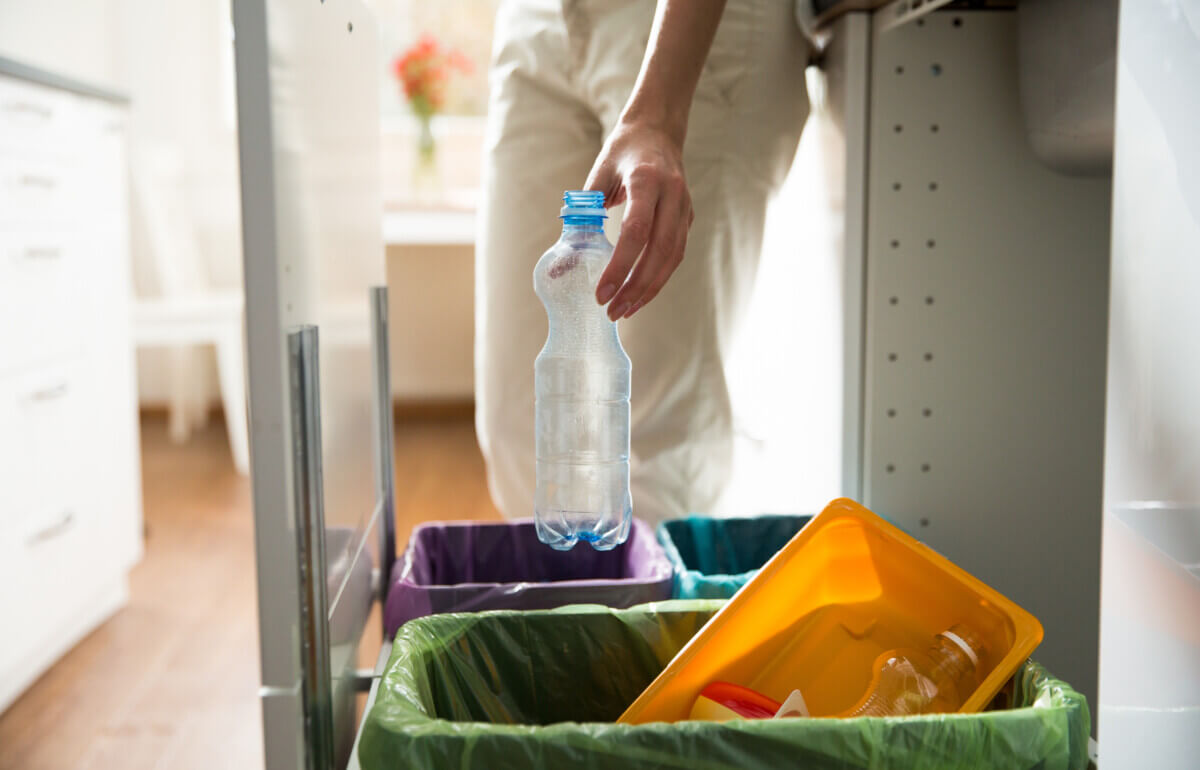
Companies call the practice lightweighting. Water bottles that crinkle at a squeeze are one example, and Amazon, Coca-Cola, and H&M all use the approach, which swaps in lighter materials or uses less of them to cut costs and environmental footprint. University of Georgia researchers Lyndsay Loomer and Sarah C. Whitley found that once a lighter package reaches a consumer’s hand, it is more likely to be thrown out than a sturdier package is, which can erode the benefit.
Published in the Journal of the Academy of Marketing Science, the work combines real trash bins, a lab experiment, and online experiments. A short printed message also reduced trashing of thin packaging in one online test, hinting at a low-cost fix.
Lightweight Packaging Ends Up in the Trash More Often Than Sturdy Packaging
A real product anchored the first test. A major bottled water brand was switching to a thinner bottle while the older one was still on sale. Researchers set out 150 of each at a campus speaker event, and attendees took 200. Only 20 bottles were recovered from the exit bins afterward, but four of the lighter ones were in the trash and none of the heavier ones were. With numbers that small, the result was an early hint, not proof.
Next, researchers spent a week collecting every recyclable plastic drink container from 38 bins on one floor of a university business school, 172 containers in all. Each was weighed and compared with its size, so a container that felt light for its size counted as lightweight. Lighter containers were more likely to be in the trash, even after accounting for dirt, color, dents, and missing labels. An audit shows a link, not a cause.
A lab experiment tested cause. Undergraduates at a large U.S. university (235 total, average age about 20, 58.3% female) held a quarter-sheet of gray paper and treated it as a flyer. At random, some received thin, newspaper-like paper and others thick, cardstock-like paper. Bins outside the lab had lids hiding earlier participants’ trash. After 17 people who kept or abandoned the paper were excluded, 218 remained. Among them, about 41 percent of the thin-paper group trashed it, compared with about 26 percent of the thick-paper group.

Thin Packaging Seems Less Valuable, So Fewer People Recycle It
A third study asked 400 U.S.-based online participants (375 after 25 were screened out, average age about 45) to read about an empty takeout bag, described as either thin like a bakery bag or thick like a grocery bag. Both conditions showed the same photo. Asked where the bag would go, about 23 percent chose the trash in the thin group, compared with 14 percent in the thick group.
Participants also rated the thin bag lower in quality and value, and tossing it bothered them less. That last piece mattered most: perceived value shaped disposal only by easing the uneasy feeling of wasting something worthwhile, a reaction researchers call waste aversion.
A Short Value Message Cut Trashing of Thin Envelopes in an Online Test
In a fourth study, 537 U.S.-based online participants (average age about 44) read about taking promotional buttons out of a paper envelope at an event. It was described as thin, thick, or thin with a printed note reading “You may be done with this envelope, but it still has value,” and participants rated how likely they were to throw it away.
Participants were most likely to say they would throw out the thin envelope. The note brought that down to the level of the thick envelope.
Real envelopes in a graduate student building pointed the same way over two days: 19.6 percent of envelopes with the note were recycled, compared with 12.9 percent of those without. Only 58 of 226 envelopes turned up in the bins, though, and the gap was too small to rule out chance.
Lightweight Packaging Could Undercut Recycling Goals
Lightweighting does save raw material, and the authors acknowledge that benefit. Their concern is what happens afterward. Regulators, including California, are pushing manufacturers to use more recycled material in new packaging, and thinner containers that get trashed shrink the supply of that material. In the authors’ words, “even sustainable firm practices can result in unintended and unsustainable consequences.”
Not every lighter package is doomed, either. In the bin audit, trashing climbed sharply below a certain lightness, though the authors say that tipping point applies only to the containers they collected.
Thinner packaging looks like an easy sustainability win from the factory floor. Until companies check where it lands after use, and tell shoppers it is still worth recycling, that win is not guaranteed.
Disclaimer: This article summarizes a published research paper for general information only and is not professional advice. Findings from a single study may not apply to every product, setting, or group of people.
Paper Notes
Limitations
Authors note that only packaging density was examined, so texture, shape, and sheen could also affect disposal. Studies compared recycling with trashing only, and reuse habits, which may vary by person or culture, were not measured. The bottle pilot and the envelope field test involved small numbers of recovered items, and the envelope result was not statistically significant. Beyond those admissions, the bin audit shows an association rather than cause, the lab experiment used undergraduates from one university, and the third and fourth studies relied on online participants imagining what they would do, meaning stated intentions rather than observed behavior. The audit’s tipping point, about 0.7 grams per fluid ounce, comes from one building’s plastic containers, and the authors state it is specific to that context.
Funding and Disclosures
No funding source is named in the paper. The authors declare no relevant financial or non-financial interests. The University of Georgia’s Institutional Review Board approved the research, and the manuscript is based on Loomer’s dissertation, supervised by Whitley. Several studies were preregistered, and the authors say preregistrations and datasets are posted on the Open Science Framework. They thank John Hulland, Remi Trudel, and the UGA Marketing Behavioral Lab for feedback and help with data collection.
Publication Details
Title: Through Thick and Thin? When Sustainable Packaging Design Increases Consumer Waste Generation | Authors: Lyndsay Loomer and Sarah C. Whitley, University of Georgia, Athens, Georgia | Journal: Journal of the Academy of Marketing Science (Original Empirical Research; Guest Editor Neeraj Bharadwaj) | Dates: Received July 15, 2025; accepted September 7, 2026; published online September 23, 2026 | DOI: 10.1007/s11747-026-01208-7 (https://doi.org/10.1007/s11747-026-01208-7) | License: Open access, Creative Commons Attribution 4.0


