
(© WavebreakMediaMicro - stock.adobe.com)
SAN DIEGO — A new study reveals a surprising correlation between developing Type 2 diabetes and suffering from lower back pain. University of California-San Diego researchers discovered that Type 2 diabetes impacts the vertebral column, particularly the intervertebral discs. Their study provides crucial insights into the biomechanical changes in the spinal discs of those dealing with Type 2 diabetes, linking the condition to an increased risk of disc degeneration.
Intervertebral discs act as cushions between the bones of the spine, providing flexibility and absorbing shocks. However, in individuals with Type 2 diabetes, these discs become stiffer and change shape prematurely, impairing their ability to handle pressure effectively. This alteration in disc behavior contributes to a higher prevalence of low back pain among diabetic patients, a condition that is a leading cause of disability worldwide.
The study was co-led by Claire Acevedo of the Department of Mechanical and Aerospace Engineering at UC San Diego and Aaron Fields of the Department of Orthopaedic Surgery at the University of California-San Francisco (UCSF). Their research aimed to delve into the biomechanical properties of intervertebral discs to better understand the progression of disc degeneration in diabetes and to pave the way for the development of targeted treatments and preventive measures.
“These findings provide novel insight into the potential mechanisms underlying diabetes-related disc tissue damage and may inform the development of preventative and therapeutic strategies for this debilitating condition,” researchers say in a university release.
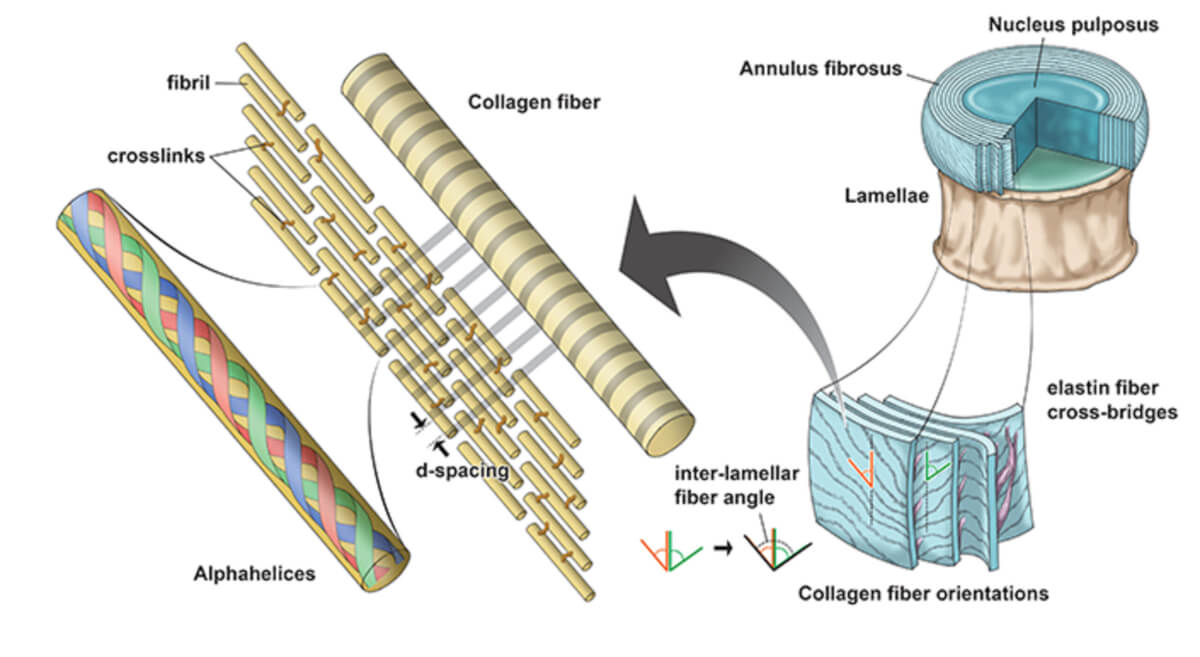
The team focused on the nanoscale deformation mechanisms of collagen fibrils within the disc, which are essential for the disc’s ability to absorb compressive forces. Using synchrotron small-angle x-ray scattering (SAXS), a sophisticated experimental technique, researchers observed how collagen fibrils in healthy rats rotate and stretch under compression, allowing for effective energy dissipation. In stark contrast, discs from rats with Type 2 diabetes showed a significant impairment in this process, with reduced rotation and stretching of collagen fibrils, indicating a diminished capacity to withstand pressure.
Moreover, the diabetic rats’ discs exhibited increased stiffness and a higher concentration of non-enzymatic cross-links within the collagen fibrils. These cross-links, a result of hyperglycemia (high blood sugar levels), restrict the fibrils’ ability to slide past each other, limiting the disc’s plastic deformation and making it more brittle and less capable of handling mechanical stress.
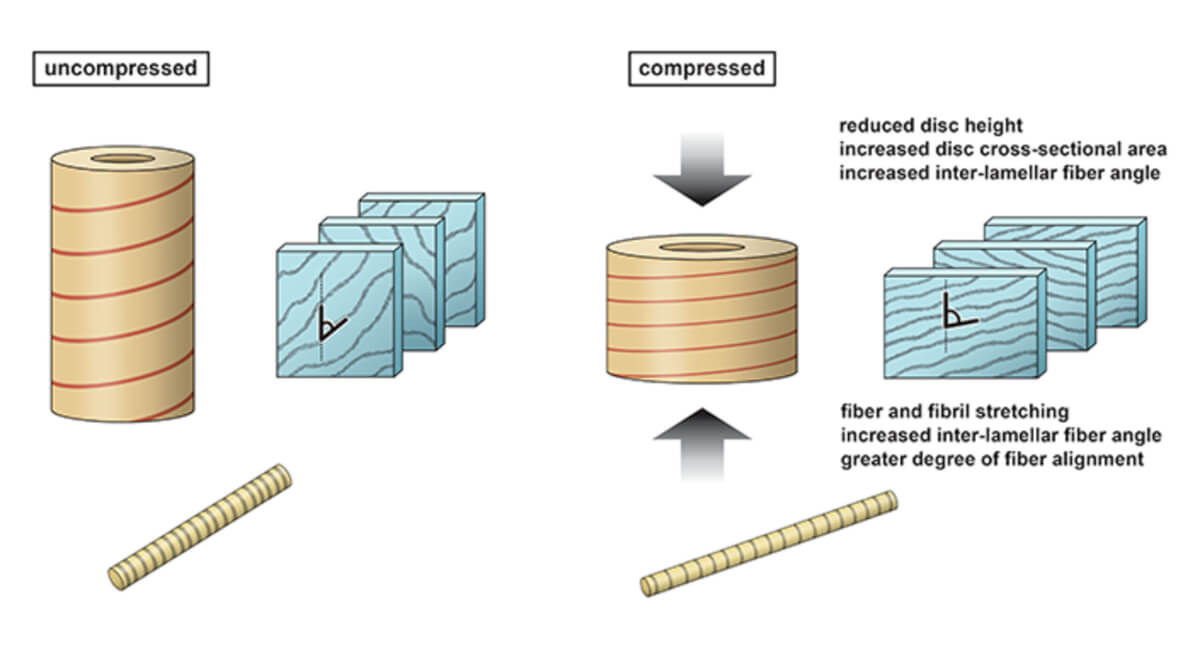
These findings shed light on the intricate ways Type 2 diabetes can damage disc tissue, emphasizing the disruption of efficient deformation mechanisms that are vital for the healthy function of the spine. The study underscores the importance of managing diabetes not only to control blood sugar levels but also to prevent the debilitating effects of diabetes-induced low back pain and disc degeneration.
The research received support from various institutions, including the Research Allocation Committee at UCSF, the Core Center for Musculoskeletal Biology and Medicine at UCSF, the University of California Office of the President, the National Institutes of Health, the University of Utah, and the Advanced Light Source.
The study is published in the journal PNAS Nexus.


