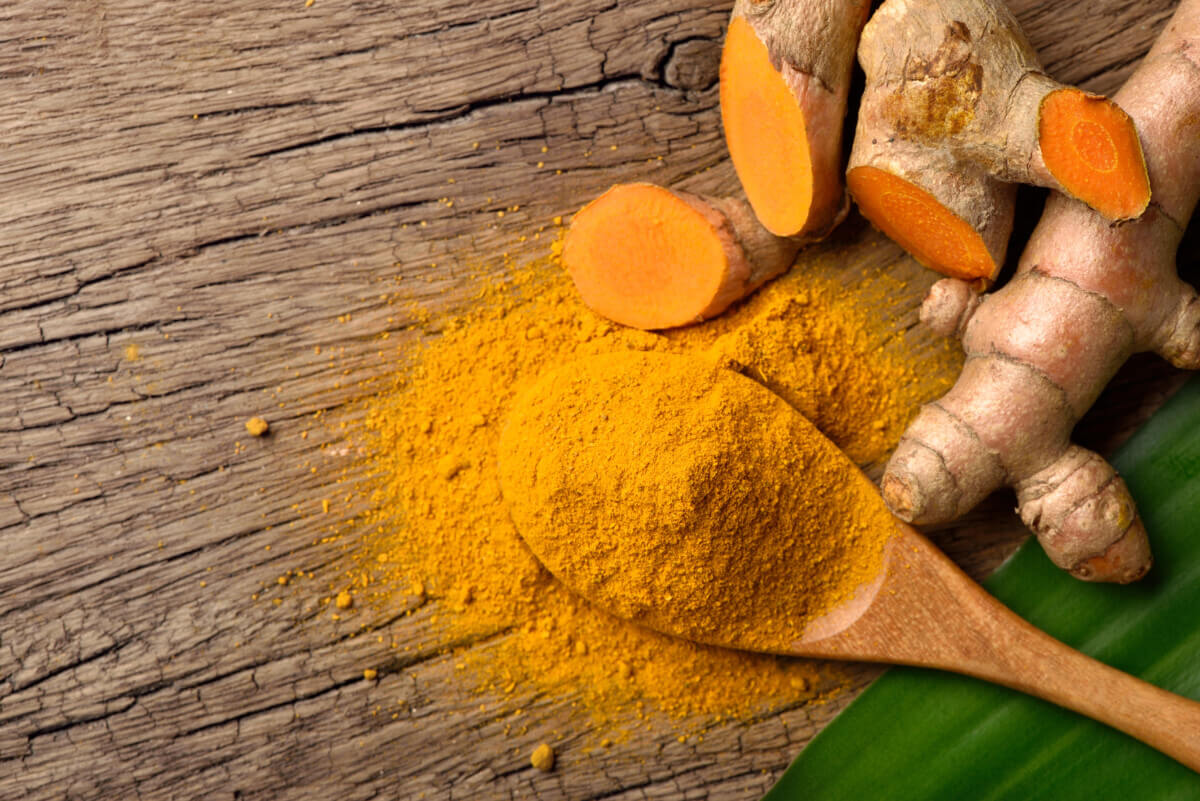
(© Paitoon - stock.adobe.com)
This Common Kitchen Spice May Have a Future in Cancer Research, Early Study Suggests
In A Nutshell
- Five plant compounds with long histories in traditional medicine, including turmeric’s curcumin and the herbal alkaloid berberine, were tested against mouse fibrosarcoma cells and normal muscle cells in the lab
- Curcumin and CAPE showed the clearest early preference for affecting cancer cells over healthy ones, while the other three compounds were initially more toxic to normal cells
- Biochanin A looked like the most powerful cancer killer in a dish, then turned out to be by far the most dangerous compound when tested in a living organism
- Curcumin and berberine combined solid anticancer activity with the best safety showing in that live test, making them the top candidates for further research
Fibrosarcoma is a rare, aggressive cancer that grows inside the same muscle tissue it eventually destroys, making a spare-the-tissue treatment tricky to find. An early lab study now suggests some plant-derived compounds, particularly curcumin, may affect mouse fibrosarcoma cells more strongly than normal muscle cells under certain experimental conditions.
Scientists tested curcumin (from turmeric), berberine, caffeic acid phenethyl ester (CAPE, from the resin bees use to seal their hives), biochanin A (found in red clover), and cucurbitacin E against mouse fibrosarcoma cells and normal rat muscle cells. All five have histories in traditional medicine as inflammation fighters and are known to interact with NF-κB, a molecular switch that helps tumors survive and spread when active. The study, published in the International Journal of Molecular Sciences, is an early cell-based screen, not a test in animals or people.
Results varied a lot depending on the compound. Two, curcumin and CAPE, seemed to target cancer cells more than healthy ones from the start. The rest told a messier story, and one produced a result researchers found genuinely alarming once testing moved beyond a dish.
Fibrosarcoma Cells Showed a Sharp Energy Collapse
To get these results, researchers exposed fibrosarcoma cells and normal muscle cells to each compound and measured how the cells responded: their survival rates, their energy levels, and a marker for cellular senescence, a state where stressed cells stop dividing but linger rather than dying outright. To see how the compounds behaved beyond a dish, they also injected them into wax moth larvae, a simple, inexpensive model commonly used in early drug research, and tracked survival over five days. The team ran this in two rodent cell lines, one from a mouse fibrosarcoma tumor and one from normal rat muscle, so the comparison would reflect a real difference between cancerous and healthy tissue rather than random variation.
The compounds drained energy stores far more aggressively in cancer cells than in normal ones. Normal muscle cells lost anywhere from about a quarter to nearly three-quarters of their fuel supply, depending on the compound. Fibrosarcoma cells lost far more, typically 83% to 92%, with berberine draining roughly 92% of their fuel. Both cell types started with similar energy levels, so cancer cells weren’t just weaker to begin with; they simply couldn’t recover the way normal cells could.
Mitochondrial function followed a similar pattern. Berberine and CAPE caused near-total collapse in fibrosarcoma cells; curcumin and cucurbitacin E caused a more moderate drop instead. Biochanin A, oddly, slightly increased mitochondrial activity in cancer cells, a paradox researchers could not explain.
Curcumin drove the highest share of fibrosarcoma cells into a senescence-associated state. Untreated cells showed this marker naturally in only 16 to 18% of cases; after curcumin treatment, more than 75% of cancer cells tested positive, versus about 57% of normal cells. Berberine pushed more than 69% of tumor cells into this state, with a much smaller effect on healthy cells. Senescent cells generally stop dividing, though the experiment did not establish whether that arrest was permanent or how cells would behave inside an actual tumor.

Biochanin A Killed Cancer Cells but Nearly Wiped Out the Larvae
Biochanin A was that compound. In cell culture, it looked like a star, killing cancer cells effectively. But in the wax moth larvae, it was by far the worst performer, with only 2 of 10 surviving past the first day, a warning sign researchers take seriously.
Something odd showed up in its gene activity too. After an initial dip in cancer-related gene activity at 24 hours, fibrosarcoma cells appeared to mount a comeback by 48 hours, with several tumor-survival genes rebounding well above baseline. One gene in particular, which helps cells burn sugar for fuel, shot up to roughly nine times its normal level. Researchers can’t say whether that rebound actually helped the cancer cells survive, since the study didn’t test that directly, but they suspect it may reflect the cells scrambling to compensate. Cucurbitacin E showed no such rebound, though it also proved harder on the larvae than curcumin or berberine.
Curcumin and Berberine Held Up Best in Live Testing
Curcumin and berberine, by contrast, held up well in the larvae. Berberine had 9 of 10 alive throughout the five-day window, and curcumin had 7 of 10 alive by day five, both in line with untreated control groups. Combined with their strong performance against fibrosarcoma cells in the dish, that makes them the two compounds researchers see as most worth chasing further.
Fibrosarcoma is just one of more than 100 sarcoma subtypes, and this study looked at a single cell line of it alongside one type of normal muscle cell, not a real tumor growing in a living animal. Getting from a promising result in a dish to an actual treatment means clearing mammalian safety testing that hasn’t happened yet. Even so, these early results suggest a handful of everyday plant compounds can hit cancer cells in specific, measurable ways, and that’s a lead worth following.
Disclaimer: This article is based on early laboratory research and is intended for informational purposes only. It is not medical advice, and none of the compounds discussed have been shown to prevent, treat, or cure cancer in humans. Anyone considering dietary supplements or changes to their treatment plan should speak with a qualified healthcare provider first.
Paper Notes
Limitations
As the authors acknowledge, this study compares two rodent cell lines from different species and tissue backgrounds rather than a matched tumor-and-normal pair from the same animal. Observed differences between cancer and normal cells may partly reflect baseline biological differences unrelated to malignant transformation. Gene expression analysis was limited to the WEHI-164 cancer cell line and only two of the five compounds tested. NF-κB activity was inferred from gene transcript levels rather than from direct protein measurements such as nuclear translocation or DNA-binding assays. Some mitochondrial and mitophagy measurements were conducted with limited replication, meaning the direction of effects is supported, but precise quantitative estimates should be interpreted cautiously. The Galleria mellonella larval model provides only a preliminary acute toxicity screen and cannot substitute for mammalian pharmacokinetic studies, tissue distribution analysis, or chronic toxicity evaluation. The authors call for future work using human sarcoma models, direct NF-κB activation assays, metabolic flux measurements, and combination studies with standard sarcoma therapies.
Funding and Disclosures
According to the paper, the study was supported by the Statutory Subsidy Funds of the Department of Molecular and Cellular Biology (grant number SUBZ.D260.26.013). Authors declared no conflicts of interest.
Publication Details
Authors: Justyna Radzka, Agnieszka Gizak, Dagmara Baczyńska, Adam Junka, Bartłomiej Dudek, Malwina Brożyna, Anna Szewczyk, and Julita Kulbacka. | Affiliations: Department of Molecular Physiology and Neurobiology, Faculty of Biology, University of Wroclaw; Department of Molecular and Cellular Biology, Faculty of Pharmacy, Wroclaw Medical University; “P.U.M.A.” Platform for Unique Model Application, Department of Translative Technologies, Faculty of Pharmacy, Wroclaw Medical University; College of Life Sciences and Medicine, Zhejiang Sci-Tech University; Department of Immunology and Bioelectrochemistry, State Research Institute Centre for Innovative Medicine, Vilnius, Lithuania. | Journal: International Journal of Molecular Sciences | Paper Title: Modulation of NFκB Signaling by Natural Compounds in Sarcoma and Normal Muscle Models | DOI: https://doi.org/10.3390/ijms27115025 | Published: June 2, 2026


